Chapter 1: The Regenerative Approach as the Next Bound of Urban Development
Cities have the potential to achieve both liveability and resilience in a climate-changed and resource-constrained world. This chapter presents key paradigm shifts of the regenerative approach.
Last updated on 12 June 2026
The Reality of Climate Change for Cities
Cities are leading the way in climate innovation, from implementing green technologies and smart systems to sustainable construction. While the 2023 Global Stocktake (opens in new tab) showed significant progress towards achieving the Paris Agreement goals, climate data indicates that more action is needed. From 2015 to 2025, global temperatures and ocean temperatures reached record highs. (opens in new tab) The breach of seven out of nine critical planetary boundaries (opens in new tab) additionally highlight the declining health of our planet.
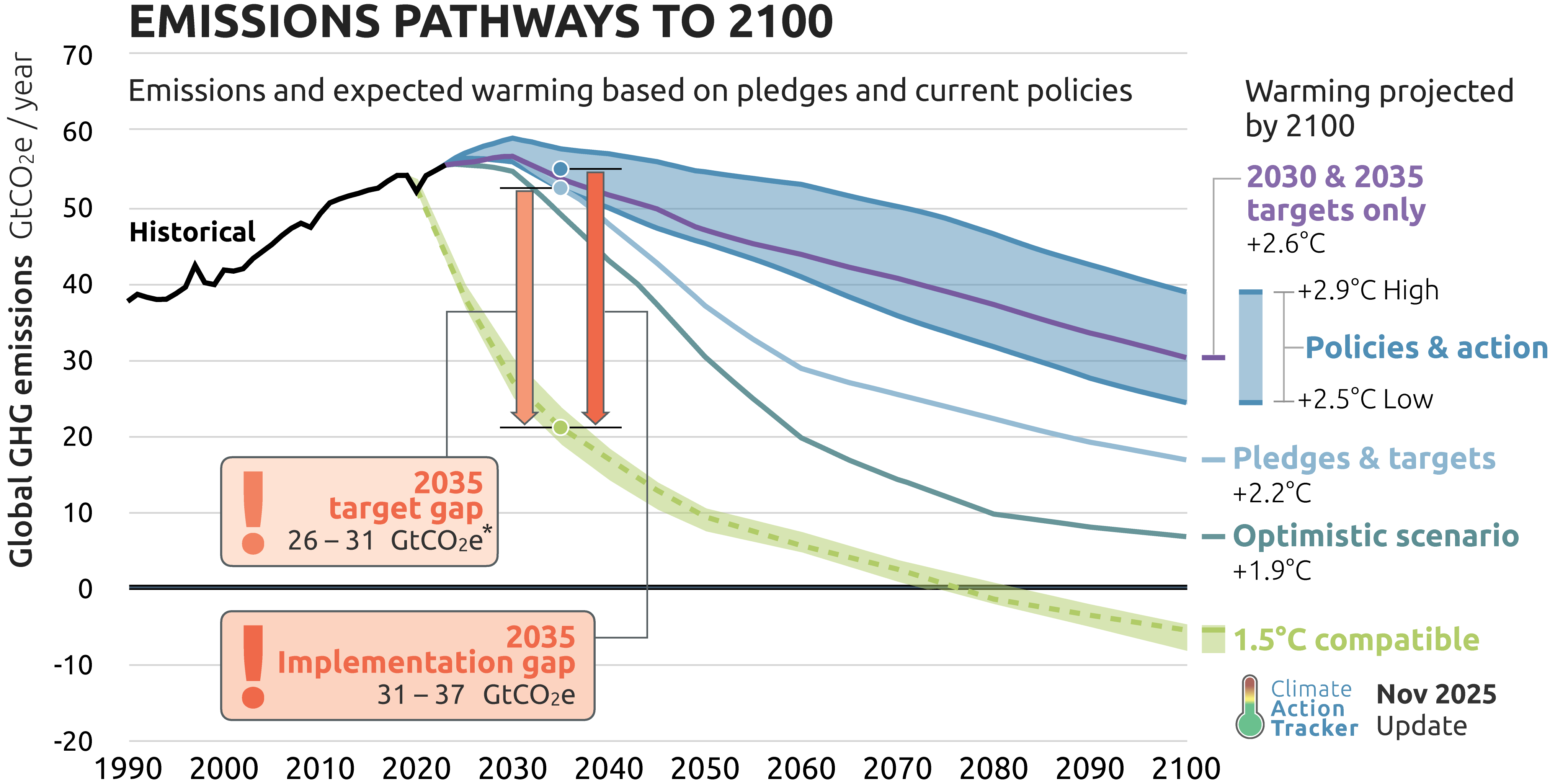
Emission pathways to 2100, based on pledges and current policies. (©Climate Analytics and NewClimate Institute)
We are also living in a period of great urban transition. By 2050, nearly 70% of the world's population will live in cities, (opens in new tab) where 75% of global energy is being used today to power key urban functions. (opens in new tab) Even as cities face escalating climate vulnerabilities and challenges that transcend geographical, sectoral and temporal boundaries, (opens in new tab) compact urban agglomerations offer opportunities. Urban density optimises resources for urban systems to deliver coordinated services with economies of scale. As talent and innovation hubs, cities effectively adopt and scale climate adaptation and mitigation strategies. (opens in new tab)
Resilient and Regenerative Cities for a Climate-Changed World
Cities present unique opportunities for innovative climate solutions. Learn how emerging regenerative strategies offer pathways beyond traditional sustainability approaches—actively enhancing social and ecological systems, maintaining high liveability while strengthening biodiversity, and ensuring responsible resource stewardship for future generations. [By: Winston Chow, Co-Chair, Intergovernmental Panel on Climate Change (IPCC) Working Group II; Elaine Tan, Director of Research, Centre for Liveable Cities (CLC); and Andy Tan, Senior Assistant Director of Research, CLC]
... to be less bad is to accept things as they are, to believe that poorly designed, dishonorable, destructive systems are the best humans can do. This is the ultimate failure of the 'be less bad' approach: a failure of the imagination.— Wiliam McDonough, Author of Cradle to Cradle: Remaking the Way We Make Things
In recent years, sustainable development frameworks have guided cities to address climate change by aiming for net-zero outcomes and long-term continuity. (opens in new tab) Yet, rapid urban growth has pushed cities beyond ecological limits and challenged liveability standards. How can cities achieve both liveability and resilience goals in a climate-changed and resource-constrained world?
The regenerative approach shifts the trajectory of urban development through two pathways that are central to moving beyond sustainability: a combination of mitigation and adaptation and going beyond minimising harm to doing good. By reimagining the urban built and natural environments as integral parts of the city that are capable of renewal and regeneration, the regenerative approach underscores the importance of harnessing synergies across the entire urban ecosystem to achieve resilience and liveability through climate action.
Towards the Regenerative City: The Next Leap for Urban Development
Cities today face a convergence of crises that reveal the limits of a sustainability paradigm too often reduced to doing less harm. Read about how a regenerative approach reframes this moment as an opening for transformation—recognising that humans can contribute to the flourishing of life and that cities can become catalysts for co-evolution rather than places of extraction. [By: Chrisna du Plessis, Professor of Regenerative Futures at Department of Architecture, University of Pretoria]
The Genesis and Evolution of the Regenerative Approach in Urban Design
Regenerative development asks us to consider what does it mean to actually add value to life, ... and encourage or participate in evolutionary processes.— Bill Reed, Principal of Regenesis
Early books on regenerative urban design
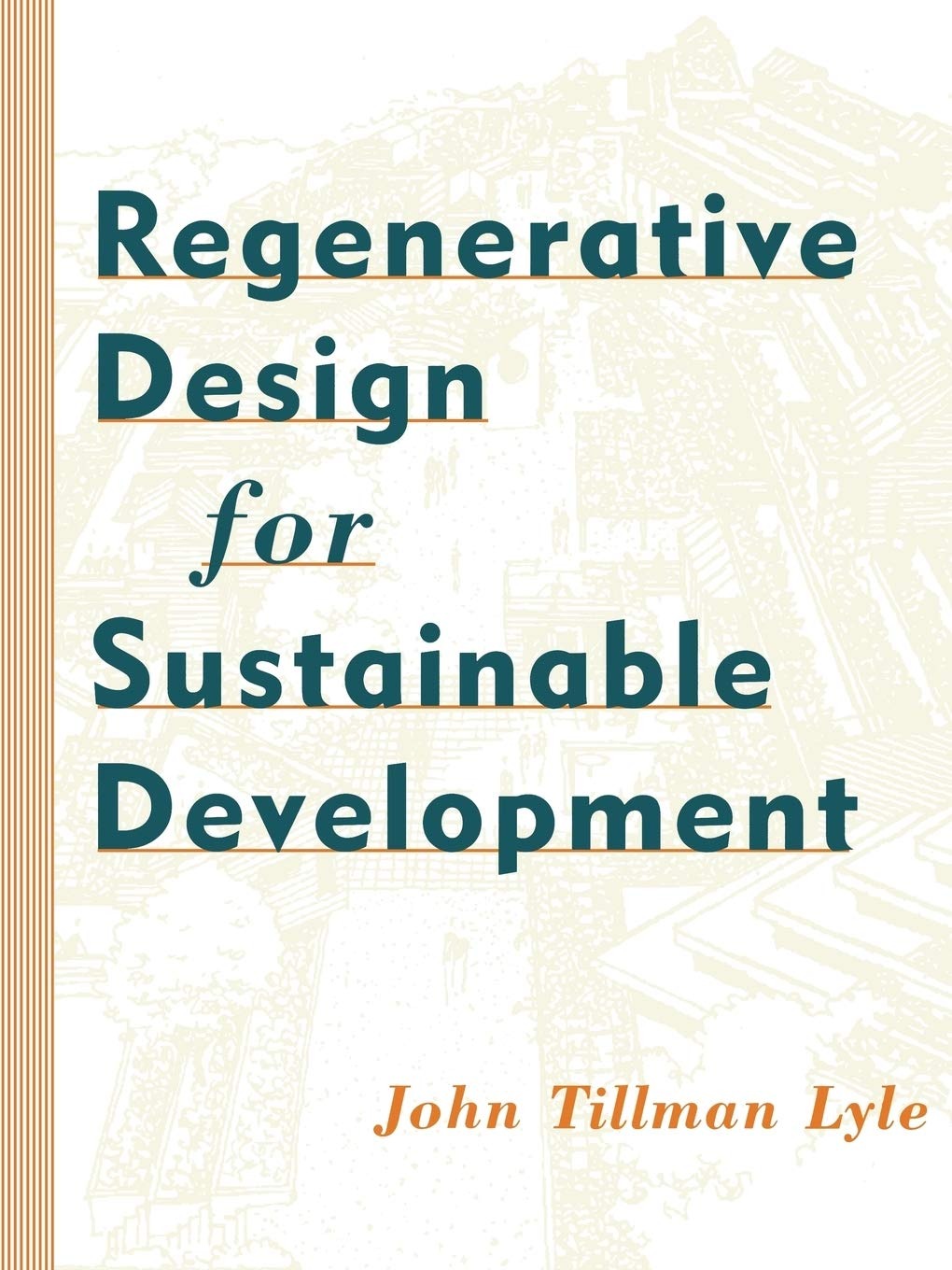
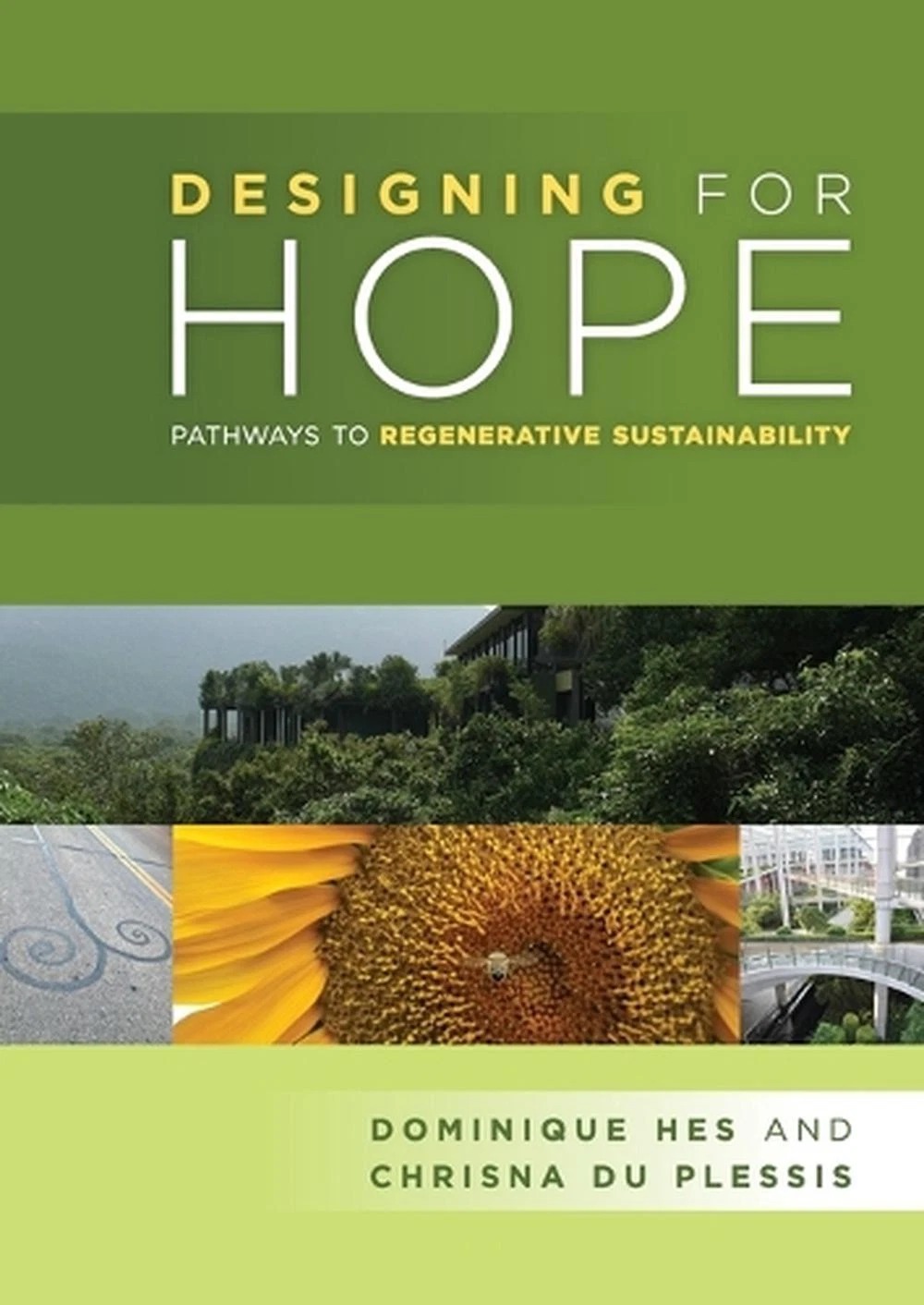
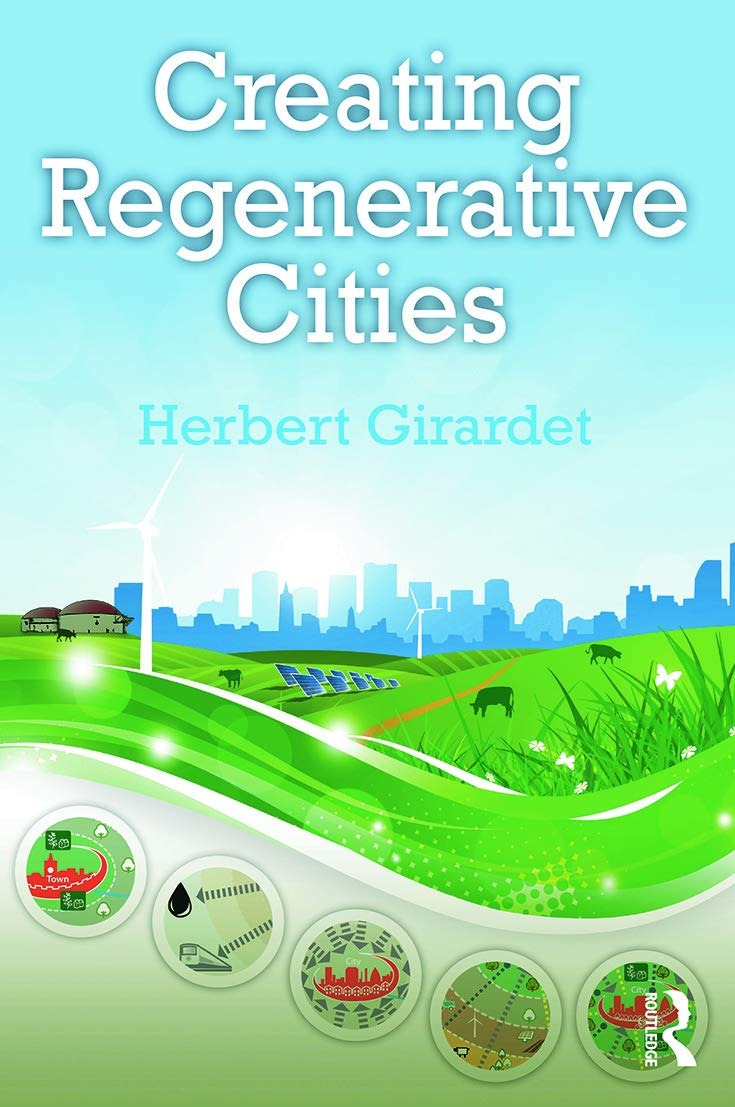
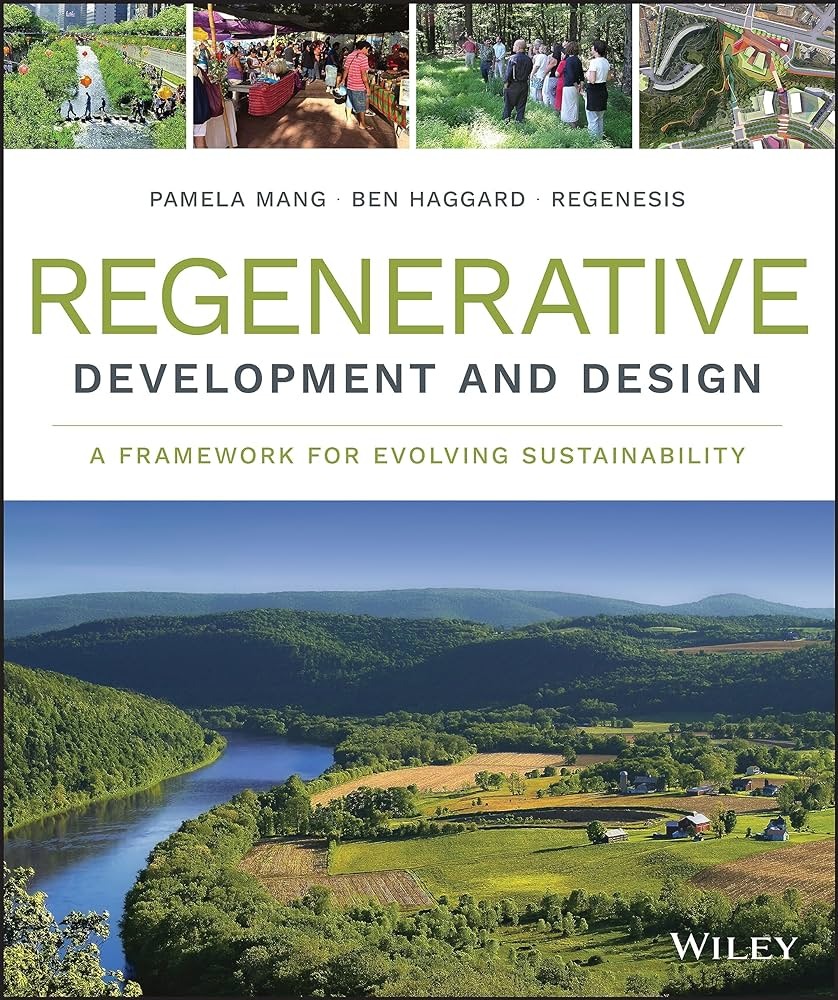
In the 1970s, architects like John T. Lyle envisioned ecosystem-centric development to align humanity with nature, echoing indigenous cultural practices. In the 1980s, architectural design thinking began to shape concepts like biophilia and self-renewing landscapes. The foundational principles of regeneration gradually evolved into practical frameworks by theorists like Bill Reed, Pamela Mang, and Chrisna du Plessis, who established the fundamentals of regenerative development and continue to advocate for urban development that supports ecosystems health.
At its core, regenerative development promotes positive interdependent relationships between human activities and ecological processes. Recognising nature as a key stakeholder, this approach calls for collaboration across designers, communities and the built environment. It prompts decision-makers to re-evaluate conventional planning and design approaches.
Regenerative Design: Across Urban Scales
Where sustainable design aims to reduce harm, regenerative design challenges us to do better by actively improving social and planetary health. Learn how three connected principles—nature-led, systemic and equitable—can guide this shift across urban scales, from materials and buildings to neighbourhoods and cities. [By: Bree Trevena, Australasia Foresight Team Lead, Arup]
From Sustainable to Regenerative: Buildings That Give Back
Rising temperatures, breached planetary boundaries and compounded urban risks demand a bold ambition: cities that actively give back. Understand how DP Architects is playing an essential role in enabling buildings to not only reduce impact but generate co-benefits through regenerative urban design. [By: Angelene Chan, Executive Chairman, DP Architects]
The City That Knows Itself: How Intelligent Cities can Learn to Give Back
A regenerative city restores, renews and enhances the systems around it, creating the conditions for more life to thrive. Though without systematic assessment, regeneration cannot be operationalised, benchmarked or scaled. Learn more about SJ Group's Regenerative Futures Framework. [By: Sean Chiao, Group Chief Executive Officer, SJ Group]
Paradigm Shifts for the Regenerative City
The key to driving a mindset shift is understanding how a regenerative approach differs from sustainability.
While both approaches aim for ecologically responsible relationships between urban development and natural ecosystems, and also preservation of the planet's capacity to support life, there is a fundamental difference in their ambition and approach.
Four paradigm shifts define how a regenerative approach changes the way we conceive, plan and build cities.
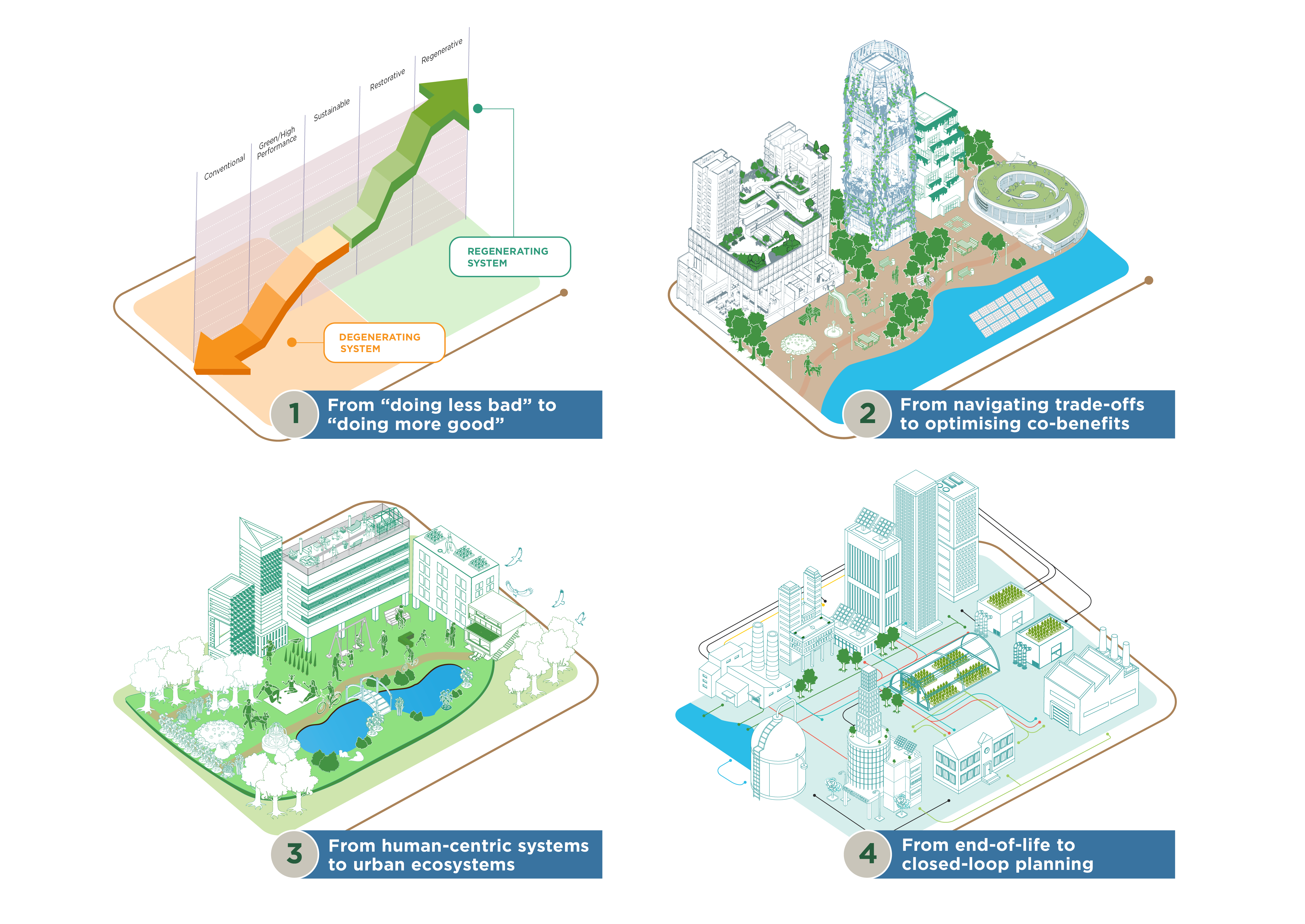
The four paradigm shifts of the regenerative city. (Centre for Liveable Cities)
1. From "doing less bad" to "doing more good"
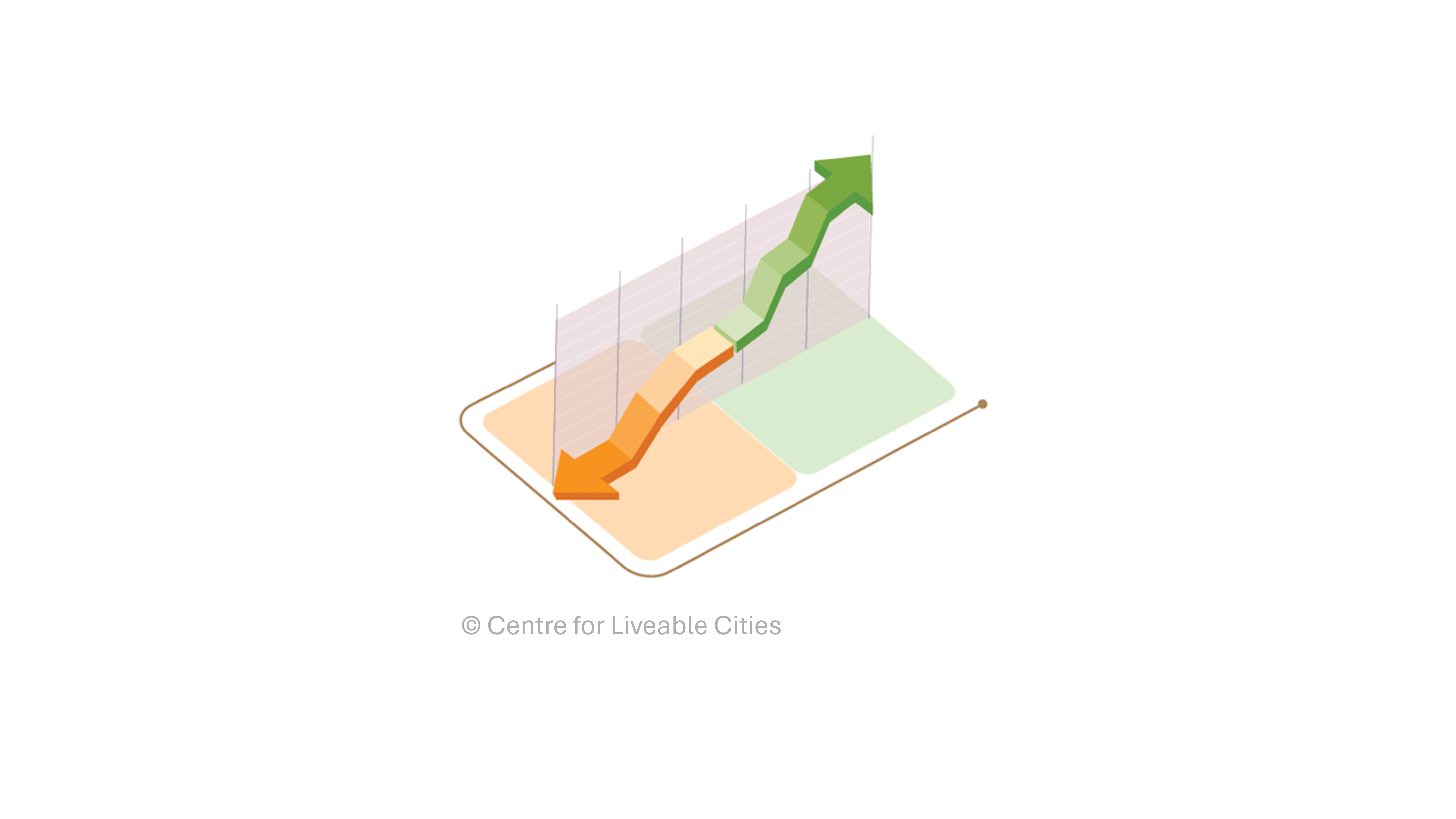
The United Nations defines sustainable development as being a balance of present needs with future generations' well-being, encompassing environmental, social, economic and political conditions, to ensure intergenerational equity. (opens in new tab) It also covers net zero goals, green transition and resource efficiency. In response, the regenerative approach advances sustainable development by restoring ecosystems, harnessing multiple socio-ecological benefits and building resilience and adaptability to change, ultimately designing cities where humans and the natural environment belong in one system.
The regenerative approach seeks to make positive change. To advance urban development, it shifts focus from minimising harm to generating co-benefits of healthy ecosystems, resilient communities, and equitable economic progress. This approach balances competing environmental and socio-economic demands, and expands problem-solving capacity. For practitioners, it promotes integrated systems thinking, achieving multiple positive outcomes through restoration and enhancement, rather than merely meeting minimum standards and minimising impact.
Climate Resilience Through Regeneration
Climate resilience can be turned from a defensive strategy into a pathway for new opportunities and benefits. Beyond minimising risks and harm, explore how the idea of regeneration pushes us to consider how climate solutions can holistically restore and enhance natural ecosystems while also generating social well-being and economic vitality. [By: Ravi Menon, Singapore's Ambassador for Climate Action]
2. From navigating trade-offs to optimising co-benefits
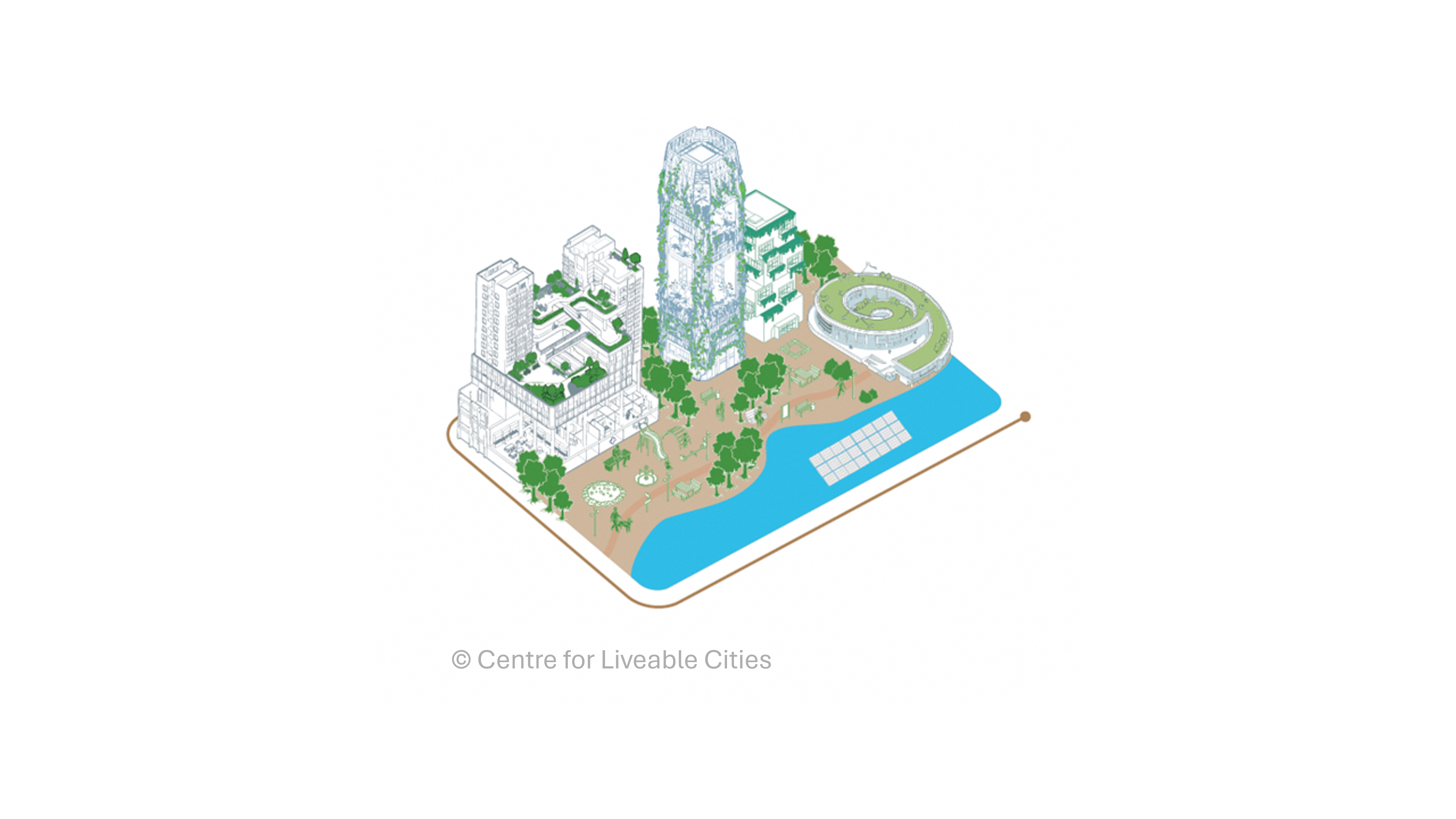
While the “trade-offs” approach weighs urban intervention costs against outcomes, the “co-benefits” approach, introduced by the Intergovernmental Panel on Climate Change (IPCC) in 2001, (opens in new tab) acknowledges that one policy or action can lead to multiple positive effects across social, economic, and environmental domains. Evaluating trade-offs with co-benefits ensures that decisions are not only informed by a balance between risk and reward, but by an optimisation of potential.
This shift fundamentally changes city-making solely from managing competing demands to also orchestrating synergies that enhance liveability and resilience. Nature-based solutions and low-carbon strategies are recognised for delivering social and economic benefits alongside environmental goals. Canada Water in London demonstrates this by repurposing its Daily Mail paper warehouse into a community and educational space using recycled materials. This shows low-carbon strategies are not only fit for climate mitigation, but can also be optimised to tap on existing resources to provide more community-centred spaces.
Charting Regenerative Urban Futures: A Working Regenerative City Framework
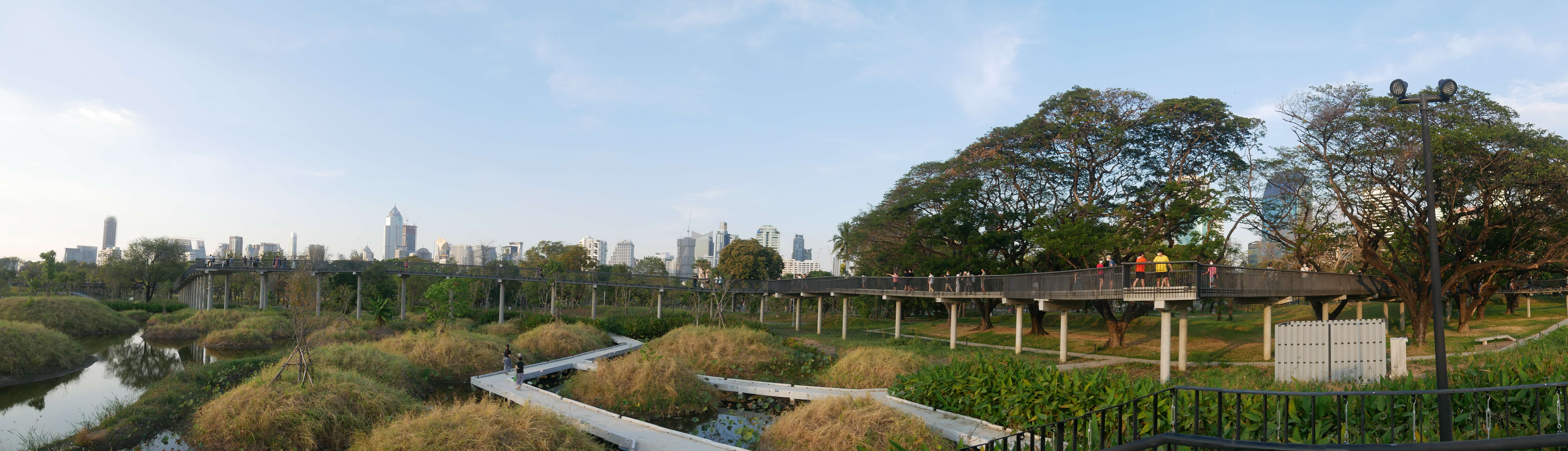
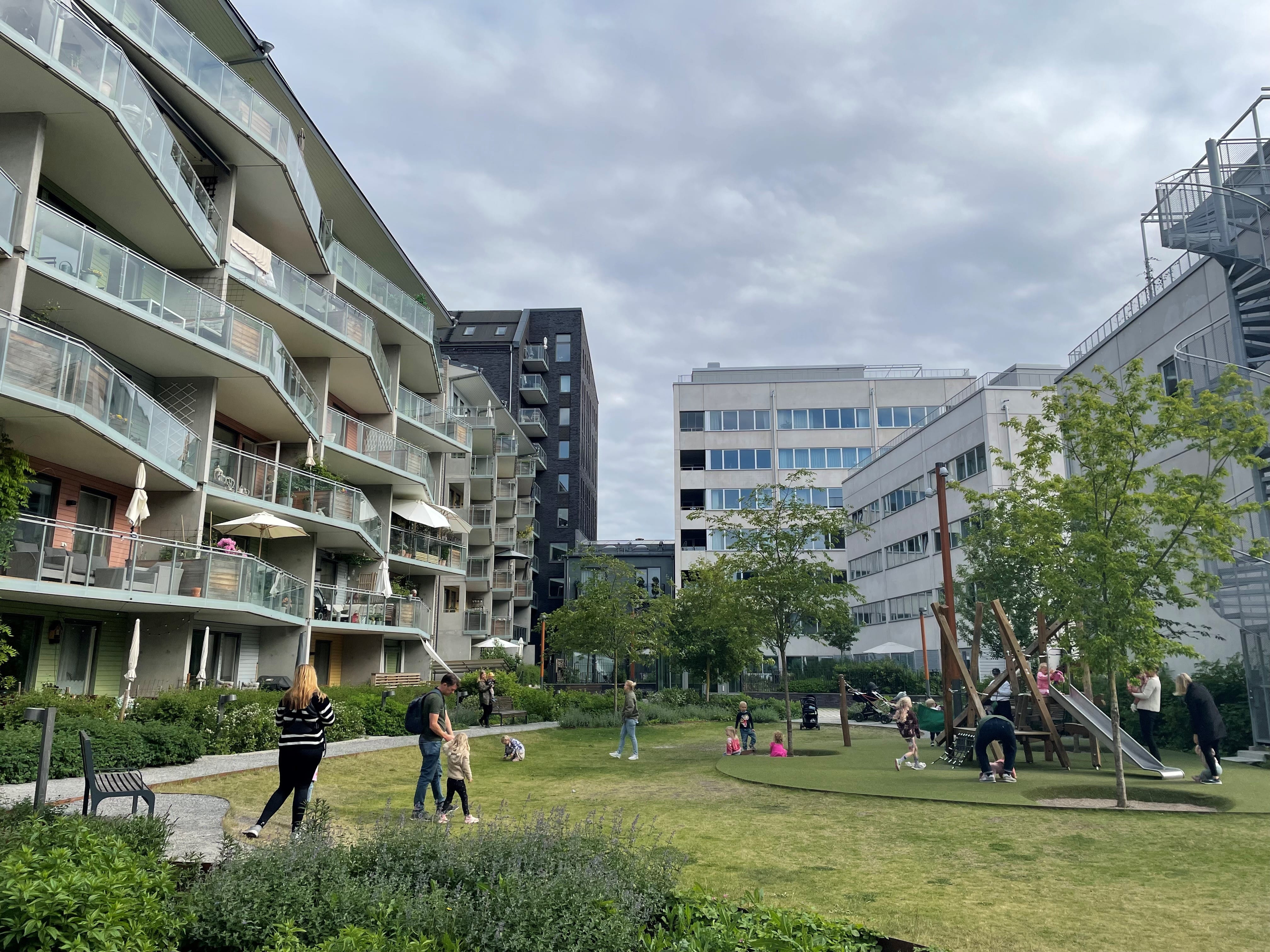
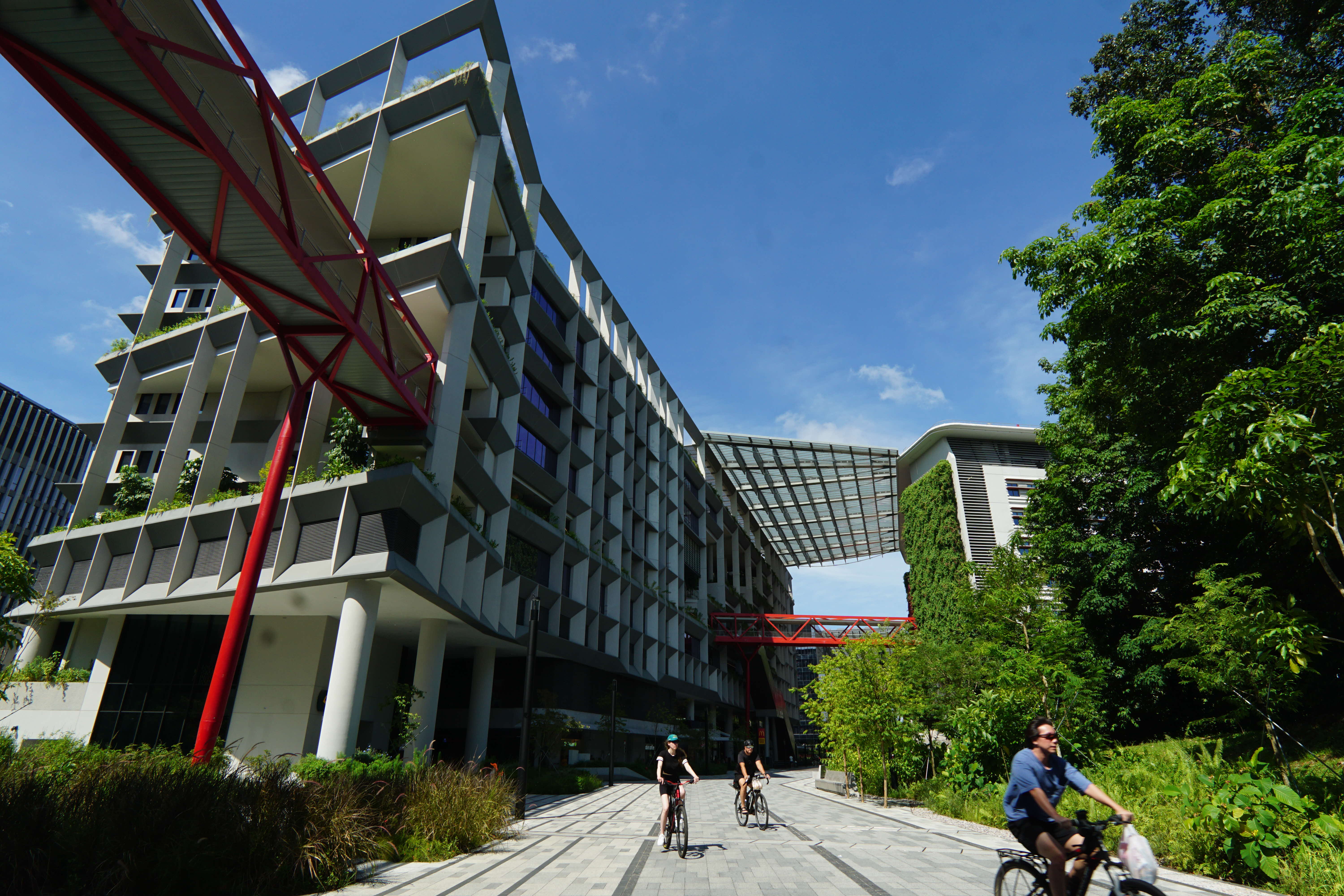
Explore the regenerative approach from a co-benefit lens through three case studies from Singapore, London and Bangkok. These case studies highlight social and ecological outcomes from nature-based solutions. [By: Hugh Lim, Executive Director, CLC; and Alysia Wee, Assistant Director of Research, CLC]
3. From human-centric systems to urban ecosystems
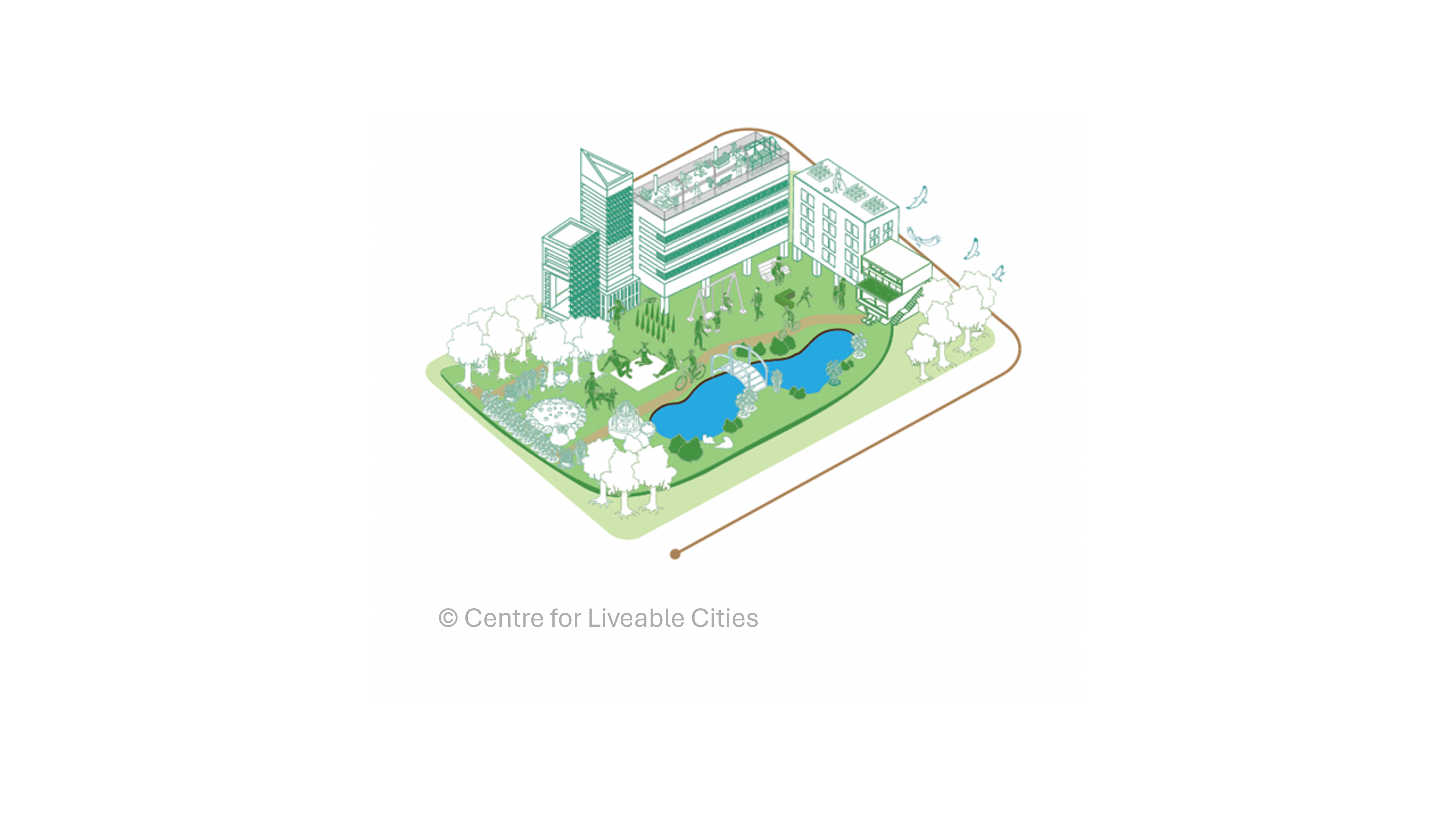
Urban development decisions have been framed conventionally around economic utility, valuing nature as a commodity to be owned and exploited, from raw materials like timber to carbon storage, or recreation. This mindset deems nature as separate from cities and limits our ability to work with and learn from ecological systems. A regenerative paradigm challenges this thinking by recognising that social and environmental systems are interdependent, and relationships can be mutually beneficial instead of extractive. An urban ecosystems-led paradigm puts this into practice by aligning urban development with ecological processes.
Globally, practitioners have demonstrated how to design with natural processes, such as water cycles and habitat networks, rather than against them. Notable projects like Singapore's Bishan-Ang Mo Kio Park, Seoul's Cheonggyecheon Stream, and Madrid's Madrid-Río Park show how cities remain highly liveable, while achieving ecological, social, and economic benefits.
Returning Life to the City: Renaturalising the Manzanares River
Learn how Madrid returned life to the city with its transformation of the M-30, a six-lane ring road which previously cut off access to the Manzanares River, into a verdant riverside park. [By: Juan Azcárate, Deputy Director-General of Energy and Climate Change, Madrid City Council; and Antonio Morcillo, Deputy Director-General of Parks and Nursery Gardens, Madrid City Council]
The Pathway to Cities that Learn from Nature
Learn how repairing the relationship between humans and nature—by shifting from human-centric to eco-centric decision-making, and learning from nature through biomimicry—is critical to designing buildings and cities that deliver better outcomes for people and our world. [By: Amanda Sturgeon, Chief Executive Officer, Biomimicry Institute]
4. From end-of-life to closed-loop planning
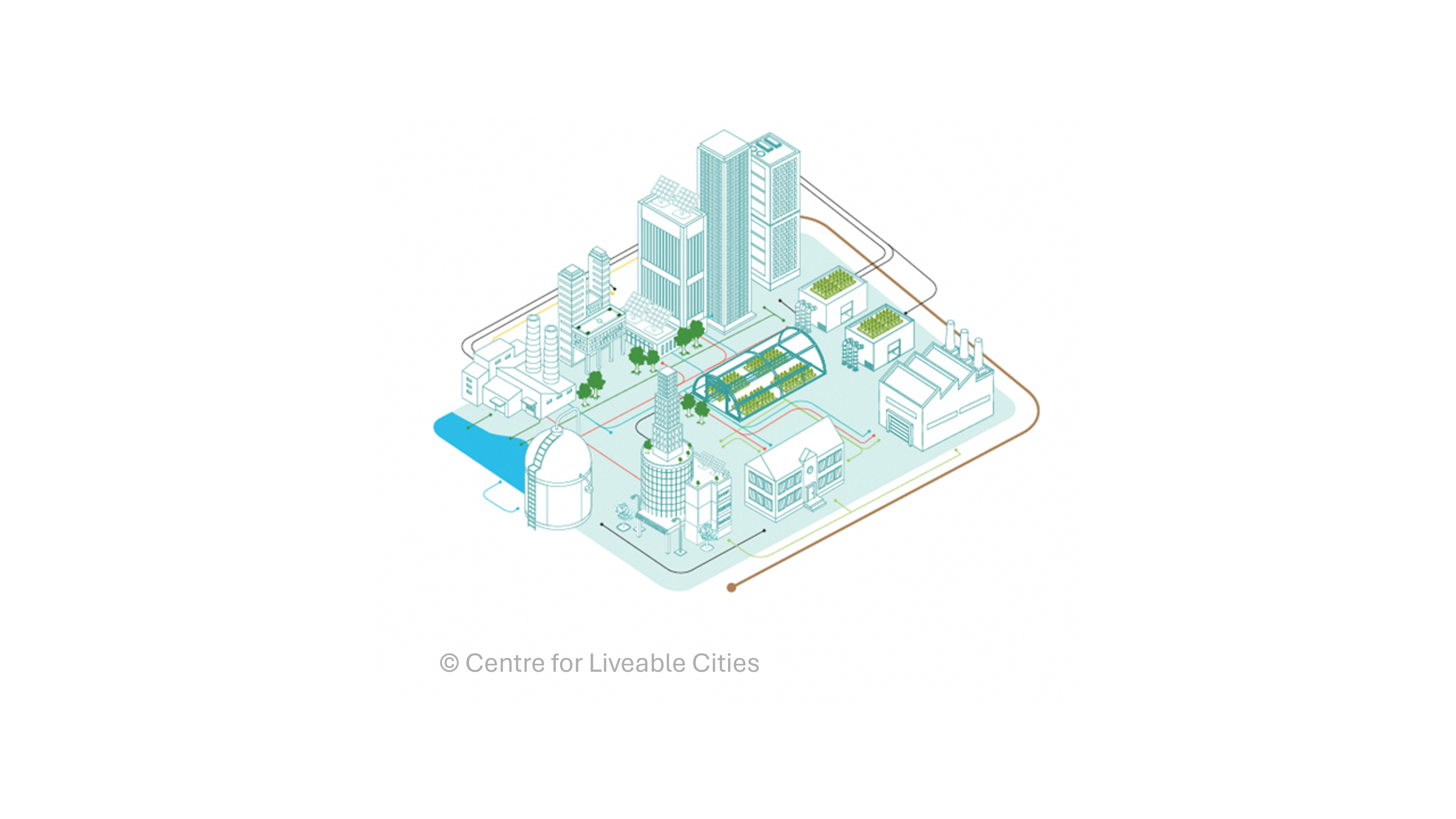
Conventional urban development follows linear timelines, with buildings designed for fixed lifespans and demolished once they lose viability. However, pressures such as urban renewal, evolving social needs and technological change are shortening lifespans—by up to 45% in Northern Europe, (opens in new tab) and to just 25 to 35 years in China, (opens in new tab) which is far below intended durability.
A regenerative approach challenges this by treating time as a core dimension, emphasising long-term, holistic planning with closed-loop systems where upgrading and resource reuse are built-in to maximise social, economic and environmental co-benefits throughout a development's lifecycle. In practice, it means not merely designing structures, but developing dynamic systems with feedback loops that can adapt, expand and be optimised to meet capacity demands over time. Early-stage investments in features like daylighting, ventilation, and biophilic design yield lasting benefits, including improved liveability, health, energy efficiencies, and ecological resilience.
Designing Cities That Give Back: A Regenerative Co-Benefits Agenda for Urban Density
As climate impacts intensify and resource constraints tighten, cities are looking to regenerative design as a powerful and practical framework for mitigating climate risks and reducing emissions while enhancing ecosystems, liveability and resource efficiency. Gain an overview of the four paradigm shifts of the regenerative approach—towards net-positive value creation, designing for synergies, human-nature co-evolution and circular, regenerative lifecycles. [By: Cheong Koon Hean, Chair, Lee Kuan Yew Centre for Innovative Cities]
In a climate- and resource-constrained world, the regenerative approach promotes positive change, harness co-benefits, steward urban ecosystems, and design for circularity. Through increasing capacity for synergy, adaptation and optimisation, it enables cities to achieve the co-benefits of liveability and resilience.
Our next question: How can we bridge regenerative outcomes with real-world operating capacities? In Chapter 2, we unpack the Regenerative City Framework to gear up for practical action.
Download Chapter 1 PDF [PDF, 9.16 MB] (opens in new tab)
Download Full Publication PDF [PDF, 29.60 MB] (opens in new tab)