
Publication Op-eds
The Pathway to Cities that Learn from Nature
14 June 2026
By Amanda Sturgeon Chief Executive Officer, Biomimicry Institute
We don't value what we don't love. To have any significant reduction on the impacts of climate change, it is critical to repair the relationship between humans and nature.— Amanda Sturgeon

We don't value what we don't love. To have any significant reduction on the impacts of climate change, it is critical to repair the relationship between humans and nature.
Designing our buildings and cities with respect for the resources that they depend on, and with a love of all life at the centre of decision-making, will require a complete systemic change. It necessitates an understanding that taking care of more than the human world will always result in the best outcome for people as well. It involves the need to move away from the prevalent human-centric (ego-centric) decision-making processes that rely on measurements, reporting, checklists and silos which are dominated by metrics that add up to a prescribed answer.
Instead, we must embrace eco-centric decision making, which focuses on understanding the impacts of a decision on the whole system. This will guide us in seeking intuitive answers based on long-term thinking, and valuing nature for its own sake rather than purely for its monetary benefits. However, an eco-centric approach can feel less certain, less defined and unpredictable—like nature, which is ever-changing, dynamic and adaptive.
Putting Learning from Nature into Practice
There are time-tested practices that light the path towards an eco-centric decision-making future. Nature itself adapts and designs solutions to challenging problems constantly, and much of the life on Earth has had 3.8 billion years to perfect adaptation. There is much to learn from Nature's brilliance, strategies and systems, which the practice of biomimicry brings to light.
The indigenous communities around the world that have been able to keep their knowledge, dignity and traditions intact demonstrate that it is possible for humanity to live with a different value system. Our current dominant societal and economic systems are set up to rely on the broken relationship between humans and the more-than-human world, even though these systems are driving humans and many other species to the brink of extinction, and the ecosystems that underpin them are collapsing.
The first step in moving towards an eco-centric decision-making approach is to reconnect people with nature. Cities can play a powerful role in that reconnection, and given that most of the world's people live in cities, their potential for positive change is immense. The best cities to live in are consistently regarded as those with abundant open space, accessible rivers or waterfronts, clean air and frequent opportunities to spend time in nature. Cities can go beyond these basics to start integrating requirements for biodiversity net gain.
Biomimicry and Ecosystem Services
Once nature is vibrant in the city, and opportunities for reconnecting with nature are in place, utilising biomimicry can take the reconnection even deeper. Analysis and understanding of the ecosystem services that nature provides can teach us how to emulate those services in dense cities, where the addition of open space can be challenging, and in the process create a rich connection between the human and natural parts of a city.
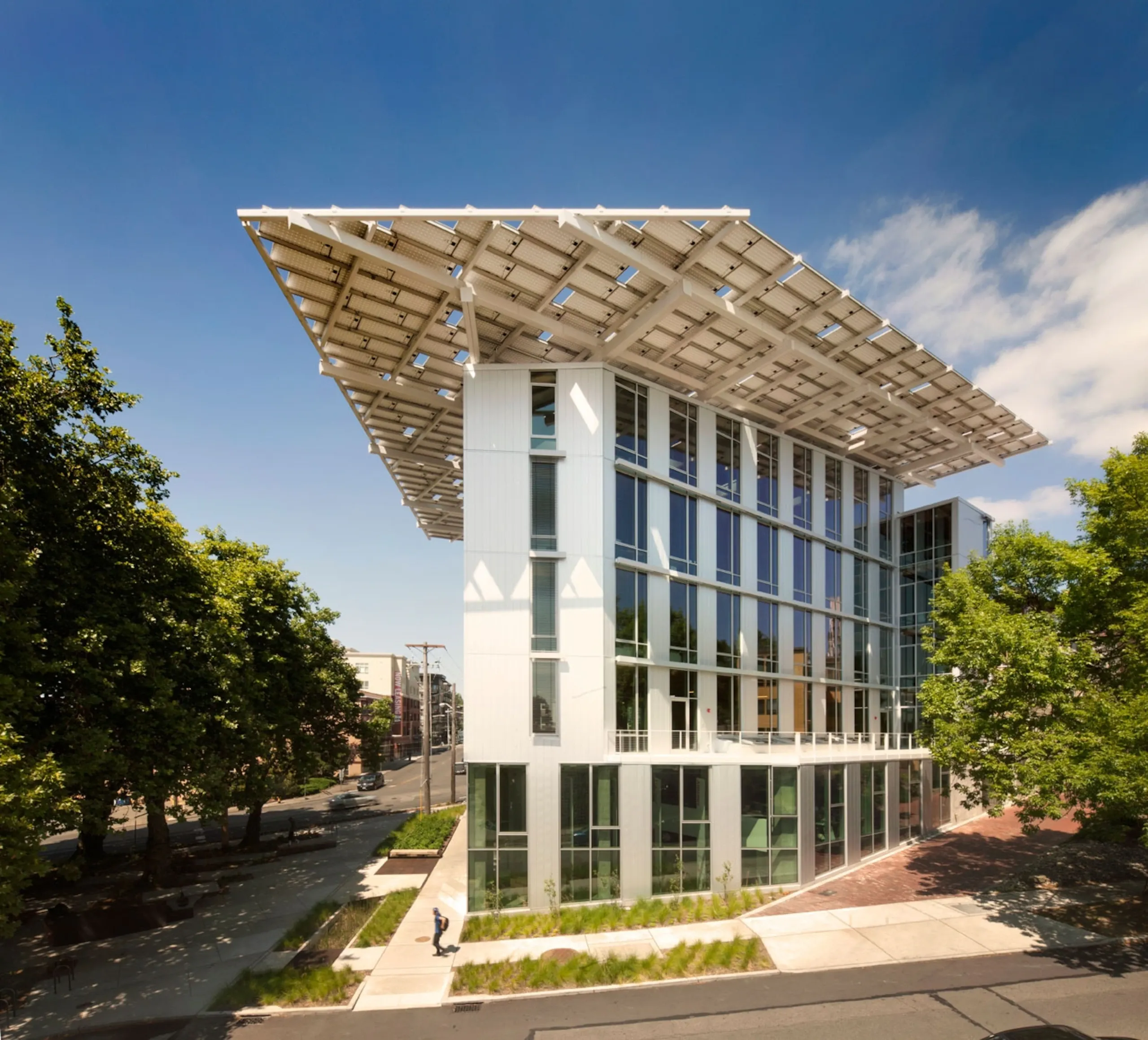
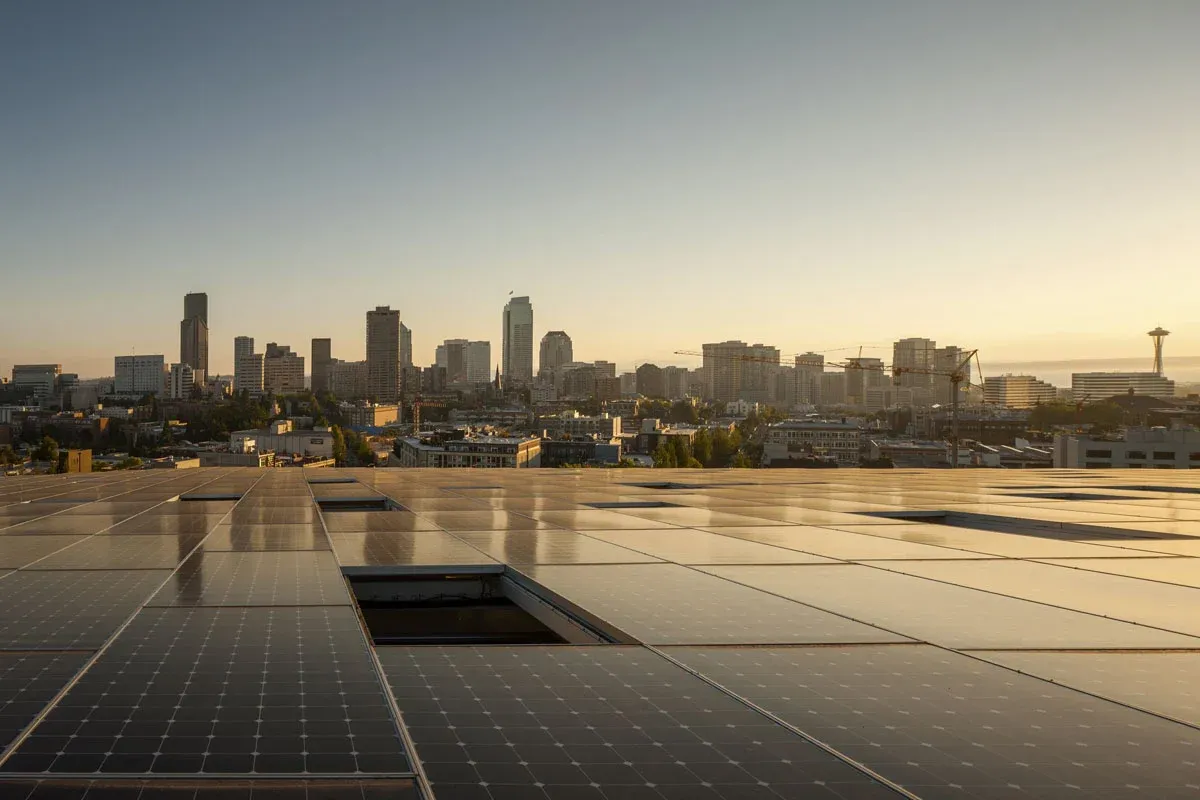
Biomimicry can provide a functional view of how nature supports all of life to thrive. The adoption of this approach at the city scale is limited, but one of the best examples that shows its potential is the Bullitt Center in Seattle. This project undertook an ecosystem services study that shows how the building continues to reap the benefits from an eco-centric approach. The Bullitt Center reuses 487 m3 of rainwater yearly. It also saves 323 metric tonnes of CO₂ each year through energy‑efficient strategies, and a further 1,844 metric tonnes over its lifecycle through the use of responsibly managed wood in its construction.
Lastly, the reconnection between people and nature must be celebrated for eco-centric decision-making to take hold. If there is joy and play when we spend time in nature, then we can reawaken our profound relationship with the rest of life.
As we explore what a regenerative city could be, it is critical that we look at shifting our decision-making processes, that we analyse what we value and how we value it, and that we take accountability for challenging the dominant social structures that inherently do not value nature at their core.