
Publication Op-eds
The City That Knows Itself: How Intelligent Cities Can Learn to Give Back
14 June 2026
By Sean Chiao Group Chief Executive Officer, SJ Group
Regeneration is how we find our way back. A return to how living systems actually work: through reciprocity, adaptation and interdependence.— Sean Chiao
We are, by nature, a regenerative species. Like every living organism, we are built to participate in cycles of renewal, and contribute to the ecosystems that sustain us.
But somewhere along the way, we lost the thread.
We began to see the natural world as something separate from ourselves. We chased control, predictability, efficiency. In the pursuit of growth, we harnessed stored energy, altered entire landscapes and built cities that deplete the very systems we depend on.
The result? Ecological degradation. And a deepening disconnect between people and place.
Regeneration is how we find our way back. A return to how living systems actually work: through reciprocity, adaptation and interdependence. A regenerative city restores, renews and enhances the systems around it, creating the conditions for more life to thrive.
What needs to accompany aspiration is measurement. Without systematic assessment, regeneration cannot be operationalised, benchmarked or scaled, and the investment needed to make it last will not follow.
At SJ Group, our Regenerative Futures Framework is built for exactly this. Our premise is simple: cities must be assessed as complex socio-ecological systems. We evaluate performance across six interconnected impact areas—nature, life, society, knowledge, economy and the built environment—each with clear action areas, delivery principles and performance outputs.
With a systemic lens, we examine how systems connect and depend on each other. We are building a continuum of performance, from business-as-usual to pioneering, that rewards continuous improvement over static compliance. And we integrate both quantitative and qualitative measures. After all, not everything that matters can be reduced to a number.
In Kaua'i, Hawai'i, the Economic Resilience Center is a real-world proof point. Its repurposed structure has a resilience understood as inseparable from the health of the surrounding coral reefs and wetlands. Indigenous knowledge is woven into the design. Ecological, social and economic performance are measured as one system, because they are one system.
Temasek Shophouse, a century-old conserved heritage building in Singapore, integrates real-time occupancy monitoring, solar panels, rainwater harvesting and native planting. Achieving up to 47% energy savings, it's on track to become Singapore's first heritage shophouse to achieve the Building and Construction Authority's Green Mark Platinum Zero Energy certification. At a larger scales, Singapore's Changi Airport shows how regenerative thinking enhances human experience through biophilic design and high-performance engineering.
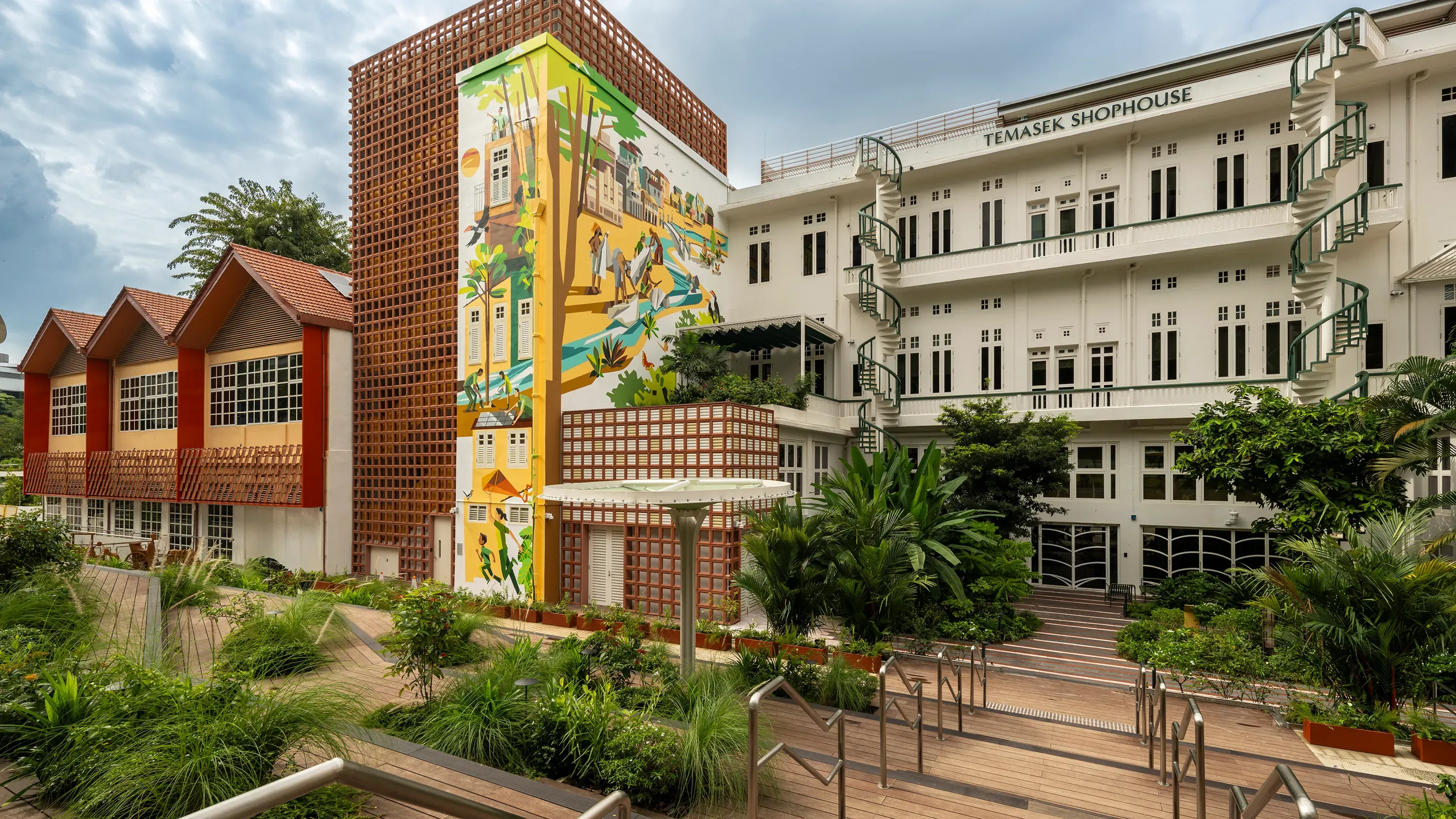
Temasek Shophouse in Singapore. (Temasek Shophouse)
In Canada, the New Lowell masterplan, and in India, the Biomimicry Building, go further. These quantify CO₂ sequestration, oxygen production, stormwater retention, temperature regulation and air purification before and after design. These developments actively improve ecological performance by design.
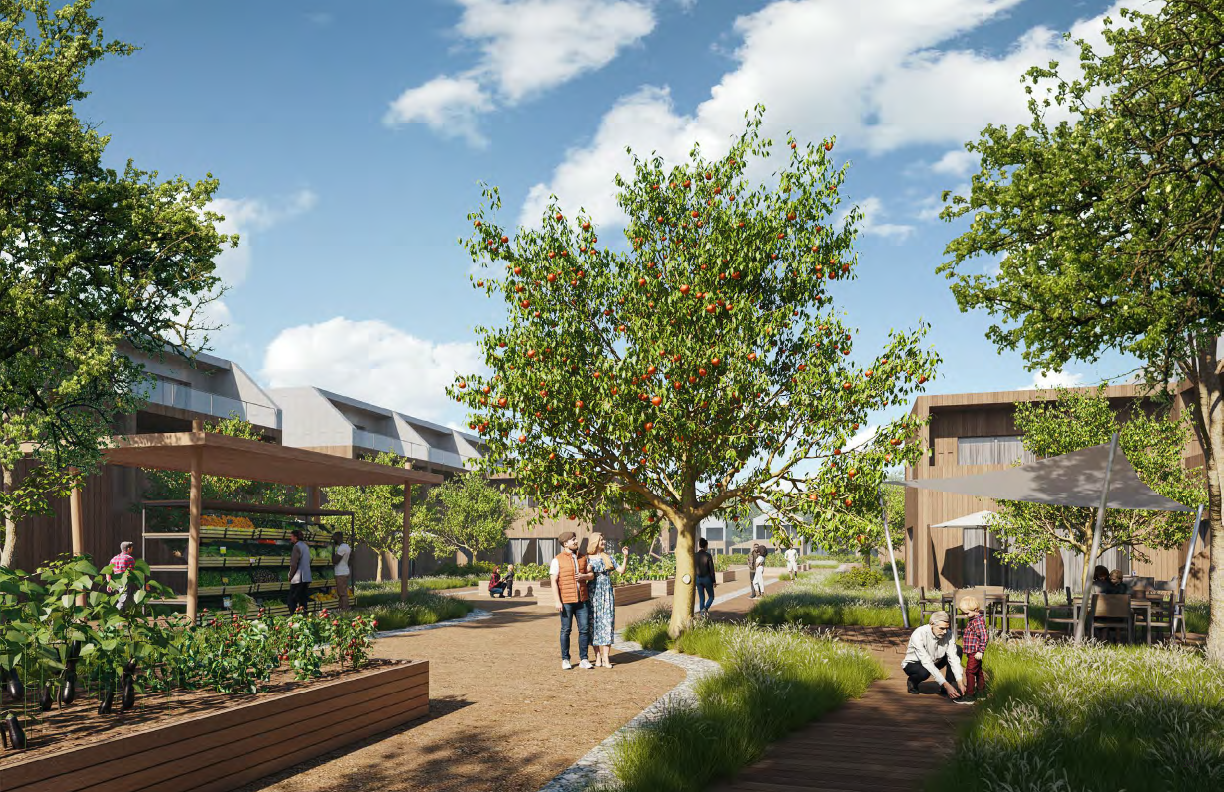
New Lowell Vision Plan in Canada. (SJ Group)
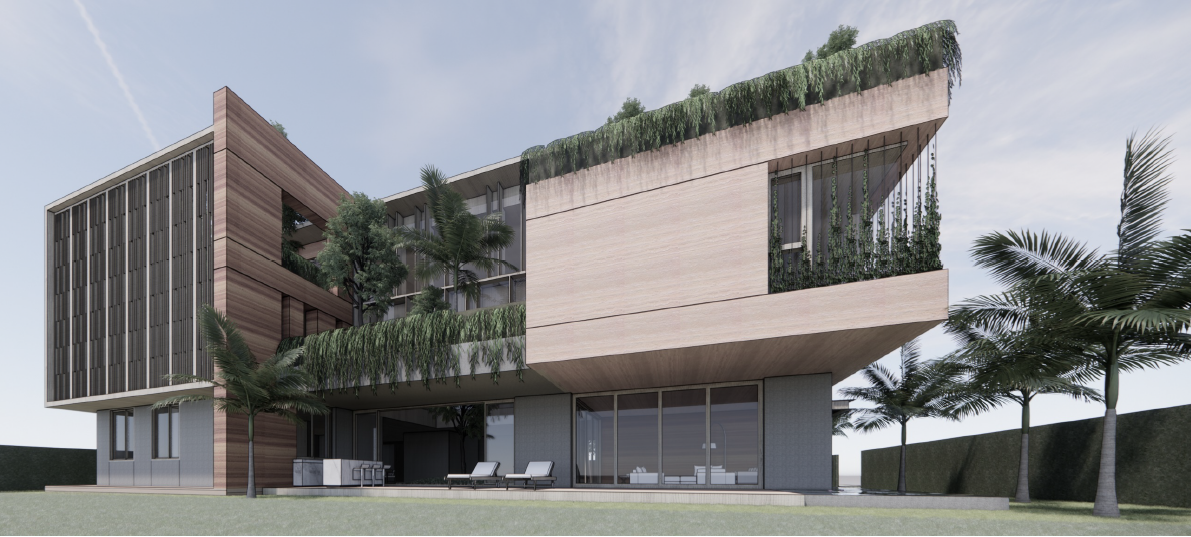
Biomimicry Building in India. (SJ Group)
To take this further, SJ Group has developed a Cognitive City framework, a dynamic digital layer that enables real-time monitoring and adaptive decision-making. AI can help cities learn from how their systems perform and accelerate their evolution. Regenerative design defines the direction that evolution should take: restoring ecosystems, strengthening communities, creating long-term value.
Together, they describe something genuinely new: a city that can measure, adapt and continuously improve, mirroring the behaviour of living systems.
The regenerative city is a living process. And a city that truly knows itself—one that measures, learns and adapts—will know how to give back. We have the frameworks, the tools and the knowledge. Now we build.