Chapter 3: Measuring the Regenerative City
The regenerative city can measure progress by its ability to achieve regenerative outcomes and build capacity over time. This chapter delves into example indicators that can be used as a starting point for evidence-based planning.
Last updated on 12 June 2026
Moving the Needle: Inspiring and Measuring Progress
Building on the Regenerative City Framework, Chapter 3 addresses the more complex issue of how a regenerative city is assessed. It presents two sets of assessment indicators: regenerative outcomes that measure progress in implementing regenerative development, and regenerative capacities that assess existing conditions and how well the city can support the harnessing of co-benefits.
Assessed together, they provide insights on the extent a city's investments in capacity impact desired outcomes across the development lifecycle.
Indicators to Measure the Regenerative City
A preliminary set of indicators for assessing regenerative outcomes and capacities was identified by the Singapore University of Technology and Design, in collaboration with the CLC, to catalyse evidence-based planning for addressing urban environment interdependencies. Establishing a clear method of assessing indicators across the three outcomes and three capacity pillars provides a starting point for cities to understand co-benefits over time.
Regenerative Outcome Indicators
Tracking outcomes help us to understand change. Beyond that, it accounts for the impacts of interventions as well as progress in achieving various goals.
Regenerative Capacity Indicators
Guided by regenerative outcomes, capacity indicators support planners and policymakers in creating conditions fit to harness the interdependencies between the urban built and natural environments.
Developing a Regenerative City Self-Assessment Tool
The Regenerative City Self-Assessment Tool (RCSAT) is a work-in-progress tool that aims to provide practitioners a shared method for measuring and tracking progress of regenerative urban development.
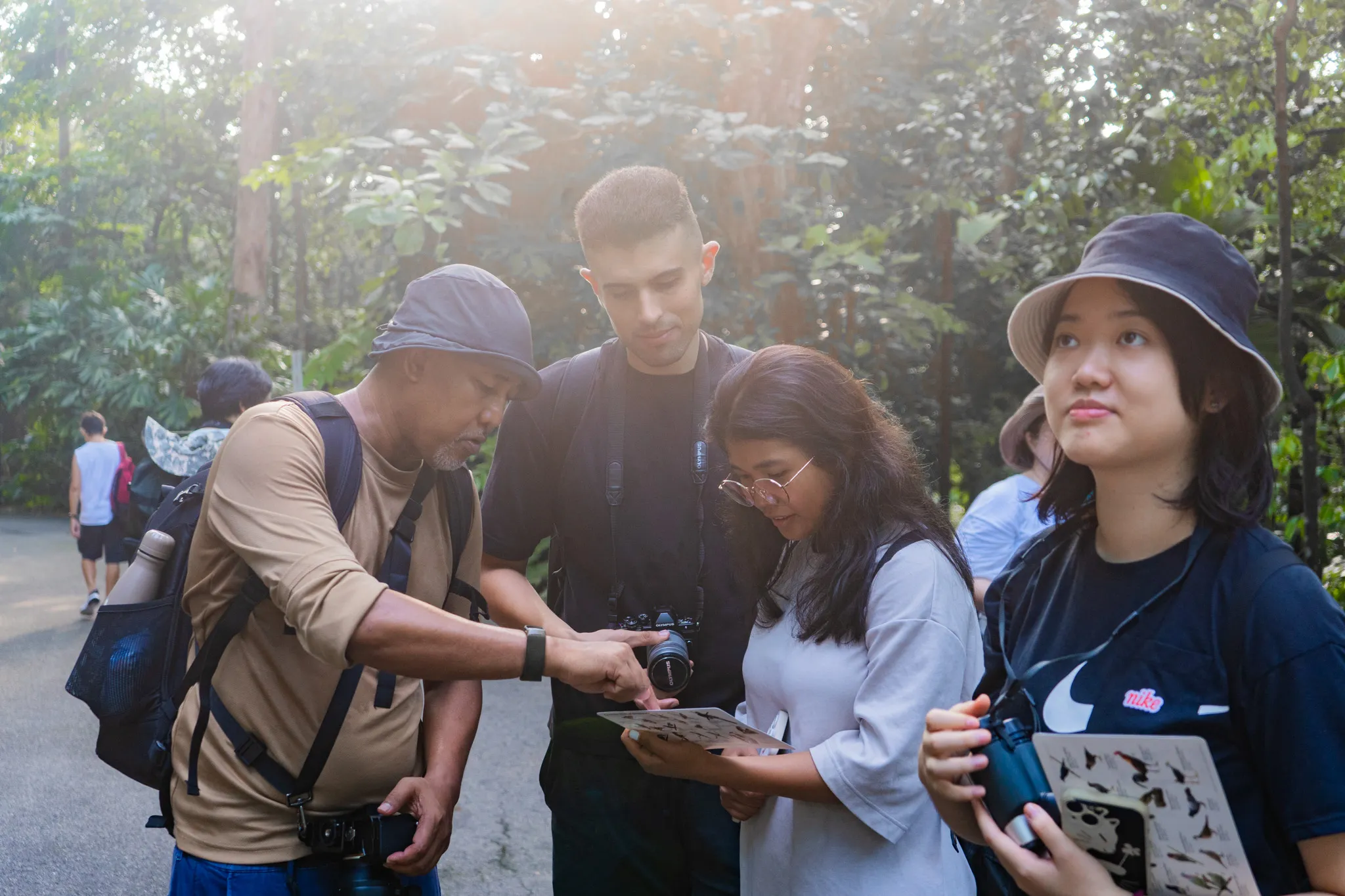
Citizens can contribute to measuring environmental outcomes. This can involve counting animal species and tracking their changes over time, contributing to how conservation efforts are carried out. (National Parks Board)
The preliminary indicators identified in this chapter provide an approach to an integrated, evidence-based regenerative practice. The outcomes and capacity indicators offer a rigorous and informed starting point of what to measure, distinguishing between longitudinally-tracked regenerative outcomes which reveal intervention impacts, and cross-sectionally-assessed regenerative capacity which reveal readiness to support regenerative processes.
Measurement must also be grounded in the climate, governance and urban contexts of the city. Getting this right will depend on extensive collaboration among city planners, ecologists, urban designers and local communities, as well as the availability of transparent and comprehensive datasets. As the science of regenerative cities advances, the case for regenerative urban development will become harder to ignore.
Download Chapter 3 PDF [PDF, 1.07 MB] (opens in new tab)
Download Full Publication PDF [PDF, 29.60 MB] (opens in new tab)