
Publication Op-eds
Designing Cities That Give Back: A Regenerative Co-Benefits Agenda for Urban Density
14 June 2026
By Cheong Koon Hean Chair, Lee Kuan Yew Centre for Innovative Cities at the Singapore University of Technology and Design, and Chair, the World Cities Summit Knowledge Council 2026-2028
Regenerative design offers a policy-relevant framework that aligns climate mitigation and adaptation with ecosystem restoration, liveability and resource efficiency.— Cheong Koon Hean
Cities sit at the front line of climate change. They concentrate people, assets, emissions and risks, while also holding the greatest potential to drive solutions at scale. Over the past two decades, urban climate action has focused primarily on mitigation targets, efficiency gains and risk management. These efforts remain essential. Yet as climate impacts intensify and resource constraints tighten, it is increasingly clear that incremental, siloed approaches are no longer sufficient.
What is now required is a shift in how cities conceive of climate action. Regenerative design offers a powerful and practical framework for this shift—one that enables cities to reduce emissions and climate risk while simultaneously enhancing ecosystems, liveability and resource efficiency.
Rather than treating these objectives as competing priorities, a regenerative approach reframes them as mutually reinforcing outcomes. This requires four shifts in current paradigms—towards net-positive value creation, designing for synergies, human–nature co-evolution and circular, regenerative lifecycles.
From Impact Reduction to Net-Positive Value Creation
Most urban climate strategies today are grounded in impact reduction. They operate within a logic of constraint, aiming to slow degradation rather than reverse it.
Regenerative design advances a more ambitious proposition: cities can become net contributors to ecological and social systems. This means that urban development should not only reduce emissions, but also restore ecosystem services, moderate climate impacts and strengthen long-term resilience. Through a regenerative approach, buildings, districts and infrastructure are designed to generate renewable energy, enhance biodiversity and improve microclimates—creating positive feedback loops over time.
From Managing Compromises to Designing for Synergies
Urban climate policy is often framed as a balancing act: decarbonisation versus growth; density versus liveability; resilience versus affordability. These perceived trade-offs are often tension points between the general populace, interest groups, industry and policymakers.
A regenerative, co-benefits approach replaces this logic with one that designs for synergies. By integrating climate action with urban development objectives, cities can unlock shared gains across four critical domains:
ecosystem services and biodiversity,
decarbonisation and climate mitigation,
liveability and human well-being, and
resource efficiency.
From Human Dominance to Human–Nature Co-Evolution
Conventional urban development has largely treated nature as an externality—something to be controlled, engineered around, or offset. This mindset has contributed to increased climate vulnerability, loss of biodiversity and reduced urban liveability.
Regenerative cities are built on a different premise, that human and natural systems co-evolve. Nature-based solutions are not aesthetic add-ons but essential climate infrastructure. Urban trees, wetlands, green roofs and permeable landscapes not only manage stormwater and sequester carbon, but reduce heat stress and support mental and physical health.
From Linear to Circular, Regenerative Lifecycles
Climate vulnerability is deeply tied to how cities use resources. Linear models of extraction, consumption and disposal increase emissions, expose cities to supply-chain shocks and lock in long-term environmental risk.
Regenerative design promotes circular, closed-loop systems across energy, water, materials and land. This includes designing buildings for adaptability and reuse, integrating district-scale energy and cooling systems, and treating waste streams as resources. Such approaches reduce emissions while strengthening resource security.
Regenerative Design in Singapore
Singapore provides a compelling illustration where land scarcity, competing urban demands and climate exposure intensify challenges such as urban heat, flooding and biodiversity loss. Density constrains the availability of large, contiguous areas for greenery, but it also creates powerful opportunities for innovation through compact, integrated systems.
Regenerative design allows ecological functions to be embedded vertically and systemically. Blue-green initiatives such as at Bishan-Ang Mo Kio Park and Bidadari Park demonstrate how naturalised waterways using a “sponge city” concept can simultaneously deliver climate resilience, recreational value and ecological restoration.
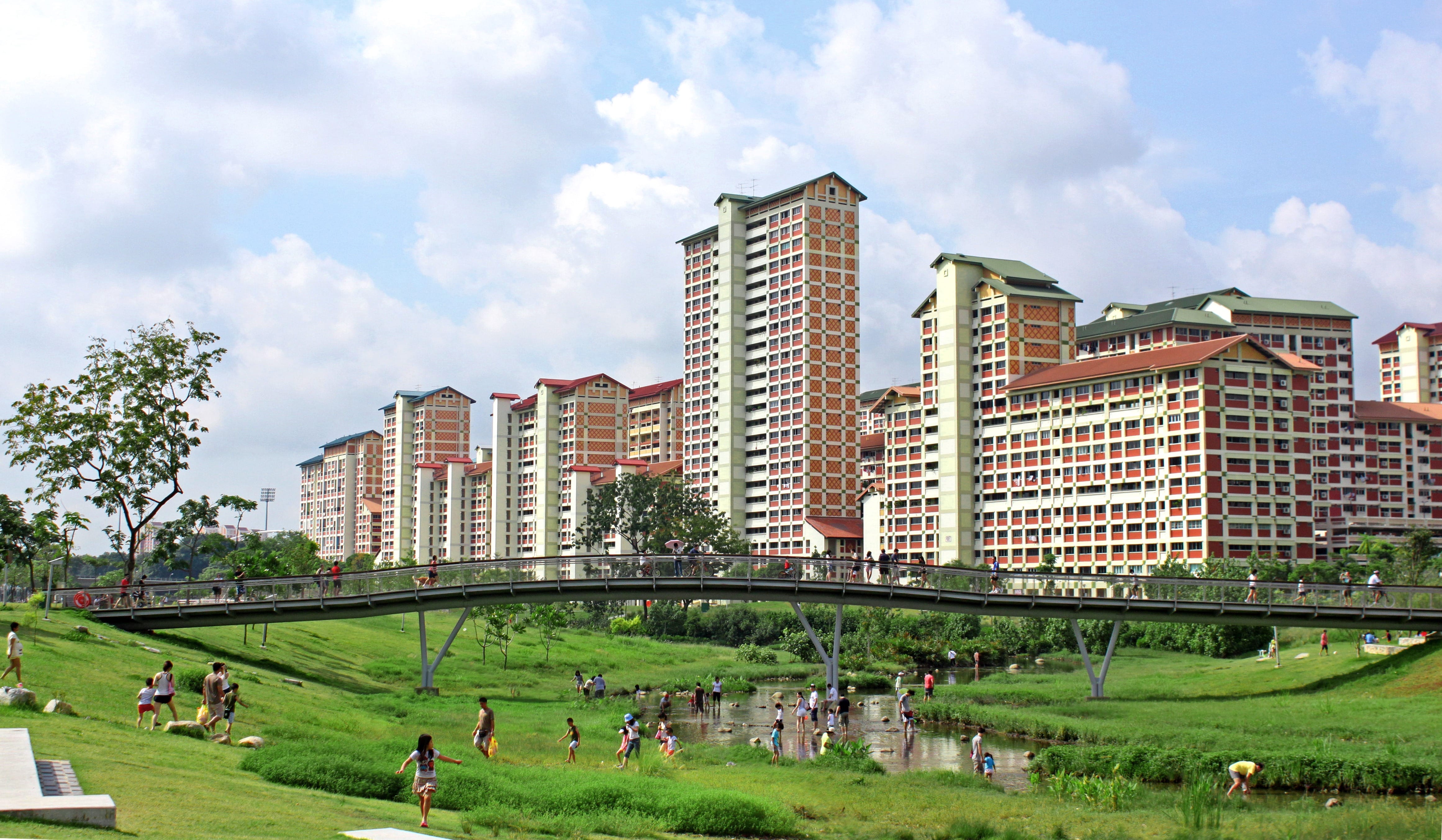
The river channel that runs through Bishan-Ang Mo Kio Park, formerly a concrete canal, was redesigned to be a flood plain, incorporating plants, natural materials such as rocks, and civil engineering techniques to soften the edges of the waterway. (Wirbel1980 (CC BY-SA 3.0) / Wikimedia Commons)
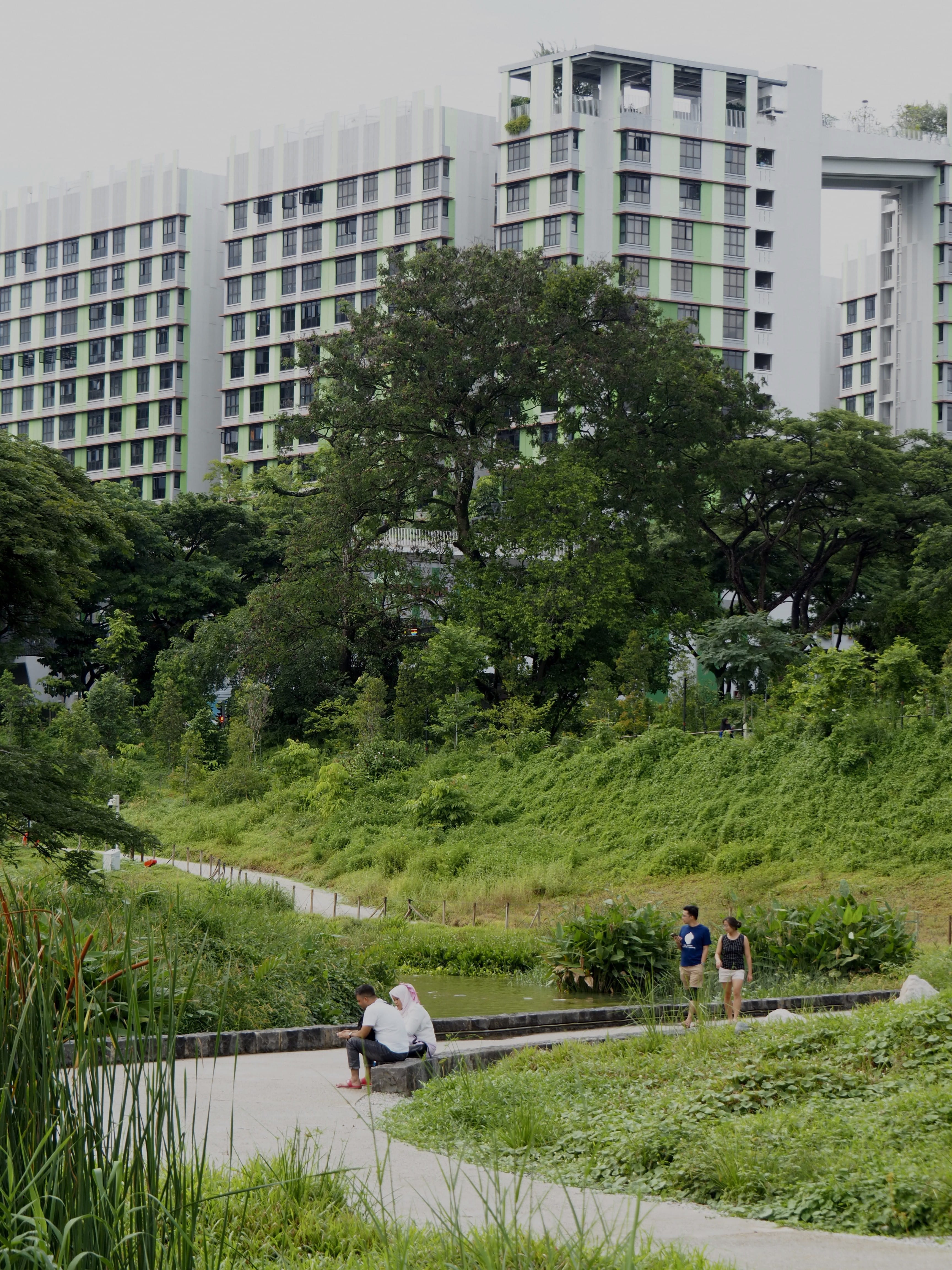
Bidadari Park's blue and green spaces not only provide areas for communal recreation and habitats for wildlife but also help absorb excess water in times of flooding. (Ng Sze Xuan)
Deeper Science and Effective Governance for Climate Policy
Beyond aspirations and rhetoric, we need to develop the science behind regenerative thinking. The interactions between different elements of human interaction, nature, ecosystem services and resource chains, and the co-benefits generated by these interactions, need to be better understood before they are applied. Deeper transdisciplinary research with the involvement of academics, industry and policymakers is essential to contribute to such understanding.
The transition towards regenerative cities is not primarily a technical challenge, it is also a governance one. Delivering co-benefits at scale requires policy integration across climate, planning, health, housing and infrastructure dimensions. It also demands new decision-making tools that prioritise long-term system performance over short-term project optimisation.
Redefining Urban Climate Success
As climate risks intensify, cities can no longer afford fragmented solutions. Climate resilience and economic competitiveness increasingly depend on the ability of cities to create value across multiple systems, rather than optimising single variables in isolation.
Regenerative design offers a policy-relevant framework that aligns climate mitigation and adaptation with ecosystem restoration, liveability and resource efficiency. It enables cities to do more with every intervention, maximising shared value rather than managing competing demands.
The question facing urban leaders is no longer whether regenerative approaches are desirable, but whether climate action can succeed without them.