
Chapter 2: Strategies for Regenerative Cities
The framework offers three strategies for the built environment that can be adapted to place-specific implementations. Learn more about these strategies here.
Last updated on 13 June 2026
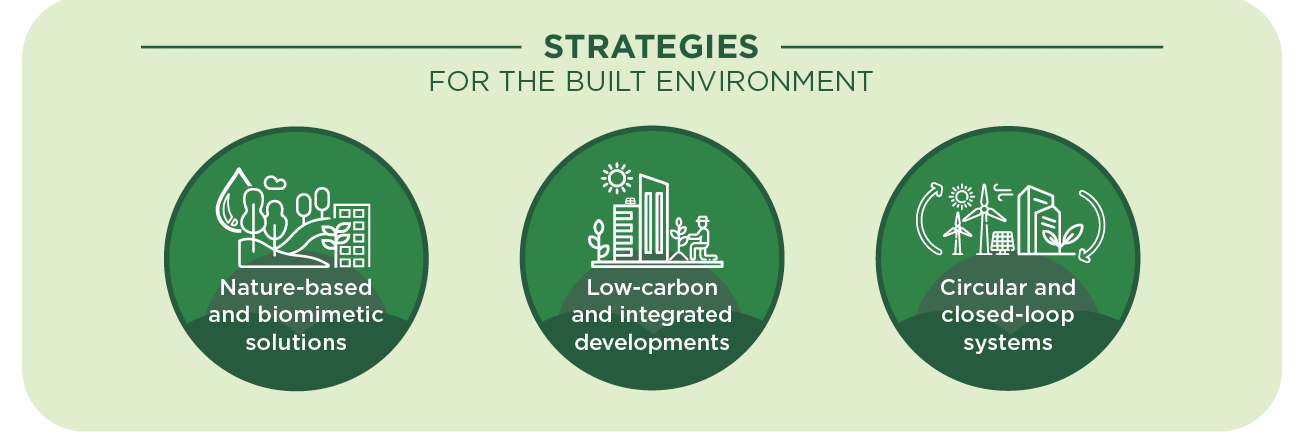
The three strategies for regenerative cities. (Centre for Liveable Cities)
Strategies that work well in a high-density Asian metropolis might not work to the same effect in a post-industrial European city.
With the aim to set out broader directions for place-specific actions, the Framework introduces three key strategies: nature-based and biomimetic solutions, low-carbon and integrated developments, and circular and closed-loop systems.
❶ Adopt Nature-Based and Biomimetic Solutions
While nature is vital to sustaining the well-being of a city, only 37% of the most populous cities globally have a dedicated strategy to nature or biodiversity preservation. (opens in new tab)
To harness the co-benefits of nature-based and biomimetic solutions, policymakers and city planners must move beyond conventional thinking about the built environment to consider how it can support ecological health. Cities can designate space for more green-blue-grey infrastructure—this ranges from soft ecological engineering, such as enhancing mangrove habitats for coastal protection, to ecosystem-based adaptation that involves hybridised solutions, such as creating rain gardens and green corridors that capture and retain stormwater.
When deployed district-wide, nature-based and biomimetic solutions alleviate heat, manage flooding and water runoff, strengthen connectivity for biodiversity, and reduce vulnerability to climate risks. They can also create more equitable cities by securing socio-economic co-benefits, benefiting the most vulnerable. Such solutions may not be just environmental imperatives, but social ones that embed resilience where it is needed most.
Case Study: Te Auaunga in Auckland, New Zealand
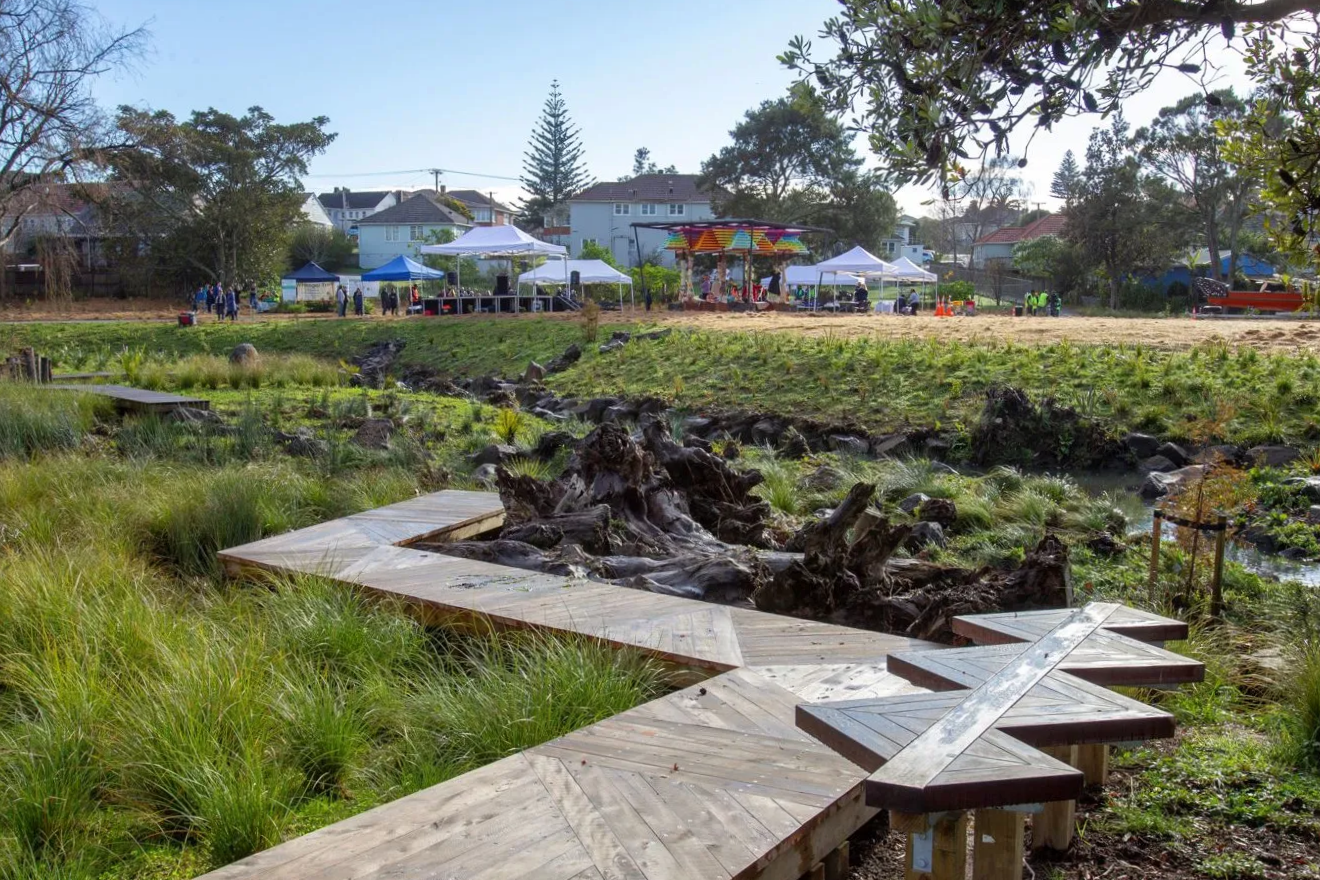
The restoration of Te Auaunga added community amenities such as shared pathways and pedestrian bridges, community orchards, an outdoor classroom and natural play areas. (Auckland Council)
The restoration of Te Auaunga (Oakley Creek) from a concrete channel into a naturalised stream and wetland unlocked social, environmental and economic co-benefits, including improved water quality, 80,000 m2 of reclaimed land for public use and flood protection for nearly 200 homes. The restoration also added shared pathways, pedestrian bridges, community orchards, an outdoor classroom and natural play areas.
The project was underpinned by Auckland's Water Strategy 2022–2050, (opens in new tab) which mandates that all new and replaced infrastructure be nature‑based, resilient, and low‑ or zero‑emission.
An Island that Captures Hearts for Generations: Sentosa Redefines Regenerative Design Practices
Learn how Sentosa's journey towards regenerative design weaves together exceptional guest experiences, community partnerships and environmental stewardship to create an enduring destination. [By: Thien Kwee Eng, Chief Executive Officer, Sentosa Development Corporation, Singapore]
Nature-Based Solutions in London, United Kingdom
Learn how London has integrated nature into highways and streets under city-wide mandates to improve flood resilience and air quality. [By: Shirley Rodrigues, London's former Deputy for Environment and Energy]
Nature-Based Solutions in Freetown, Sierra Leone
In Freetown, where temperatures can be as much as 6°C higher in informal settlements than surrounding regions, learn how green corridors provide shade and cool vulnerable communities. [By: Yvonne Aki-Sawyerr OBE, Mayor of Freetown]
❷ Create Low-Carbon and Integrated Developments
As cities race to accommodate growing urban populations, (opens in new tab) planning struggles to keep pace, giving rise to urban sprawl, at the expense of liveability and the environment. The alternative lies in compactness as denser urban forms inherently produce lower emissions.
Integrated developments reimagine urban functions as interconnected parts of a living system, maximising co-benefits across functions, creating productive interdependence through proximity, and lowering carbon emissions.
At the building level, mixed-use buildings tap on shared, circular systems and multi-purpose spaces to ensure energy and land efficiency, enhancing liveability by improving accessibility.
At the district scale, mixed-use and well-integrated districts offer high connectivity and access to all essential amenities. By prioritising sustainable mobility networks and transit-oriented developments, the carbon footprint from commuting is kept low, while compact and integrated districts minimise land use, freeing up space for social or green infrastructure.
Case Study: Our Tampines Hub in Singapore
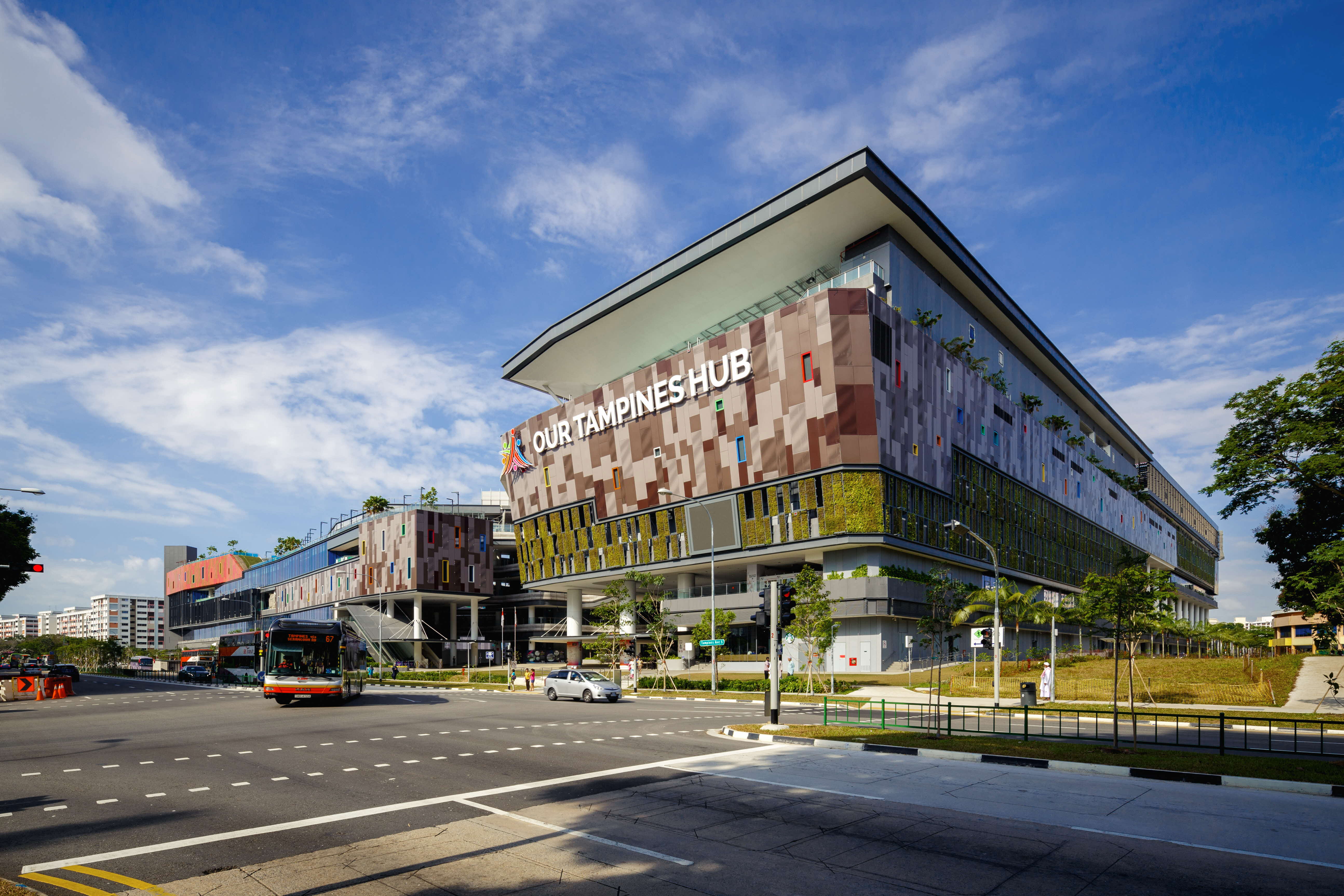
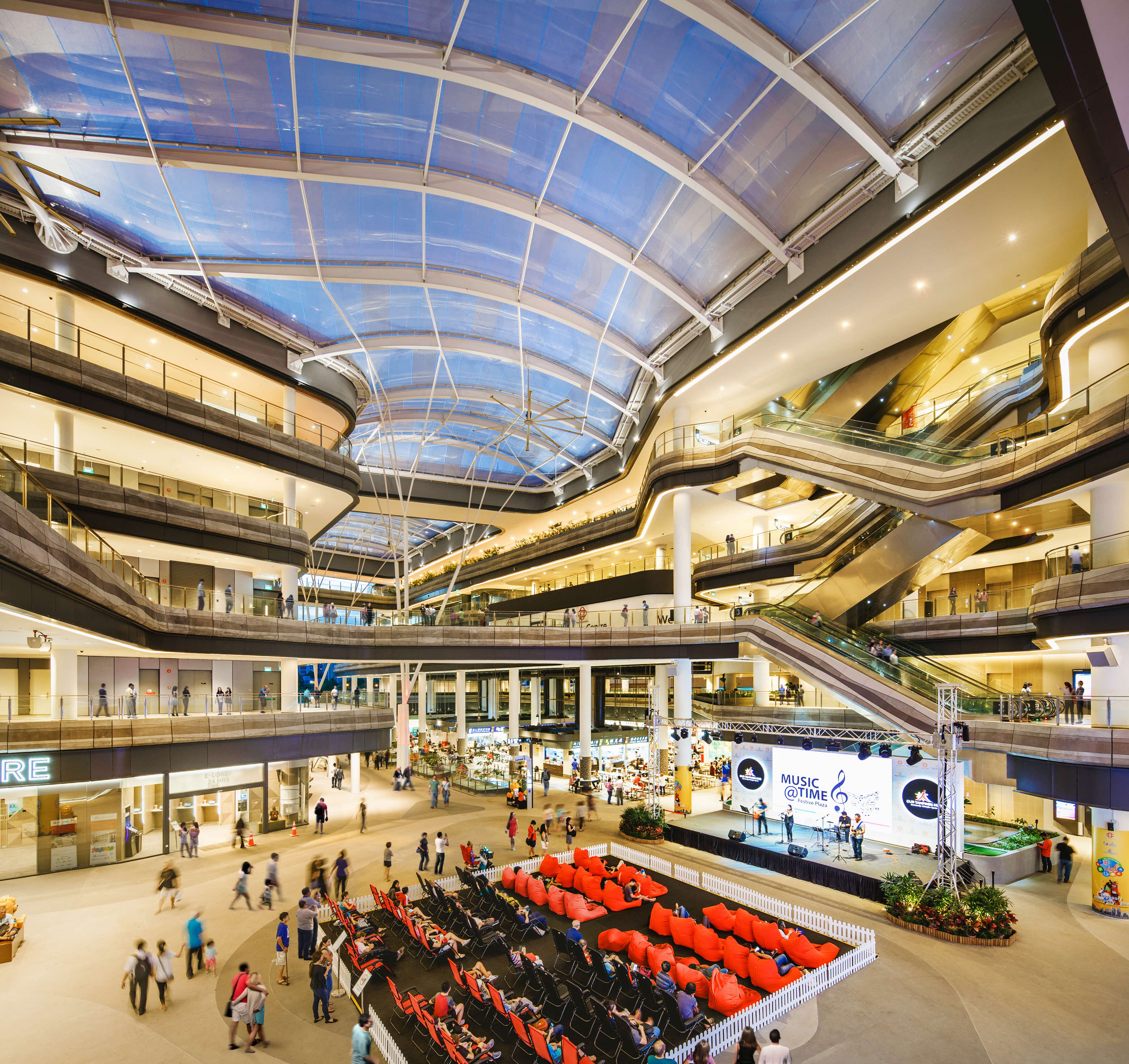
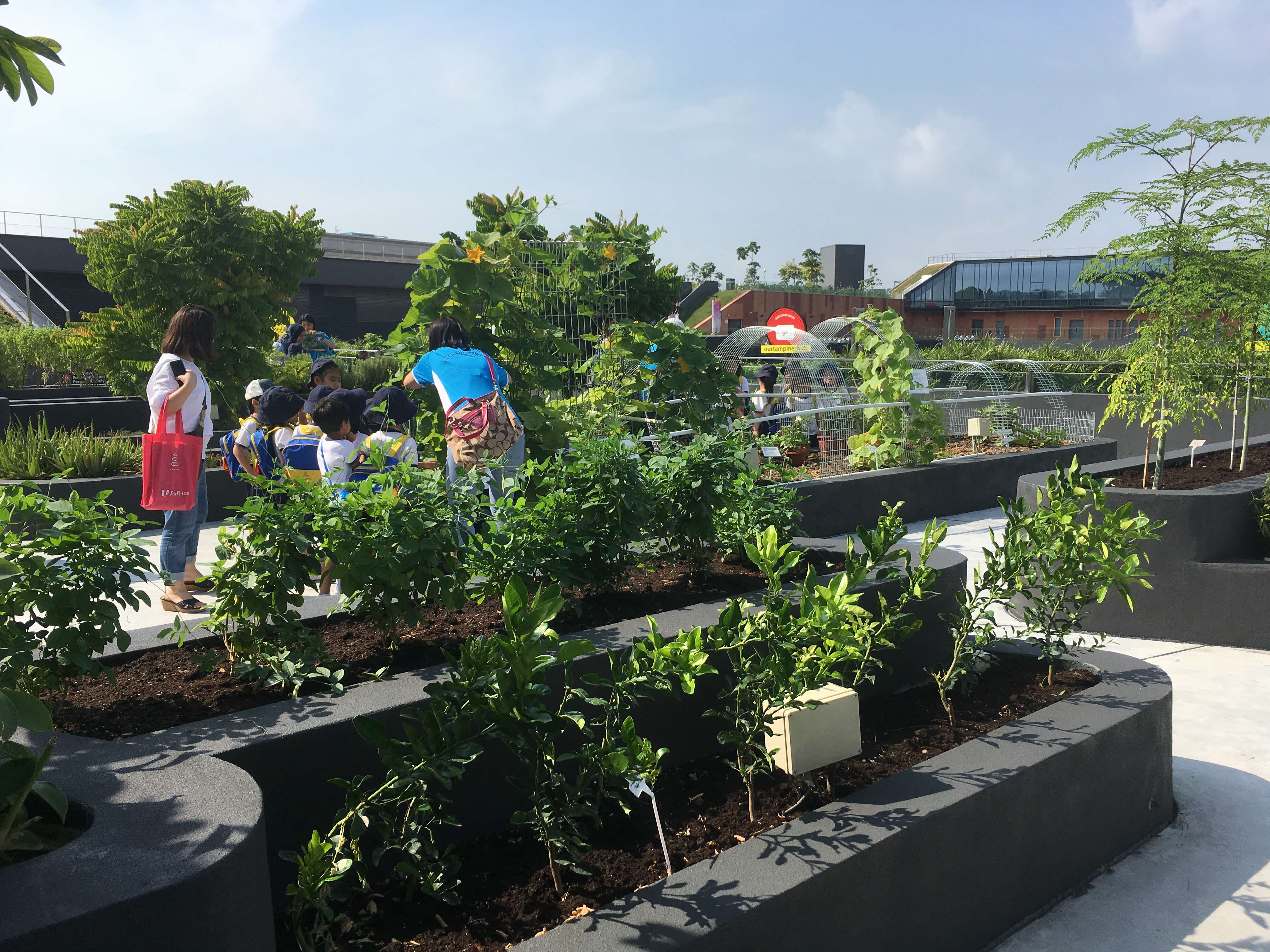
Our Tampines Hub (OTH) is an example of an integrated, community-centred development under the People's Association. It co-locates a library, health centre, football pitch, theatre, community garden and an indoor sports hall that doubles as an auditorium. OTH brings together multiple government agencies, from the National Library Board to SportSG and the National Environment Agency, to offer a wide range of services, programmes and facilities under one roof. It also champions sustainability through eco-smart design, energy-efficient systems and community-driven green initiatives.
Regenerative Design: Delivering Co-Benefits through Integrated Development
Regenerative design challenges cities to give back more than they take—to restore ecosystems, enrich biodiversity and create places where human and natural systems thrive together. Learn how projects such as One Triton Square and Shanghai's Urban Drainage Plan point the way forward. [By: Sowmya Parthasarathy, Fellow, Urban Design and Masterplanning, Arup]
❸ Establish Circular and Closed-Loop Systems
Globally, only 6.9% of materials are recovered and returned to the economy. (opens in new tab) Circular and closed-loop systems activate the untapped potential of resources, transforming linear consumption into restorative flows and reducing extraction demand.
Buildings can be converted into resource banks rather than viewed as resource consumers. Planners and designers can adopt techniques of design for disassembly to allow future adaptive reuse and flexibility. In fact, cities like New York City and Boston are already considering the conversion of underused office buildings into residential use to alleviate the housing crisis.
At the municipal scale, resources can be coordinated and catalogued, systematically matching waste streams with material inputs to reduce the demand for new resources. When applied across urban systems, these synergies enable circularity—waste from one industry can become inputs for another, as seen in some cities which harness the nexus of food, energy and water to optimise resource use.
.jpg)
.jpg)
.jpg)
Case Study: Quay Quarter Tower in Sydney, Australia
Read about how Sydney's Quay Quarter Tower transformed an underused 50-year-old high-rise into a regenerative asset—retaining over 65% of the original structure and saving approximately 12,000 metric tonnes of embodied carbon. [By: Fred Holt and Dan Cruddace, Partners, 3XN Australia]
Adaptive Reuse Plus Densification: A Carbon-Aligned Growth Model for Cities
Explore an alternative development model, adaptive reuse plus densification (AR+Df), which offers a pathway for growth that could be structurally, economically and climatically aligned. [By: Wong Mun Summ, Founding Director, WOHA Architects, and Professor in Practice, Department of Architecture (DoA), National University of Singapore (NUS); Nirmal Kishnani, Associate Professor, DoA, NUS; and Alakesh Dutta, Practitioner and Researcher, DoA, NUS]
Leveraging the Circular Economy Potential of Existing and Future Built Assets
The construction industry is a major contributor to greenhouse gas emissions, yet current practices rarely fully leverage the circular economy potential of existing and future built assets. Learn how computational technologies can operationalise circular economy strategies at the district scale to realise closed-loop systems. [By: Rudi Stouffs, Associate Professor and Assistant Dean (Research), DoA, NUS]
Nature-based and biomimetic solutions, low-carbon and integrated developments, and circular and closed-loop systems enable the city to advance beyond sustainability. The city becomes more than the sum of its parts and a living ecosystem that generates co-benefits for people and nature.
Download Chapter 2 PDF [PDF, 2.23 MB] (opens in new tab)
Download Full Publication PDF [PDF, 29.60 MB] (opens in new tab)