
Chapter 2: Outcomes of Regenerative Cities
Liveability, resilience and resource optimisation are interdependent outcomes of the Regenerative City. Learn more about these outcomes here.
Last updated on 13 June 2026
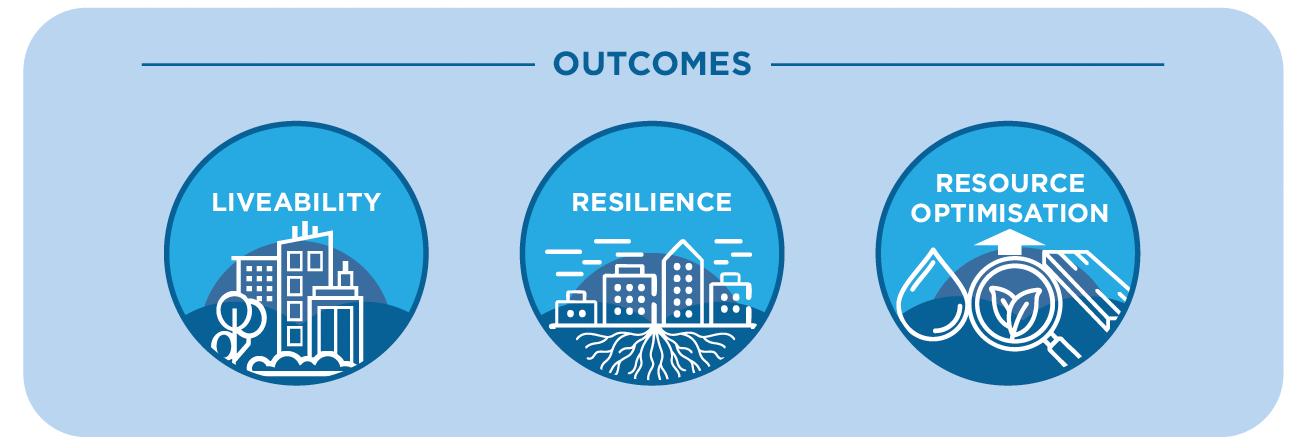
Outcomes of regenerative cities. (Centre for Liveable Cities)
Liveability, resilience and resource optimisation are dimensions of the same ambition—progress in one domain creates the conditions for progress in another, so co-benefits can be realised across all dimensions.
Liveability
A measure of urban condition, liveability reflects the city’s ability to balance and achieve a competitive economy, a high quality of life and a sustainable environment.
A regenerative city has a competitive economy that offers quality jobs for all, and is agile and adaptive. It achieves a high quality of life where residents are safe and access to transport, food, housing and healthcare is secured. It strives to harness socio-ecological co-benefits, skilfully balancing the demands of development with ecosystem health, sustaining the diversity, density and connectivity of the built and natural environments.
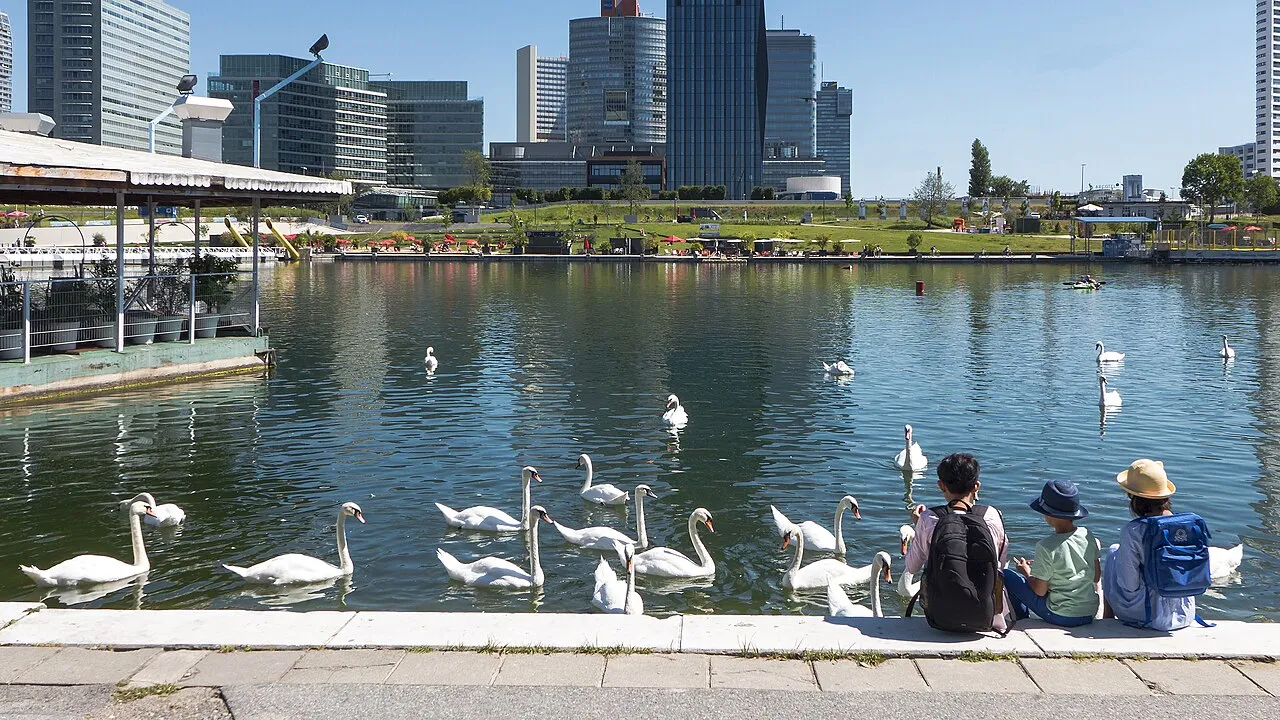
Vienna's New Danube not only provides habitats for wildlife and green-blue spaces for residents, but it also generates hydroelectric power that is used to power household needs. (Gugerell (CC BY-SA 1.0) / Wikimedia Commons)
The Centre for Liveable Cities' (CLC) Refreshed Liveability Framework
The CLC first introduced the Liveability Framework in 2014. With a recent refresh of the Framework in 2024, the Centre published "Building Liveable and Sustainable Cities: A Framework for the Future", which takes into account the challenges facing cities today and in the future. The refreshed edition of the Framework proposes an updated understanding of liveability outcomes for cities and the urban systems that support them.
Resilience
A measure of capacity, resilience reflects the ability of a city to prepare for, absorb, recover from and adapt to adverse events.
A regenerative city builds resilience across climate, social, environmental and resource dimensions. It pursues mitigation and adaptation to address climate risks, cultivates collaborative ecosystems, establishes physical and social infrastructures that empower people to bounce back, and nurtures natural systems to remain diverse and adaptive. In a regenerative city, resilience is not merely a defensive strategy but also a pathway for unlocking co-benefits for the community and local ecosystems.

The Tampa Bay Estuary Program in Florida, the United States, engages the community in restoring natural habitats in the bay, which have been damaged by pollution and rising sea levels. (Joe Whalen / Unsplash)
Building Community Resilience
There can be no resilient city without a resilient community. This playbook documents the CLC's research on strengthening and measuring community resilience through co-creation. It showcases a multi-stakeholder framework that nurtures citizen-initiated projects that does not only address local challenges but also support broader national efforts.
Resource Optimisation
A measure of process, resource optimisation shows the degree to which material, food, carbon, water and land are used and kept in continuous circulation to minimise extraction, waste and environmental degradation.
The regenerative city strives for efficiency, operating as an integrated metabolic system, where the lifespans of resources in circulation are prolonged, and more is created with less. It aligns urban development with global carbon and ecological limits, and champions land-sharing through compact, mixed-use and low-carbon developments to minimise land-take and resource use. Ultimately, a regenerative city stewards and responsibly uses its resources to ensure long-term viability.
Singapore's Water Story from the Regenerative Lens
Since independence, Singapore's water supply has been an existential issue. Learn how PUB closes the water loop with NEWater, among other inititatives, and transformed Singapore’s water supply into one that is sustainable and resilient. [By: Ong Tze-Ch'in, Chief Executive Officer, PUB, Singapore's National Water Agency]
Water: From Scarce Resource to National Asset (Revised)
A sustainable and resilient water supply is critical to ensure Singapore's liveability and growth. First published by CLC in 2012, the revised edition of this publication captures how Singapore created a well-integrated water management system and closed the "water loop" to achieve a sustainable water supply.
The regenerative city is iterative, dynamic and place-based. These three outcomes of the regenerative city—liveability, resilience and resource optimisation—are interdependent. They are not separate end states to be achieved in sequence, but are cultivated concurrently.
Download Chapter 2 PDF [PDF, 2.23 MB] (opens in new tab)
Download Full Publication PDF [PDF, 29.60 MB] (opens in new tab)