
Chapter 3: Developing a Regenerative City Self-Assessment Tool
Learn more about the Regenerative City Self-Assessment Tool (RCSAT).
Last updated on 12 June 2026
Developing a Regenerative City Self-Assessment Tool
Regenerative outcomes—liveability, resilience and resource optimisation—and capacity—density, diversity and connectivity—require collective, coordinated action and must be operationalised as part of urban development processes. Too often, they are pursued as separate goals under different agencies, with differing metrics and funding. This calls for integrated planning and design of urban interventions to maximise co-benefits and thrive in resource-constrained environments.
The Regenerative City Self-Assessment Tool (RCSAT) draws from leading assessment tools and metrics, like the Singapore Index on Cities' Biodiversity, and industry reporting standards. Read a case study by the National Parks Board and an op-ed about the City Developments Limited MicroForest at City Square Mall to find out more.
Case Study: The Singapore Index on Cities' Biodiversity
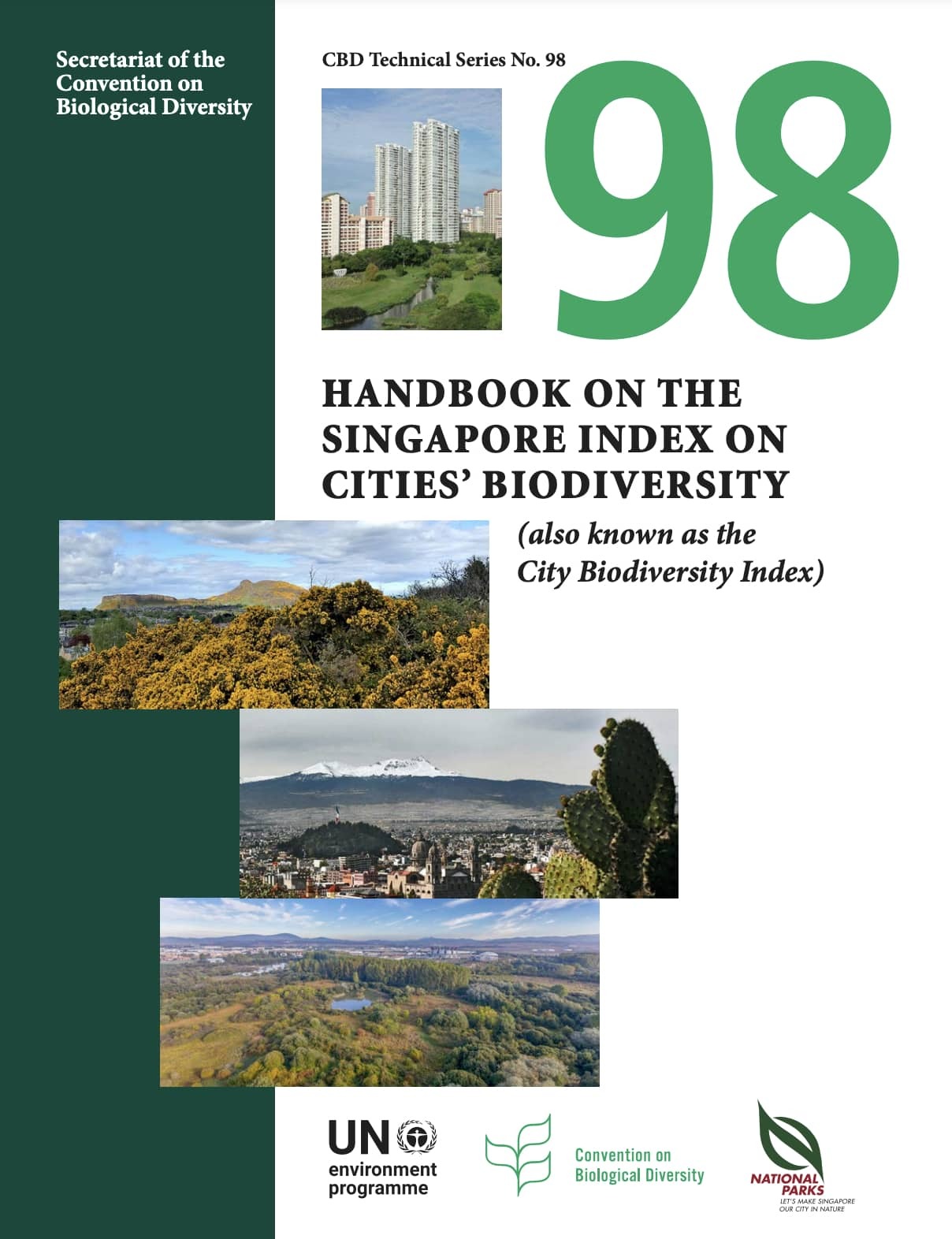
Handbook on the Singapore Index on Cities' Biodiversity (National Parks Board)
Developed by Singapore in collaboration with the Secretariat of the Convention on Biological Diversity and the Global Partnership for Local and Subnational Action for Biodiversity, the Singapore Index on Cities' Biodiversity (opens in new tab) (SI, also known as the City Biodiversity Index) provides cities with a robust framework to assess their nature conservation efforts.
Through workshops held with international experts, the SI was designed as a self-assessment tool with two parts: the profile of the city as well as 28 indicators spanning the 3 core components on native biodiversity, ecosystem services and governance. The SI helps cities demonstrate that urban nature can help to achieve co-beneficial outcomes needed in a regenerative city. (By National Parks Board)
A Regenerative Tropical Microforest in the Built Environment: A Pathway to Urban Biodiversity and Ecosystem Restoration at City Square Mall
Regenerative tropical microforests (RTMFs) have emerged as a nature-based solution that integrates dense, biodiverse forest systems into highly urbanised environments. Discover more about how the City Developments Limited (CDL) MicroForest at City Square Mall in Singapore serves as a living laboratory to assess how regenerative forests can deliver both environmental and social co-benefits. [By: Esther An, Chief Sustainability Officer, City Developments Limited; Adrian Loo, Associate Professor, Deputy Director, Centre for Nature-Based Climate Solutions, National University of Singapore (NUS); and Veera Sekaran, Professor, Engineered Nature-Based Solutions, NUS President's Office]
What the RCSAT Does
The RCSAT has three key functions that make regenerative outcomes and capacities visible, measurable and actionable.
The RCSAT creates a common language across sectors. By offering unified indicators across key regenerative outcomes, the tool bridges fragmented reporting and builds shared understanding of regenerative performance and capacity. This drives holistic assessment, decision-making and a common goal for diverse stakeholders to prioritise actions.
The RCSAT enables longitudinal tracking. Over time, outcome indicators reveal whether regenerative interventions are really achieving their intended effects and how long meaningful change takes to emerge. Meanwhile, capacity indicators can reflect the city's ability to facilitate and sustain regenerative processes. Longitudinal data offers cities an evidence-based feedback loop to iterate and evolve, justifying long-term regenerative investments.
The RCSAT supports better decisions, informing what should happen next. The RCSAT can be accompanied by simulation, modelling, and analysis to assess interventions before implementation. This supports options analysis, stress-test interventions and resource allocation, while expanding cost-benefit analysis to make co-benefits legible and comparable. This operationalises integrated decision-making for maximising regenerative returns.
Who the RCSAT Is For
The RCSAT is primarily targeted at city leaders, urban planners and policy makers making decisions at the district scale. The RCSAT enables a holistic view by aggregating key indicators across urban functions.
The tool also serves domain experts that city leaders, urban planners and policy makers work with—including urban designers, ecologists, civil engineers, architects and social behavioural scientists—who contribute specialised insights to the whole. By bringing decision-makers and domain experts into a shared assessment framework, the RCSAT fosters a collaborative ecosystem that supports regenerative urban development.
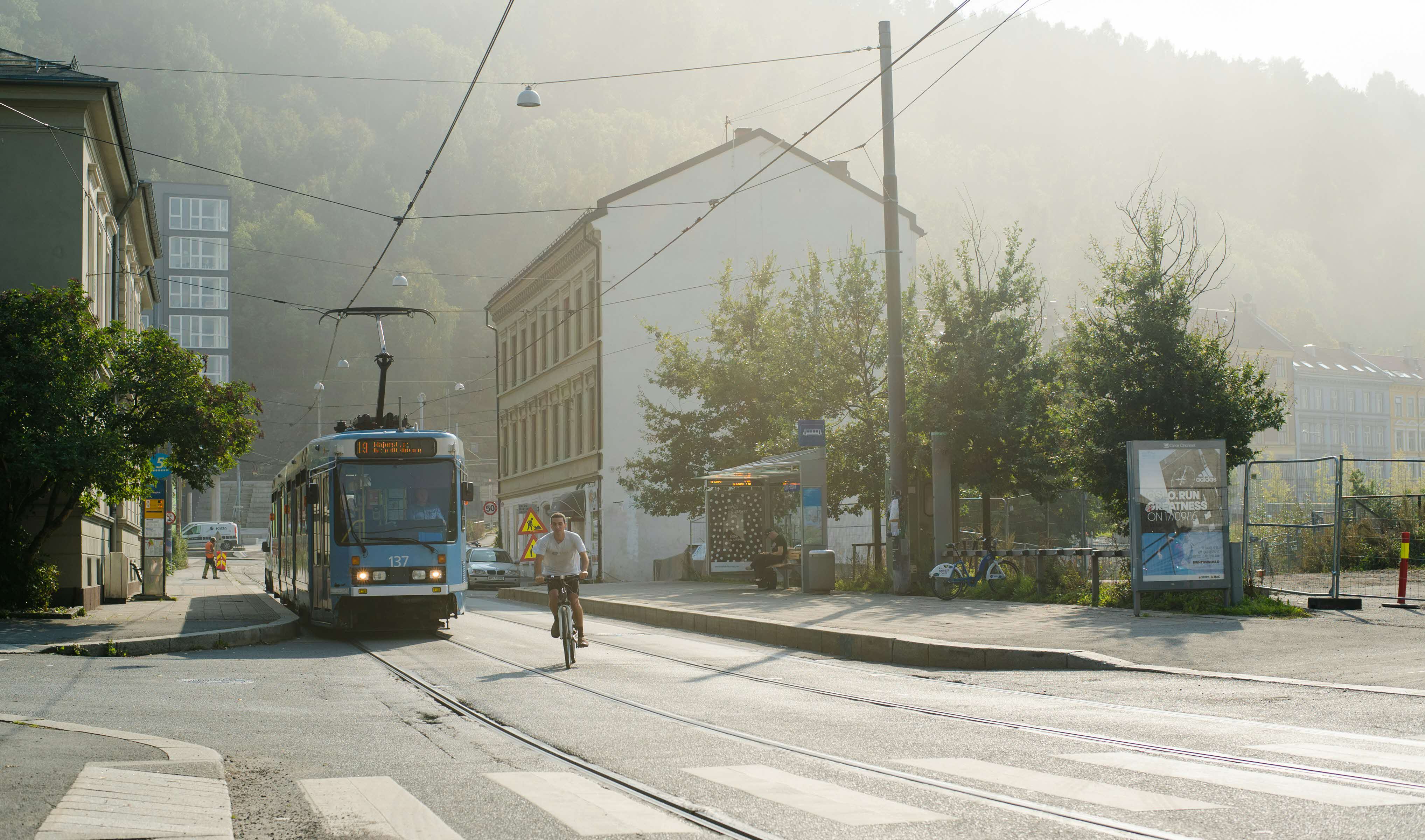
Oslo tracks the impacts of its environmental efforts with a Climate Dashboard. It measures 36 different indicators, which helps the city keep track of its progress to reach its goal of zero emissions by 2030. (Eirik Skarstein / Unsplash)
Where the RCSAT Works Best
The RCSAT is best optimised at the district scale, where urban systems intersect and co-benefits are visible and attributable. Nature-based and biomimetic solutions amplify resilience across a district in ways that building-level solutions cannot achieve. Low-carbon, integrated developments support connectivity and enable liveability when integrated at the neighbourhood level. Circular flows become viable when the loop is closed across shared infrastructure. These synergies are difficult to capture at the building scale and too diffused to attribute at the city scale. Therefore, the district is where regenerative strategies produce their most legible returns.
Download Chapter 3 PDF [PDF, 1.07 MB] (opens in new tab)
Download Full Publication PDF [PDF, 29.60 MB] (opens in new tab)