
Publication Op-eds
Driving Regenerative Urban Development through Green Mark and Innovation
14 June 2026
By Tan Chee Kiat Deputy Chief Executive Officer (Industry Development), Building and Construction Authority, Singapore
The next frontier involves transforming buildings into active carbon sinks ... Transcending individual building performance, we are championing a 'systems' approach that replaces traditional building-level silos with integrated district solutions.— Tan Chee Kiat

Singapore is committed to achieving reduction in its national emissions as part of the country's Long-Term Low-Emissions Development Strategy (LEDS) to achieve net-zero emissions around 2050. With the building sector accounting for over 20% of Singapore's total carbon emissions, the Building and Construction Authority (BCA) is spearheading the mitigation strategy to drive energy efficiency and carbon reduction of the built environment. Globally, green building rating tools are widely used by governments, organisations and cities as a policy to mitigate climate change. The BCA Green Mark (GM) scheme in Singapore is a good example.
Aligned with the United Nations (UN) Sustainable Development Goals (SDGs) and Sustainable Finance Taxonomies,1 GM is a leading green building rating tool for tropical urban areas, transcending traditional efficiency metrics to position buildings as catalysts for ecological regeneration. Since its launch, GM has seen over 230 projects attain higher standards of Super Low Energy (SLE), Zero Energy (ZE) and Positive Energy (PE).2 Over 100 projects have attained Intelligence, Health & Wellbeing, Whole of Life Carbon, Maintainability or Resilience Badges.
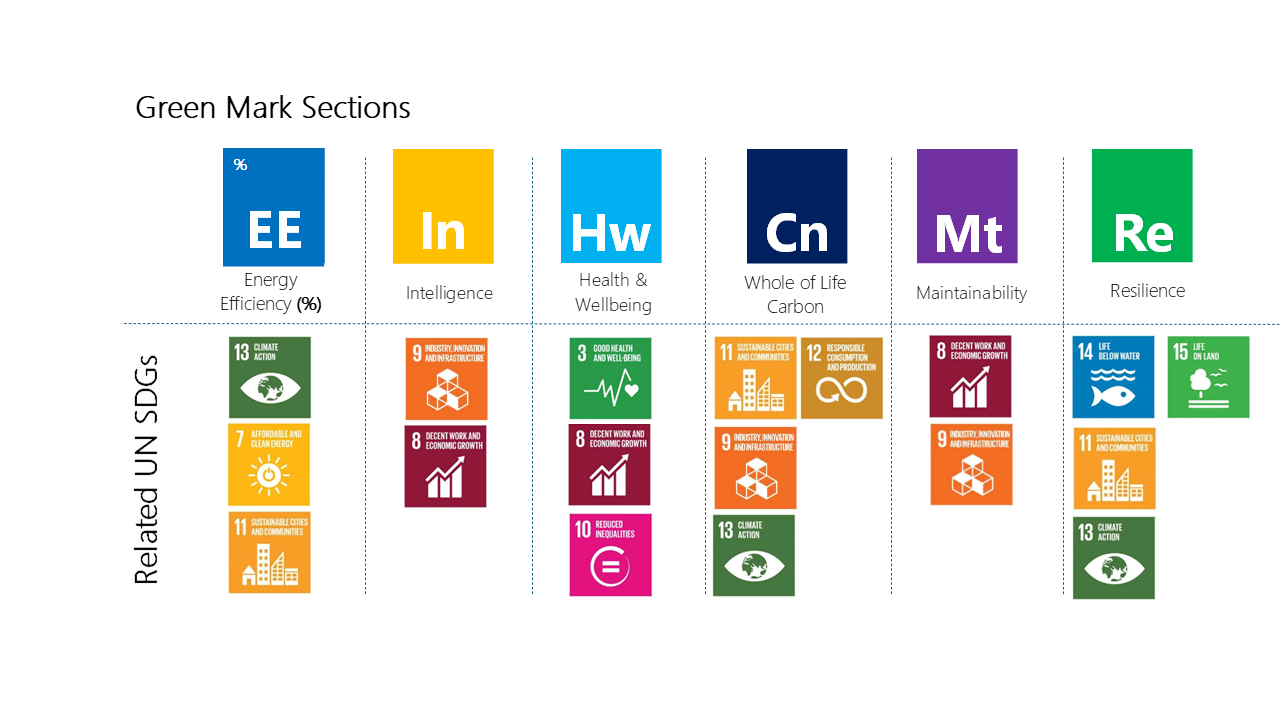
The BCA GM: 2021 badge sections mapped to the UN SDGs. The UN SDGs are the blueprint to achieve a better and more sustainable future for all, addressing climate actions, health and well-being, and resources and circularity. (Building and Construction Authority)
Specifically, the GM Whole Life Carbon and Resilience badges support Singapore's transition to a regenerative city. They create value for building owners and investors through enhanced long-term asset value, operational resilience and risk mitigation.
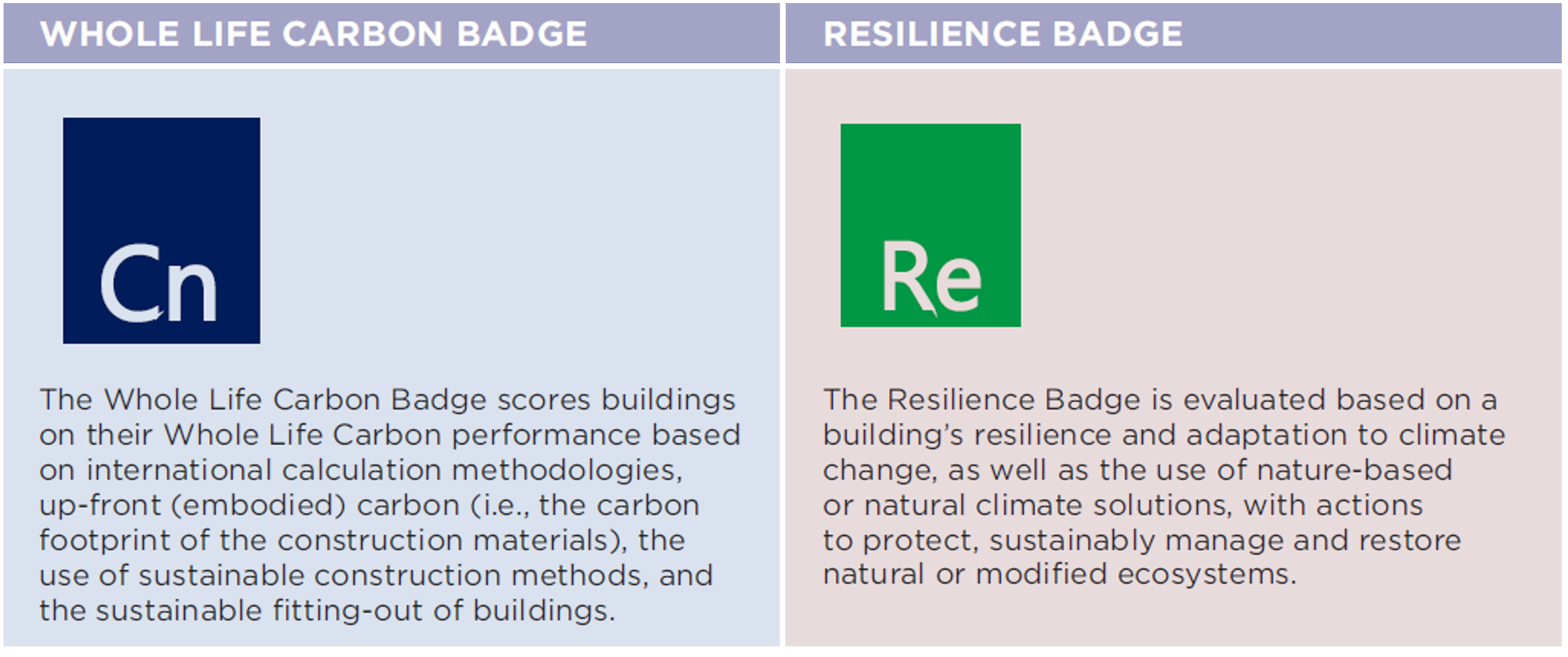
Whole Life Carbon and Resilience badges support the transition to regenerative cities. (Building and Construction Authority)
As climate change intensifies, green buildings have become more critical than ever in achieving Singapore's national climate goals. They help reduce embodied carbon through sustainable construction materials and lower operational carbon through energy-efficient designs.— Mr Chee Hong Tat, Minister for National Development, Singapore (Extracted from the Minister's speech at the Singapore Green Building Council Gala Dinner, 11 July 2025)
One Comcentre, Singapore: Carbon Neutral Development
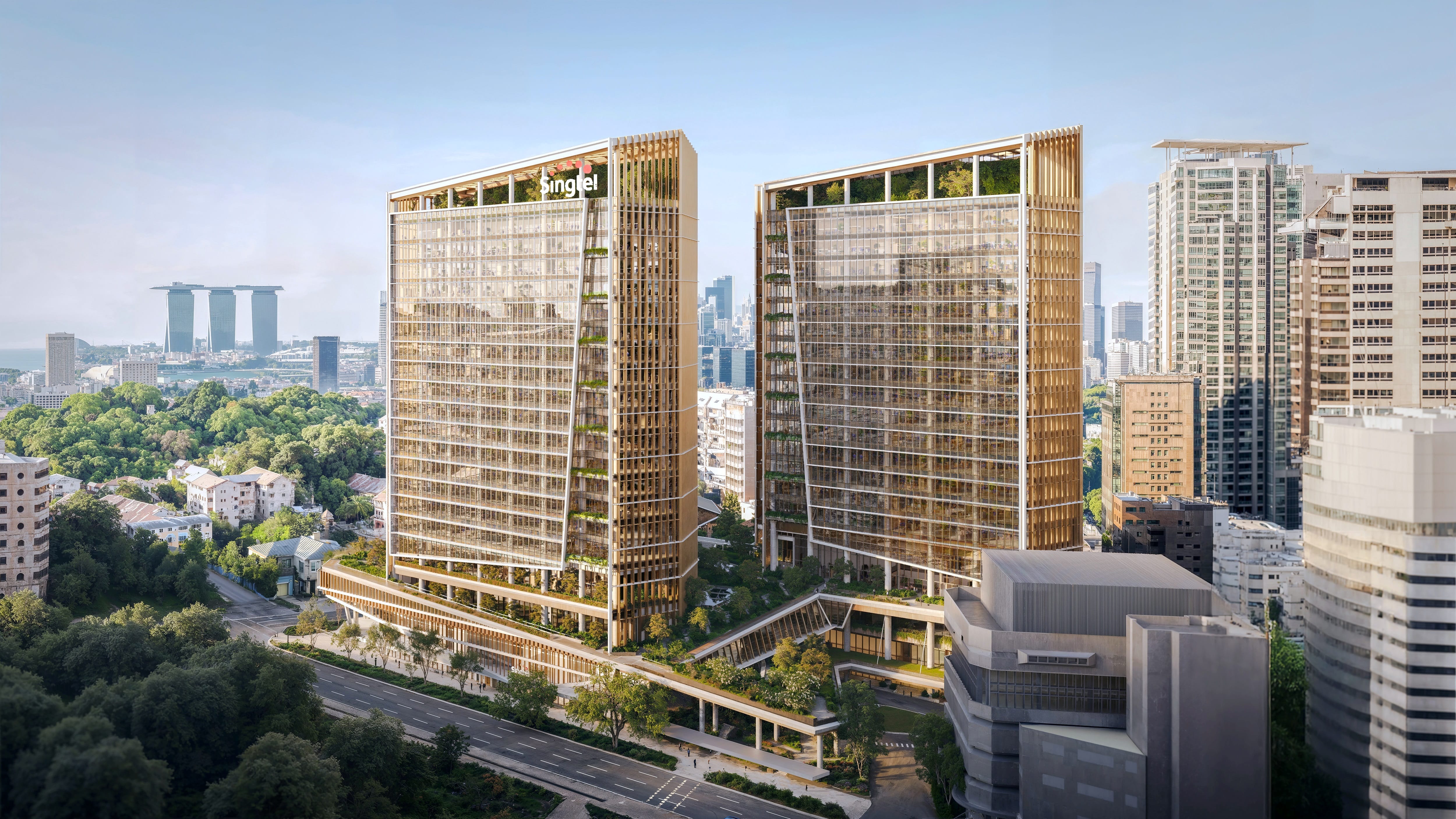
An artist's impression of One ComCentre. (Singtel, Lendlease)
The Comcentre redevelopment is a carbon-neutral project in Orchard slated for completion in 2028. Designed as a Zero Energy (ZE) development, it has achieved all five BCA GM: 2021 Sustainability Badges. Under the Whole Life Carbon Badge, the project attained a 55.4% reduction in embodied carbon, attaining a carbon intensity of 446.3 kgCO2eq/m2 by utilising carbon mineralised concrete and recycled steel. It also promotes circular construction by aiming to reuse 40% of the crushed concrete waste from the existing Comcentre structure.
Under the Resilience Badge, the development features a Green Plot Ratio of 5.9, providing 5.9 times more greenery than the site area to enhance urban biodiversity and thermal comfort. Additionally, the site is equipped with urban heat island (UHI) mitigation measures, including landscape greenery, solar PV panels, the application of cool paint on roofs and water features which comprise 57.3% of the site area.
Jurong Lake Gardens Phase 2 Development, Singapore: Living with Nature
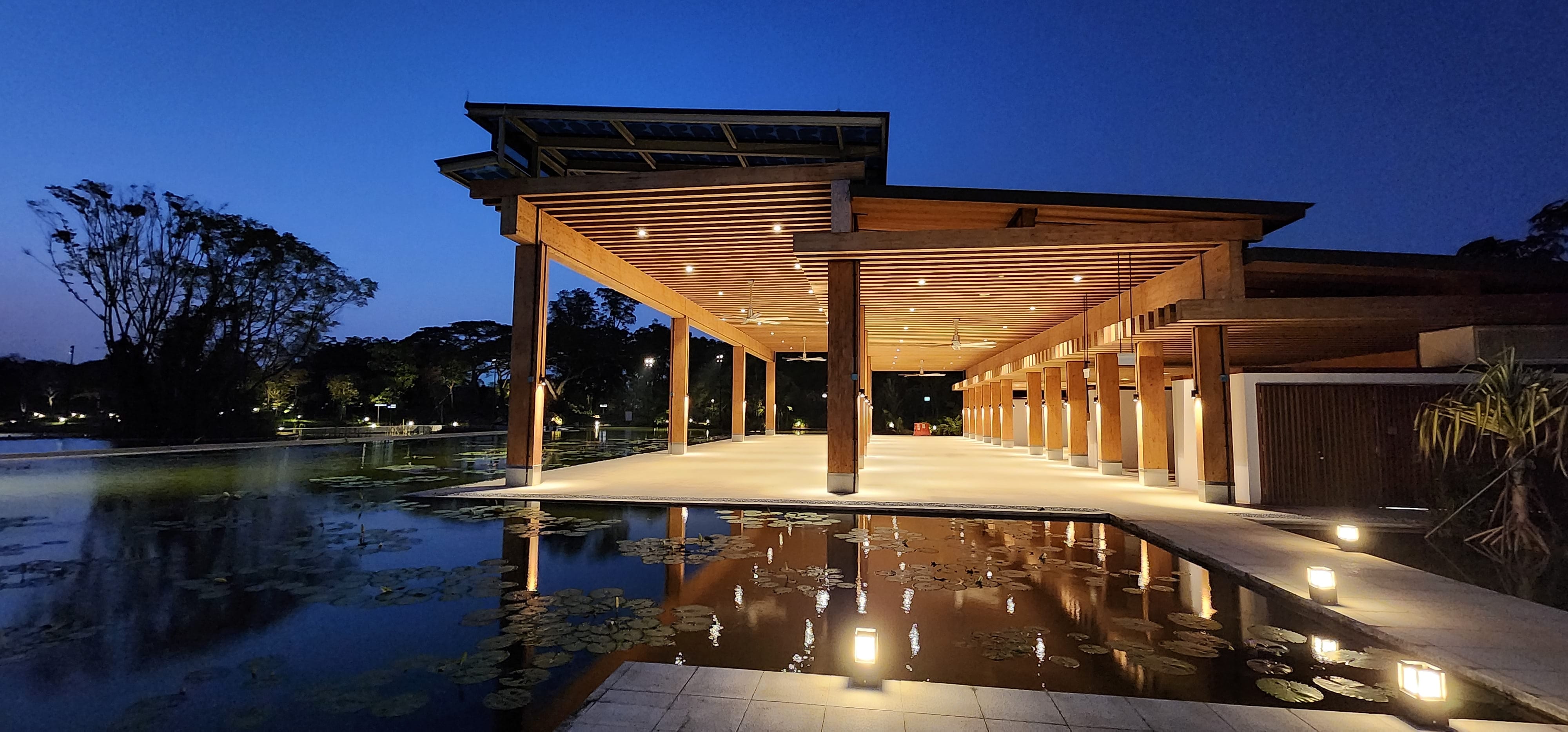
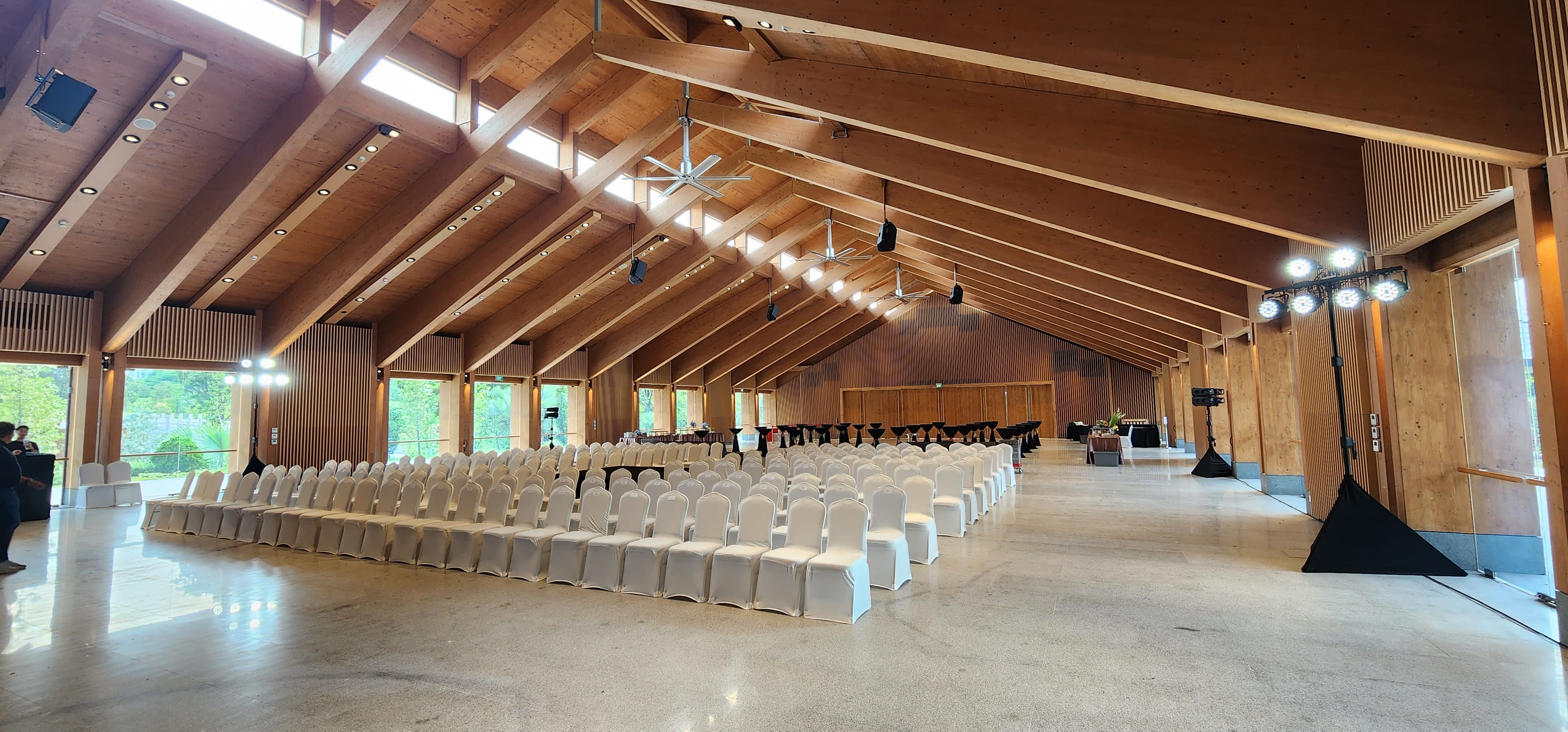
The 0.90-km2 Jurong Lake Gardens Phase 2 Development exemplifies living with nature in a dense heartland, earning the BCA Green Mark Platinum Super Low Energy (SLE) rating with badges for Whole Life Carbon, Resilience, and Health and Wellbeing. Under the Whole Life Carbon badge, the project achieved a 55.48% reduction in embodied carbon, resulting in a low carbon intensity of 445.2 kgCO2eq/m2. This was accomplished by maintaining a lean Concrete Usage Index (CUI) of 0.258 and utilising Mass Engineered Timber for nearly 70% of the construction area. Furthermore, the development champions a circular economy by incorporating NEWSand and carbon-mineralisation technology across more than 9,300 m2 of pathways. Under the Resilience Badge, the project features a Green Plot Ratio of 7.94, with extensive tree preservation and UHI mitigation measures, including ABC (Active, Beautiful, Clean) Waters features that cover 94% of the site.
Innovation as the Engine of Progress
Powered by a robust innovation ecosystem, Singapore’s building sector continues to push boundaries. Through the Green Buildings Innovation Cluster (GBIC)3 Programme, the BCA partners with the industry to co-create next-generation research and development, prototyping, and demonstration solutions. To fast-track advancements in the BE sector, the BE Accelerate to Market Programme (BEAMP)4 provides an open innovation platform to address unmet sector needs and conduct commercial trials. Additionally, the BE Innovation Hub (BEIH) at the BCA's Braddell Campus serves as a collaborative space where innovators can showcase their cutting-edge technologies, build connections and use its facilities to demonstrate new solutions in real-world settings, further establishing Singapore as a global hub for ConTech (Construction Technology).
This innovation ecosystem operates as a continuous feedback loop where emerging technologies are first identified, tested and validated through innovation platforms. Strategic funding helps these solutions bridge the gap between technical viability and commercial scalability. Once proven, solutions may be integrated into the Green Mark framework through innovation bonus points to encourage early adoption and enhance industry performance.
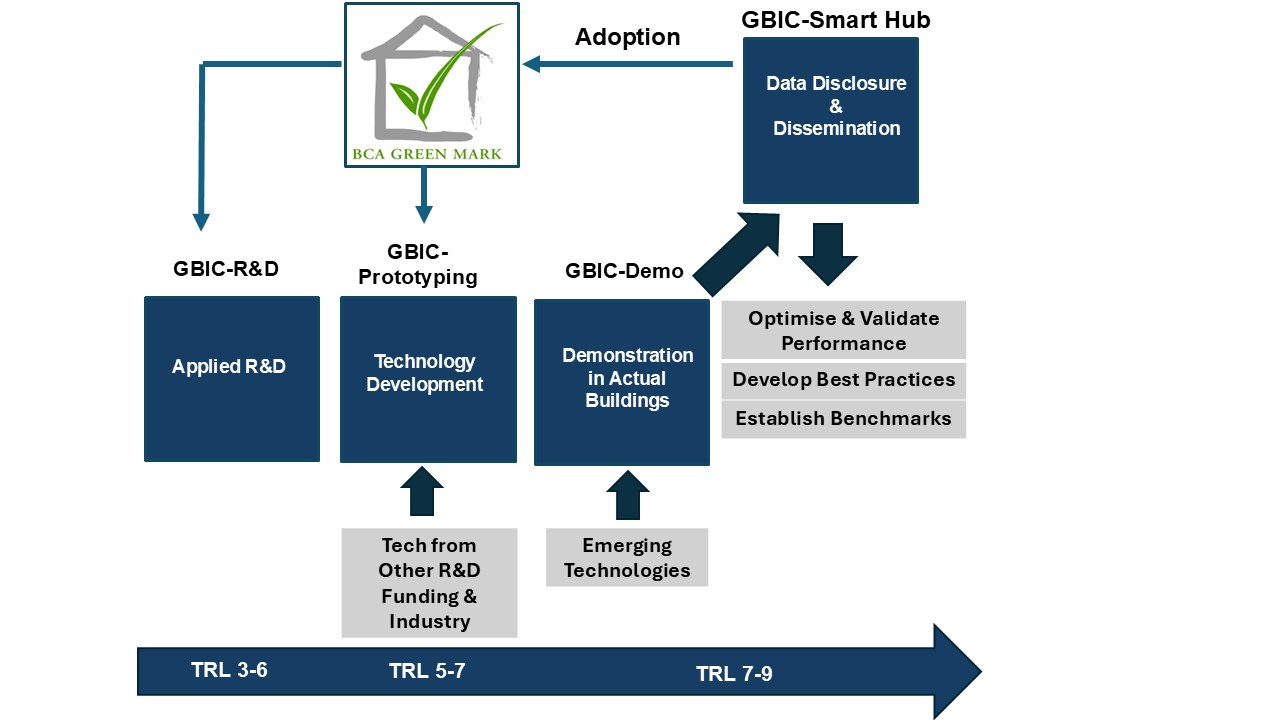
The GBIC Continuous Feedback Loop and GM Standards. This cycle shows how the GBIC Programme bridges the gap between research and development (R&D), and commercial adoption. By moving innovations through prototyping and real-world demonstrations, from technology readiness levels 3 to 9 (TRL 3–9), the programme validates performance and establishes new benchmarks, ultimately raising the baseline standards for all GM buildings. (Building and Construction Authority)
BE Decarbonisation Technology Roadmap: A Blueprint for Innovation
The BE Decarbonisation Tech Roadmap, officially rolled out on 5 February 2026, is a forward-looking blueprint identifying future-ready solutions that reduce whole life carbon emissions, preparing Singapore firms for a low-carbon future.
The roadmap was jointly developed by the BCA and Singapore Green Building Council, with support from the Agency for Science, Technology and Research, and was shaped through extensive engagement with over 100 stakeholders, including building owners, consultants, institutes of higher learning, material suppliers and technology solution providers.
The next frontier involves transforming buildings into active carbon sinks by utilising innovative feedstock materials, such as carbon mineralised aggregates and geopolymer concrete with CO2 sequestration. Transcending individual building performance, we are championing a “systems” approach that replaces traditional building-level silos with integrated district solutions. This strategy enhances energy independence and urban resilience by harnessing microgrids for peak shaving, and by fostering circular economy practices, including waste heat recovery and cross-facility material reuse.
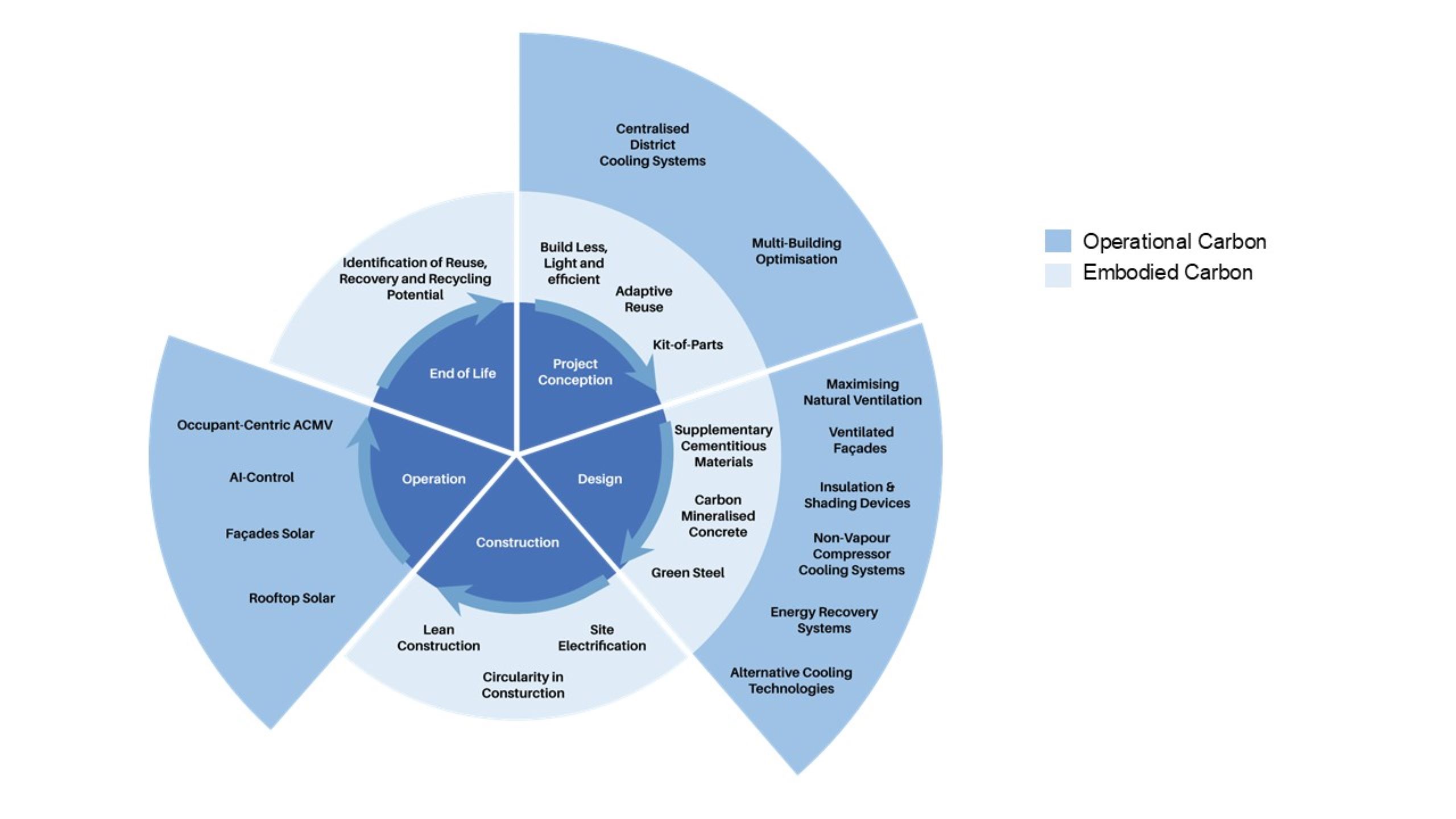
The BCA's updated reduction pathway reflects both operational carbon and embodied carbon strategies, in alignment with the whole life carbon approach. (Building and Construction Authority)
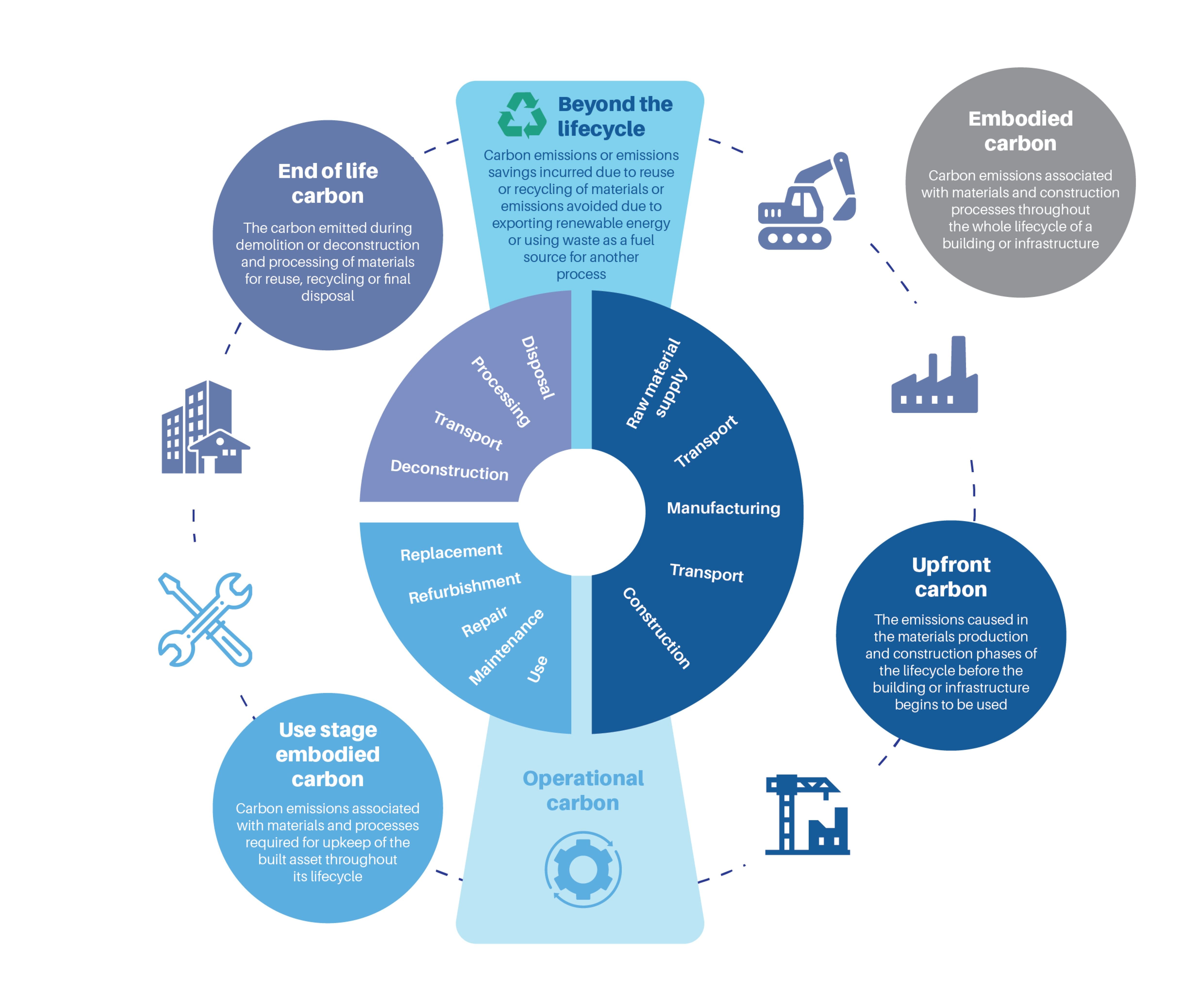
The whole life carbon approach is a comprehensive method for assessing a building's total carbon emissions across its entire life cycle, from construction through operations, to end of life. (World Green Building Council)
Call for Action: Decarbonise Our Buildings towards Net Zero in 2050
The BE Decarb Tech Roadmap is an evolving, “live” document. We invite the industry to partner with us through Deploy Now and Invest Now.
Through Deploy Now, we encourage stakeholders to immediately leverage market-ready solutions and accelerate the reduction of whole life carbon emissions in their projects.
Through Invest Now, we provide the research community with a clear directive on technology priorities to support Singapore's Research, Innovation, and Enterprise (RIE) 2030 plan. We welcome industry collaborators to pilot the next generation of technologies to raise our collective industry baseline.
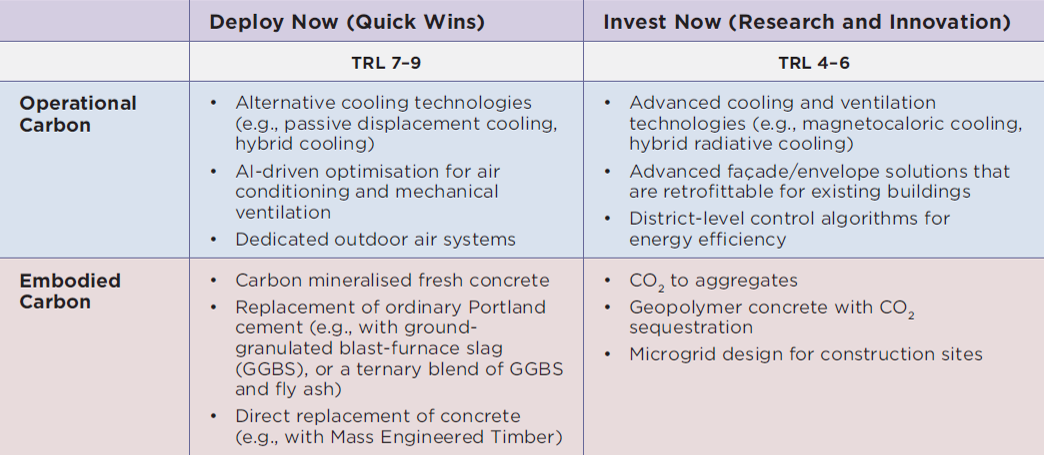
A list of key technologies under Deploy Now and Invest Now. (Building and Construction Authority)
Endnotes
[1] Sustainable Finance Taxonomies include European Union taxonomy and requirements laid out by the Taskforce on Climate-Related Financial Disclosures.
[2] A Super Low Energy (SLE) building is defined as a best-in-class performing building that achieves at least 60% energy savings based on the code of 2025, or 40% energy savings based on prevailing code; a zero-energy (ZE) building is an SLE building with all energy consumption, including plug load, supplied from renewable energy sources; a positive energy (PE) building is an SLE building with 115% of all energy consumption, including plug load, supplied from onsite renewable energy sources.
[3] The GBIC programme supports R&D and demonstration of energy-efficient solutions which are tracked under Singapore Green Building Masterplan targets.
[4] For more information, see BEAMP, “Built Environment Accelerate to Market Programme”, (opens in new tab) n.d.
General References
Building and Construction Authority, “Green Mark 2021”, (opens in new tab) last updated 25 March 2026.
Centre for Liveable Cities, “USS R&I Congress 2026: Leveraging Science and Technology for Healthy and Regenerative Cities”, 30 March 2026.
Centre for Liveable Cities and Ramboll, Creating a Regenerative City: Insights from the Centre for Liveable Cities-Ramboll Urban Lab (Singapore: Centre for Liveable Cities, 2024).
National Climate Change Secretariat, Charting Singapore's Low-Carbon and Climate Resilient Future (opens in new tab) (Singapore: National Climate Change Secretariat, Strategy Group, Prime Minister's Office, 2020).