
Publication Op-eds
Cities Can Lead the Climate Fight—But Only If They Measure, Plan and Build Regeneratively
14 June 2026
By Mark Watts Executive Director, C40 Cities
With the right frameworks, measurement tools and regenerative approaches, mayors can turn ambition into action, and action into real, measurable change.— Mark Watts

Cities are on the front lines of the climate crisis. Heatwaves, floods and extreme weather are increasingly disrupting lives and livelihoods. At the same time, city leaders hold the solutions to this existential threat: cutting emissions, reducing reliance on fossil fuels, regreening our urban centres and cutting waste while empowering residents to improve and protect the places they love.
But ambition alone is not enough; city climate action can only succeed when coupled with robust measurement tools, science-based standards, and regenerative planning frameworks that translate pledges into action and ensure progress is measurable, accountable and demonstrable to those living in the city.
C40's model is built on municipal multilateralism. Unlike most intergovernmental institutions, membership of the C40 Cities group is earned through action, not by right or fee. Our cities demonstrate climate leadership through measurable, science-based action, a willingness to collaborate, and a readiness to share their solutions and learn from one another. There are no negotiations or requirements for consensus; individual cities set the pace where they are best suited to lead and C40 helps everyone else follow them to the top together. This model has produced tangible results: cleaner air, safer streets, more green jobs, and millions of residents living in healthier, more resilient communities. To take just one example: the emissions of 72% of our cities are on a downward trend, so even as global emissions continue to grow, C40 cities' collective emissions are decreasing.
.jpg)
School street in Milan. (C40 Cities)
At the heart of this action-oriented approach are the C40 Leadership Standards and Accelerators. The Leadership Standards set a global benchmark for climate governance, requiring cities to integrate climate action into decision-making, cut emissions in line with the Paris Agreement, and report progress transparently. Many cities complement this with reporting their emissions, ensuring data is globally comparable, credible and actionable. Together, these tools allow mayors to measure what matters, track outcomes and scale solutions.
Central to effective urban climate action is regenerative planning. Cities must make the most of existing land and infrastructure, prioritise adaptive reuse, integrate circular approaches to materials, and bring nature back into urban environments. The C40 × UN-Habitat Urban Planning Accelerator leads this agenda, helping cities adopt compact, connected, mixed-use and transit-oriented development. By embedding measurable objectives into planning—such as adopting a polycentric model and prioritising density over urban sprawl—the Accelerator enables cities to cut emissions at source while delivering equitable, resilient and thriving communities.
Regenerative principles also drive C40's Clean Construction and Urban Nature Accelerators. Clean Construction reduces embodied carbon through adaptive reuse and circular construction, while Urban Nature restores green space, mitigates urban heat and enhances well-being. All of these measures can be tracked through quantifiable targets that are then transparently reported so that leaders can be held to account on their promises. For example, we can see that three quarters of cities that publicly committed to ensuring that 70% of their population has access to green or blue space within a 15-minute walk have now done so. Together, these programs demonstrate that climate action can be regenerative, equitable and economically transformative.
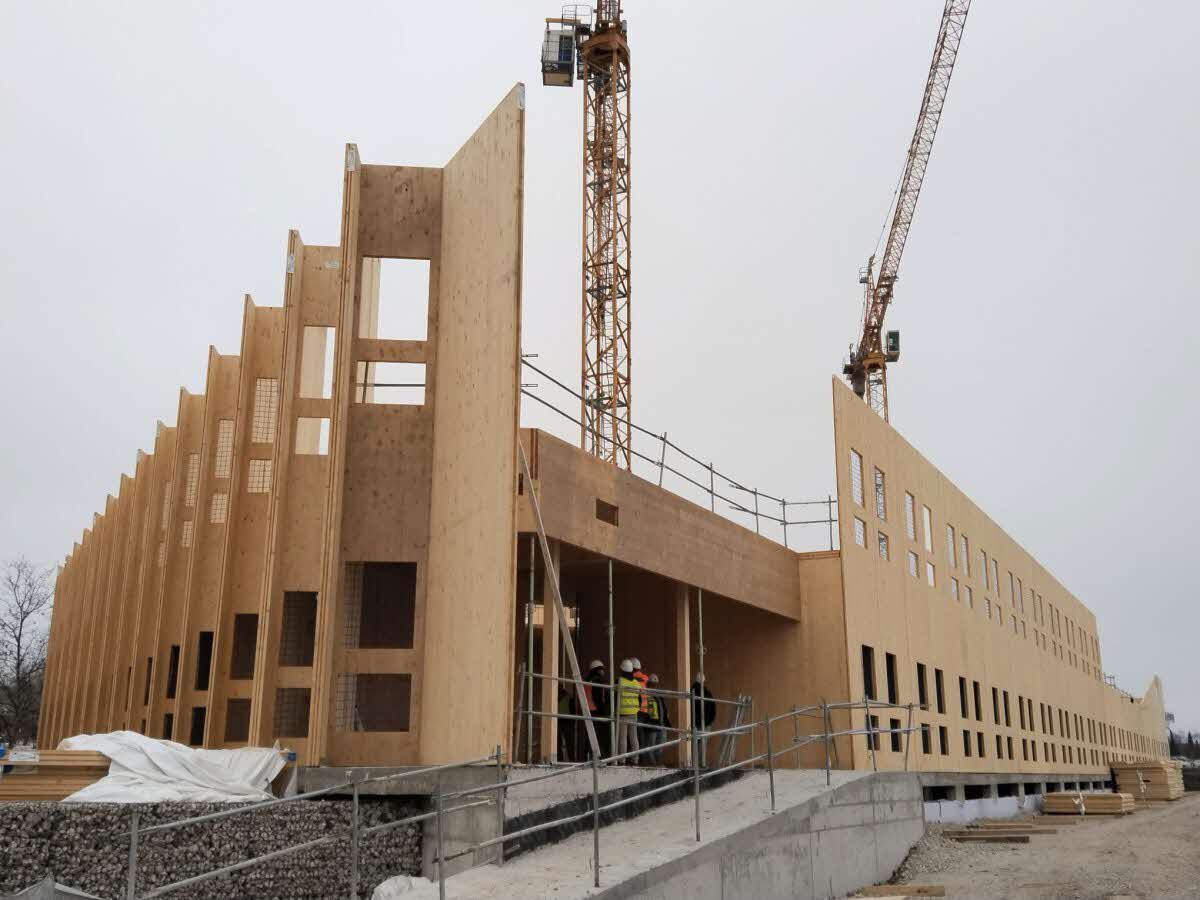
The Campus for Living Cities in the South Campus of Madrid's Polytechnic University was set to be Spain's largest cross-laminated timber building in 2025. (©UNEXUM)
C40's model of collaboration—sharing, adapting and scaling successful interventions—shows that cities can lead globally even amid political and economic uncertainty. By combining leadership standards, accelerators and robust reporting through the CDP-ICLEI Track, a city climate reporting platform by the Carbon Disclosure Project and the Local Government for Sustainability, cities demonstrate that measurable, science-based action is possible and popular with voters. They show that urban climate leadership can be politically bold, globally coordinated and locally transformative, delivering emissions reductions, resilient infrastructure and a better quality of life for millions.

Tactical urbanism in Rio de Janeiro. (João Salomonde)
The message is clear: cities are doing more than ever, but the climate crisis still demands urgency. With the right frameworks, measurement tools and regenerative approaches, mayors can turn ambition into action, and action into real, measurable change. Cities are leading—the question now is whether the world will follow.