
Articles
Festival of Innovation Panel Session: Designing Human-Centric Cities and Services
30 March 2026
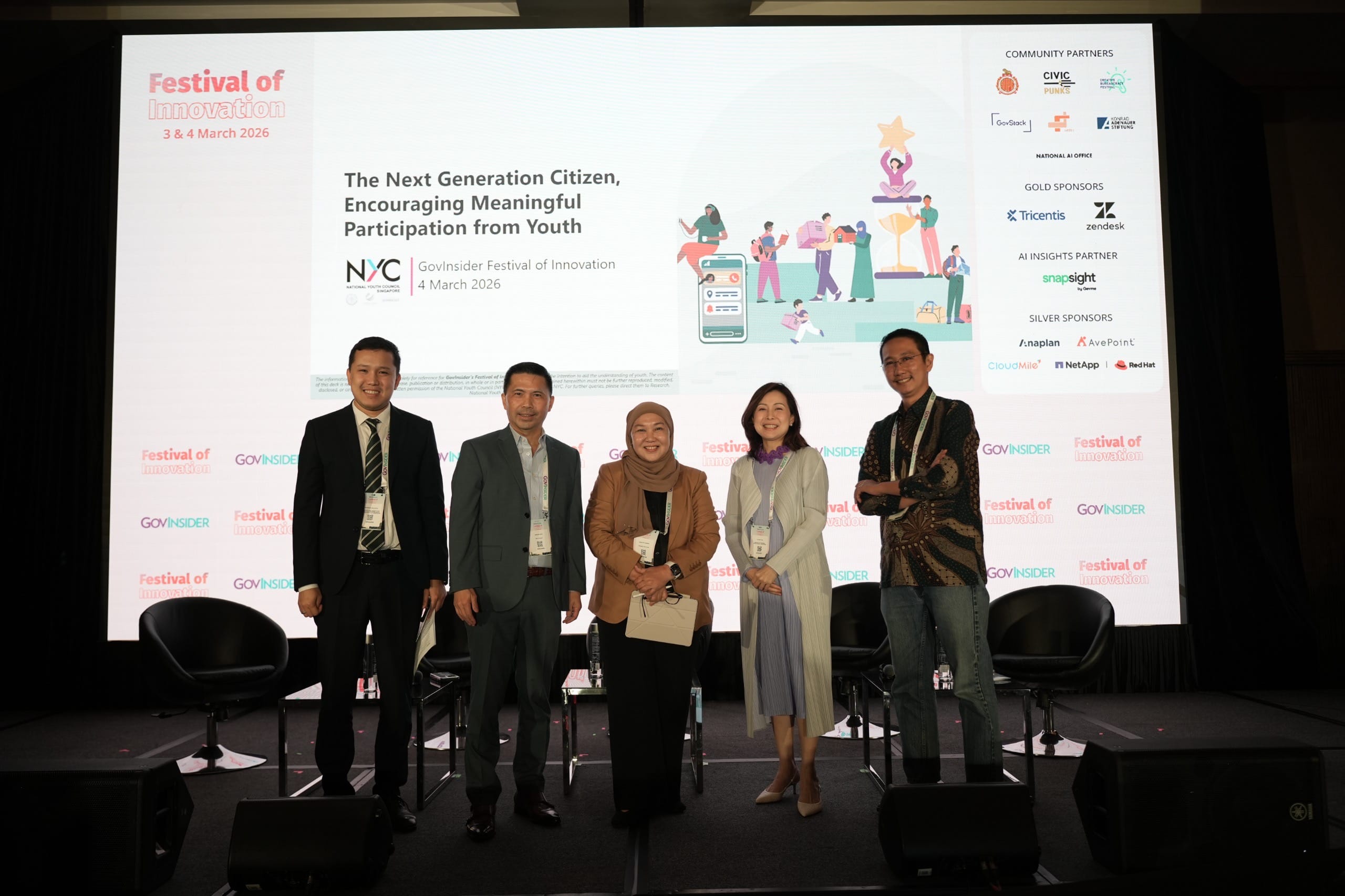
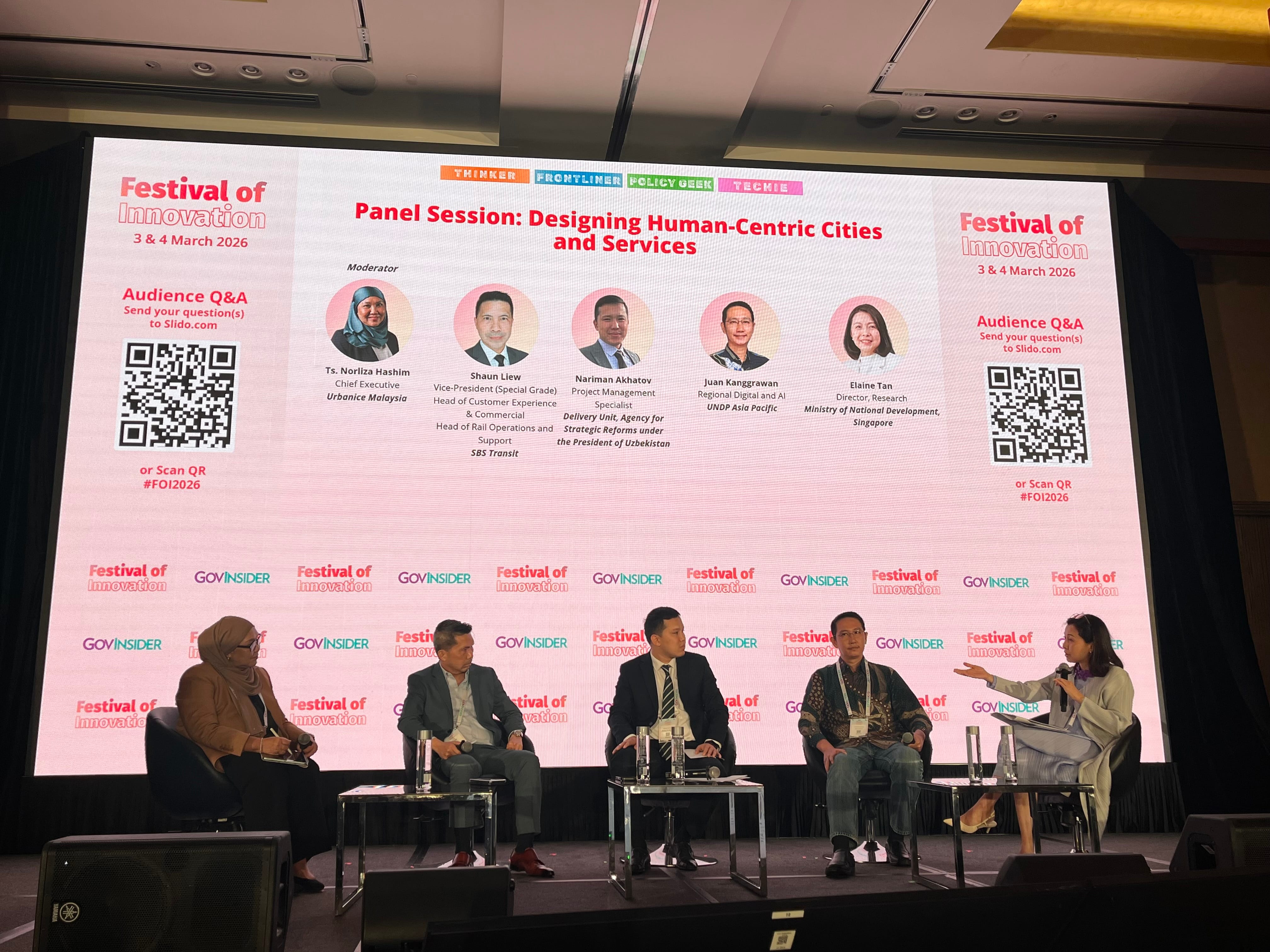
At GovInsider’s annual Festival of Innovation on 4 March 2026, Research Director Elaine Tan from the Centre for Liveable Cities spoke on the panel "Designing Human-Centric Cities and Services", sharing how CLC integrates human-centric thinking into urban planning and governance.
The panel centred on three key aspects:
1. A human-centric city: Putting people, everyday experiences, needs, and aspirations, at the heart of how cities are planned and governed.
A human-centric city goes beyond delivering efficient services or economic growth. It entails developing policies, infrastructure, and services that improve quality of life, in ways that people can feel in their daily lives.
Elaine shared how this thinking was captured in CLC’s Liveability Framework, first developed in 2010 based on Singapore’s development journey, and refreshed most recently in 2024. The framework recognises that liveability is not about choosing between outcomes, but balancing them: a high quality of life, a competitive economy, and a sustainable environment.
These outcomes require three supporting systems: integrated master planning and development, dynamic urban governance, and a collaborative ecosystem. Together, these systems ensure that human-centric intentions are embedded into decision-making processes and sustained over time.
2. Accessibility and Inclusion are key to making spaces and services more human-centric
Different groups engage in different ways, so engagement methods must accommodate diverse participants—especially those whose experiences are often overlooked in conventional processes.
Elaine highlighted the Dementia-Friendly Neighbourhood (DFN) Study that CLC conducted with the Agency for Integrated Care and Singapore University of Technology and Design. The study sought to understand how persons living with dementia experience Singapore's high-rise, high-density environment through first-person insights.
To accommodate cognitive challenges of persons living with dementia (PLWD) while capturing authentic first-person insights, the study innovated non-verbal activities and means of engagement. For example, PLWD were asked to participate in a visual jigsaw puzzle exercise to express their mental cognition of the neighbourhood; and a shadowing activity where they were observed while navigating the neighbourhood. This yielded over 2,000 data points which were distilled into insights that were then translated into design principles that formed the basis of the Dementia-Friendly Neighbourhood Design Guide and prototypes.
While general dementia-friendly design principles can be applied across neighbourhoods, there is no one-size-fits-all design solution for all neighbourhoods. As such, the study mobilised the wider community to collectively uncover specific challenges that needed to be addressed and opportunities to leverage on in the locale. Through community workshops and pop-ups, CLC was able to build shared ownership and awareness in the community, to provide support persons with dementia and their caregivers. This methodology was captured in the study’s Community Engagement Handbook.
The study illustrates an important principle for human-centric planning: inclusive outcomes require inclusive engagement processes. By adapting methods to different abilities and experiences, and by combining multiple forms of engagement, planners and service providers can ensure that diverse voices are heard, and design environments and services that truly meet the needs of the communities they serve.
3. Trust is an important factor for to activate and maintain public spaces and service.
Trust is a vital factor in bringing public spaces and services to life. While the built environment provides the hardware, trust, engagement, and community partnerships create the software that brings neighbourhood spaces to life.
Elaine referenced CLC’s Building Community Resilience Study, which measured the indicators for community resilience, of which trust is a key factor. The research revealed that trust in a community takes time to build and once established, proves enduring—especially during crises.
She also noted Singapore’s recognition of long-term trends such as demographic shifts and an ageing population. Rather than viewing ageing solely as a challenge, Singapore is exploring how to harness the ‘longevity dividend’, tapping the strengths and contributions of older adults. Planning neighbourhoods that strengthen social connections, adapt to evolving social norms, and bring together residents across generations will be key to building trust and cohesion
While cities will inevitably face future disruptions, resilient systems and strong social foundations make recovery possible. By investing in critical infrastructure —from water and energy to economic systems—while also nurturing social cohesion through continuous engagement, cities can create the conditions that help communities not only withstand crises but bounce back stronger.
Contributed by Lim Ren Ai, Assistant Director, Research