
Articles
WCS Science of Cities Symposium – From Sensors to Solutions: AI-Powered Urban Analytics
30 September 2026
This article is part of a new Insights from WCS 2026 series on Better Cities – featuring key takeaways from selected plenaries and sessions from the 10th edition of the World Cities Summit (WCS).
The WCS 2026 Science of Cities Symposium brought together over 270 delegates including international academic researchers, urban practitioners and industry experts to share their scientific knowledge, novel research methodologies and insights on tackling current and emerging urban challenges.
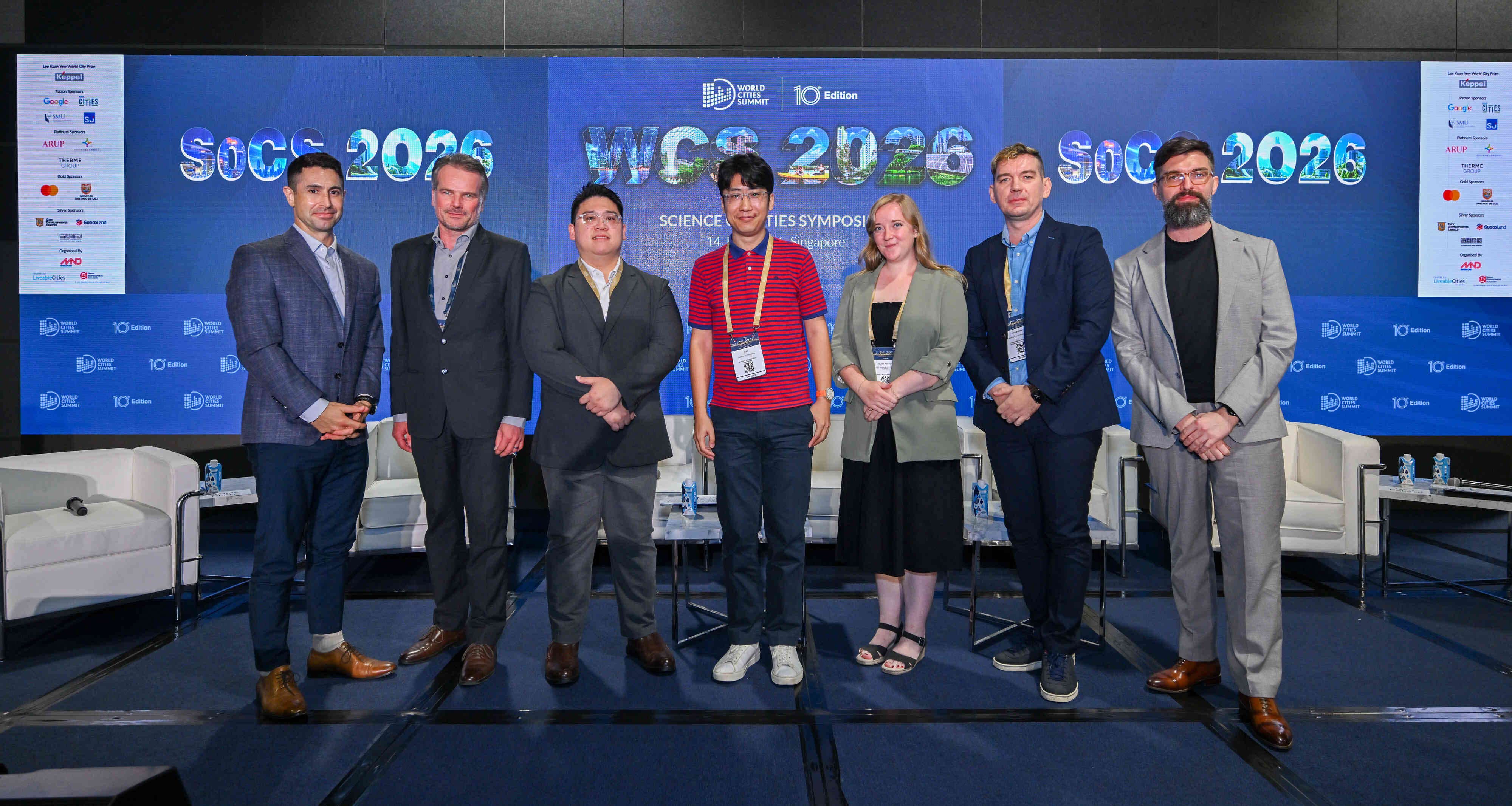
Panel 1 Discussion (L to R) – Dr Ramine Tinati, Professor Jörg Rainer Noennig, Mr Kelvin Li Wenhui, Dr Shengxiao (Alex) Li, Ms Olivia Poston, and Mr Ivan Beliaev, Professor Pieter Herthogs.
The Symposium comprised two discussion panels, focusing on different topics. This article covers the first panel titled “From Sensors to Solutions: AI-Powered Urban Analytics”.
It featured presentations by keynote speakers Dr Ramine Tinati from Google DeepMind and Professor Pieter Herthogs from NUS, and research presenters Professor Jörg Rainer Noennig from HafenCity University Hamburg, Mr Kelvin Li Wenhui from the Urban Redevelopment Authority, Dr Shengxiao (Alex) Li from the National University of Singapore, Ms Olivia Poston from the Norman Foster Institute, and Mr Ivan Beliaev from the Singapore University of Technology and Design, followed by a moderated Panel Discussion.
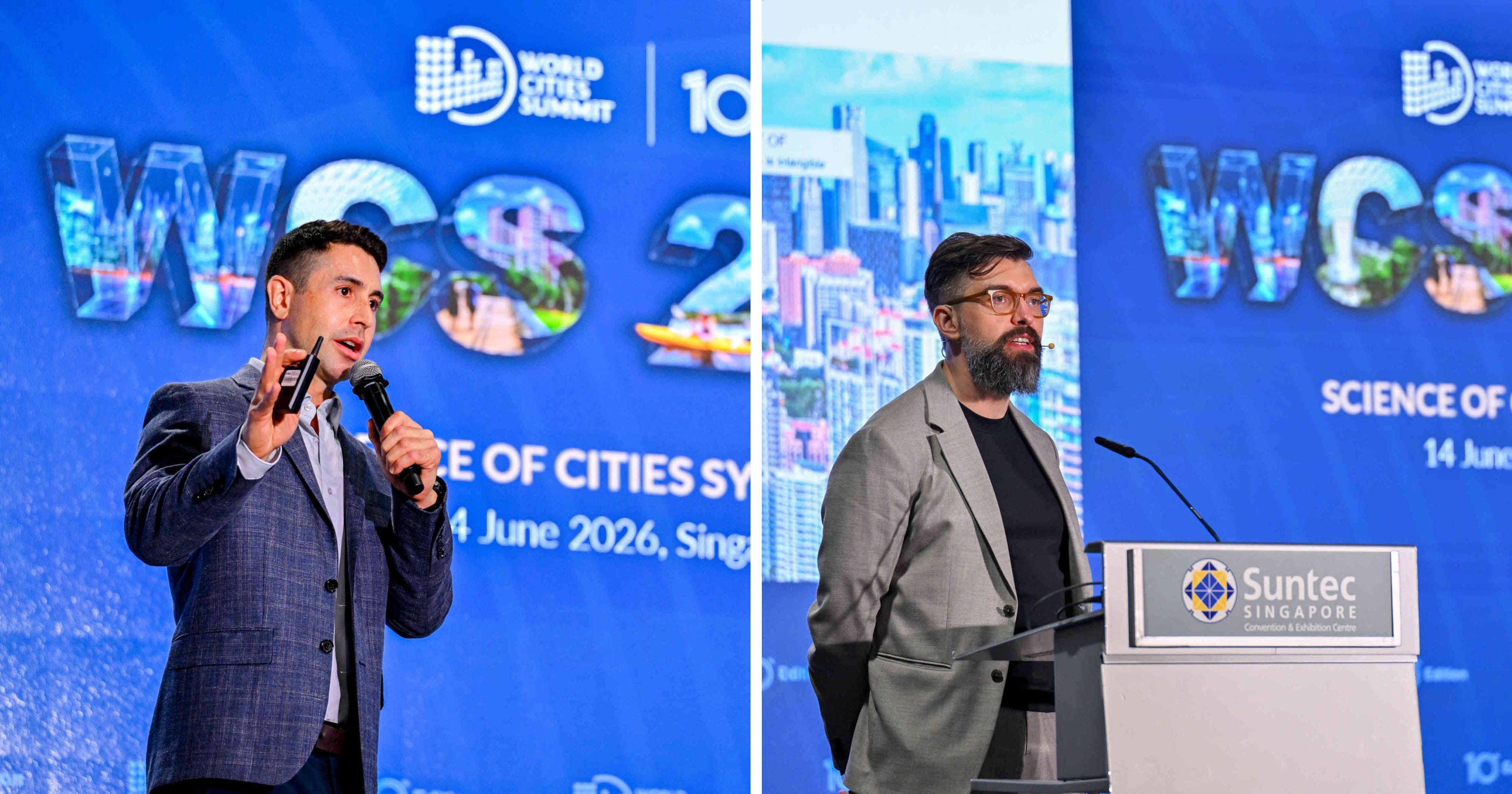
(Left) Keynote speaker Dr Ramine Tinati, Google DeepMind, titled "Reimagining the City with AI". (Right) Keynote speaker Professor Pieter Herthogs, NUS, titled "Making the Intangible Tangible: Towards Reasonable Urban Solutions"
3 key takeaways from the session
Cities do not need more data; they need better decisions. AI and analytics can power smarter, more accountable urban systems, but only when paired with clear human judgement, local knowledge, and strong governance.
Advanced urban AI tools are only as useful as the people who understand their limits. Responsible use begins with an honest account of where these tools work well and where they do not, and building that understanding across planning teams, not just technical specialists.
As AI grapples with the intangibles of urban life and contexts where data is scarce, human agency must remain at the helm of key planning decisions. The goal is not better models, but better outcomes for the people living in cities.
The WCS 2026 Science of Cities Symposium’s second panel “From Solutions to Society – Human-centred Smart Cities” will be featured in the next edition of Better Cities.
In the meantime, do check out the Symposium’s Poster exhibition for both panels and read the Abstract Proceedings here WCS Science of Cities Symposium (opens in new tab)
Contributed by David Tan, Senior Assistant Director, Research