
Articles
USS R&I Congress 2026: Leveraging Science and Technology for Heathy and Regenerative Cities
30 March 2026
On 6 February, CLC, in collaboration with URA and HDB, organised a session on leveraging science and technology for healthy and regenerative cities at the Urban Solutions and Sustainability Research and Innovation Congress 2026.
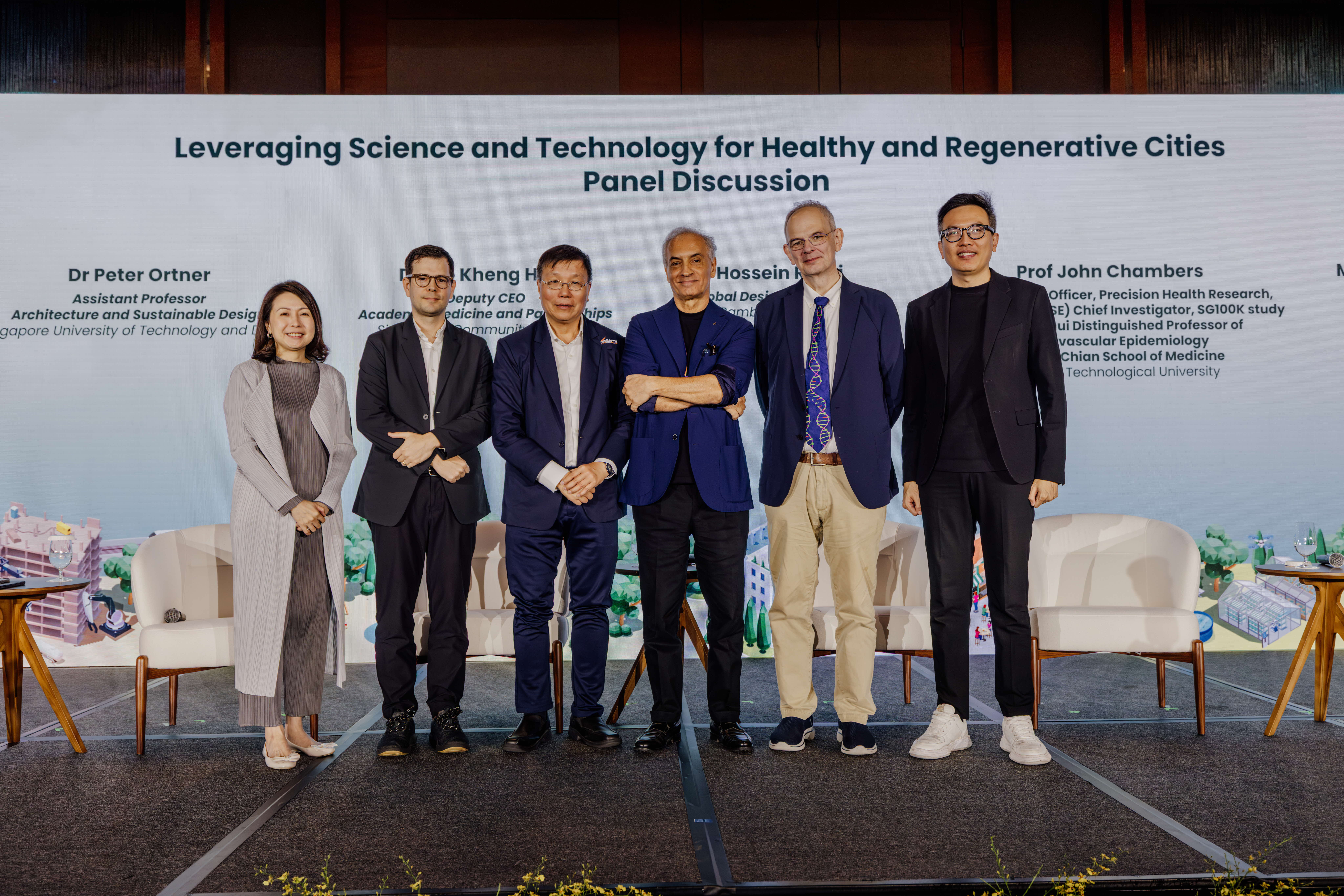
The session featured expert presentations followed by a panel discussion moderated by CLC's Research Director Elaine Tan, exploring how science and technology can inform the planning and design of more liveable and regenerative cities amid global trends such as population ageing and climate change.
Expert Presentations
Dr Peter Ortner, Assistant Professor, Singapore University of Technology and Design, shared findings from the research collaboration between CLC and SUTD on developing a Regenerative City Framework and Self-Assessment Tool. The Framework and Tool (Alpha version) will be launched at the World Cities Summit in June 2026.
Dr Hossein Rezai, Global Design Director, Ramboll Group, explored how regenerative thinking can align the built environment more closely with nature, demonstrating how good health outcomes can be achieved through design approaches such as biometric architecture.
Focusing on Singapore's context, Dr John Chambers, Professor, Nanyang Technology University, highlighted findings from the SG100K Longitudinal Population Study, which demonstrated the significance of integrating genomic data with longitudinal environmental and clinical information to identify population-specific risk factors, develop predictive models, and tailor interventions to individuals or communities.
Dr Lee Kheng Hock, Deputy Chief Executive Officer, SingHealth Community Hospitals, presented SingHealth's Living Asset Map, a dynamic and scalable platform connecting individuals with non-medical community resources through "social prescribing" to enhance community health outcomes.
Mr. Seah Chee Huang, CEO, DP Architects, showcased DP Architects' Attributes of Purposeful Design, a digital sustainability tool that measures, benchmarks, and tracks projects on their journey towards regenerative outcomes, using examples such as Bukit Canberra and The Greenhouse at Dulwich College.
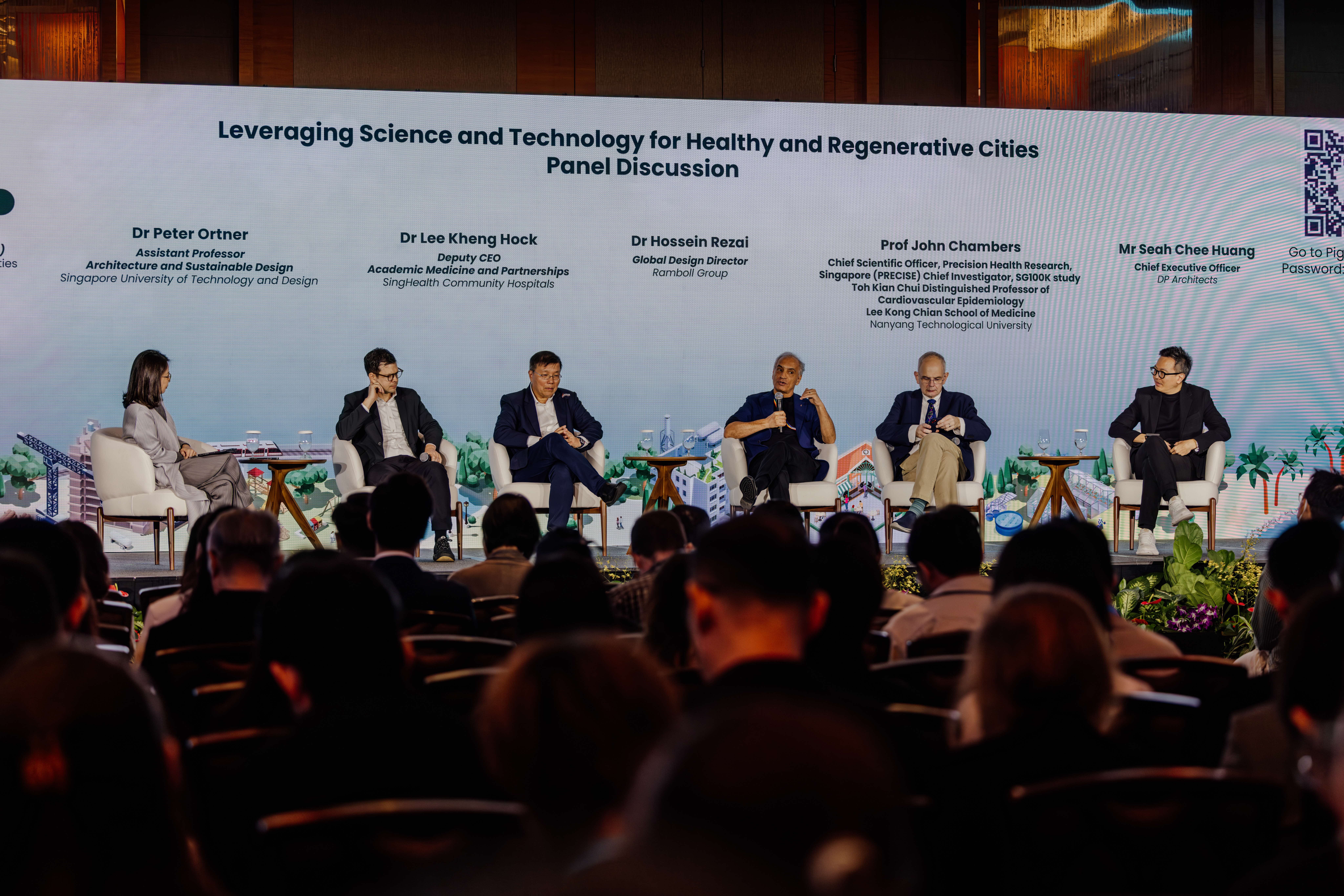
Key Panel Discussion Takeaways
During the discussion, panellists emphasised that health research must produce evidence-based knowledge on behavioural and environmental factors, including social connectivity, and their impact on health outcomes. This information can then inform policymakers, planners, and architects in designing urban environments, such as determining optimal green space allocation.
The panel distinguished between sustainability and regenerative approaches, noting that sustainability maintains steady-state conditions without necessarily improving from baseline, whilst regenerative cities aim to achieve optimal conditions. They highlighted that regenerative planning considers how ecosystems can restore themselves whilst providing benefits for its residents, with a co-benefits approach being essential for achieving shared gains between people and environment.
Elaine concluded the session by highlighting three key points:
Health and wellbeing are fundamental to regenerative cities;
The built environment should be human-centric to foster positive health outcomes; and
The conversation is shifting from examining nature and human health in isolation to studying their interactions.
We look forward to continuing this dialogue at the World Cities Summit 2026 in Singapore this June, at the Resilient and Regenerative Cities Thematic Track.
Contributed by Andy Tan, Senior Assistant Director, Research