
Articles
Shaping Smarter, Resilient Cities: CLC Programme for Officials in the Asia Pacific
16 December 2025
CLC organised the 7th run of the Japan-Singapore Partnership Programme for the 21st Century in November. 24 senior officials from cities in Asia Pacific convened to learn and share about “Urban Development Towards a Smart Nation Vision”.
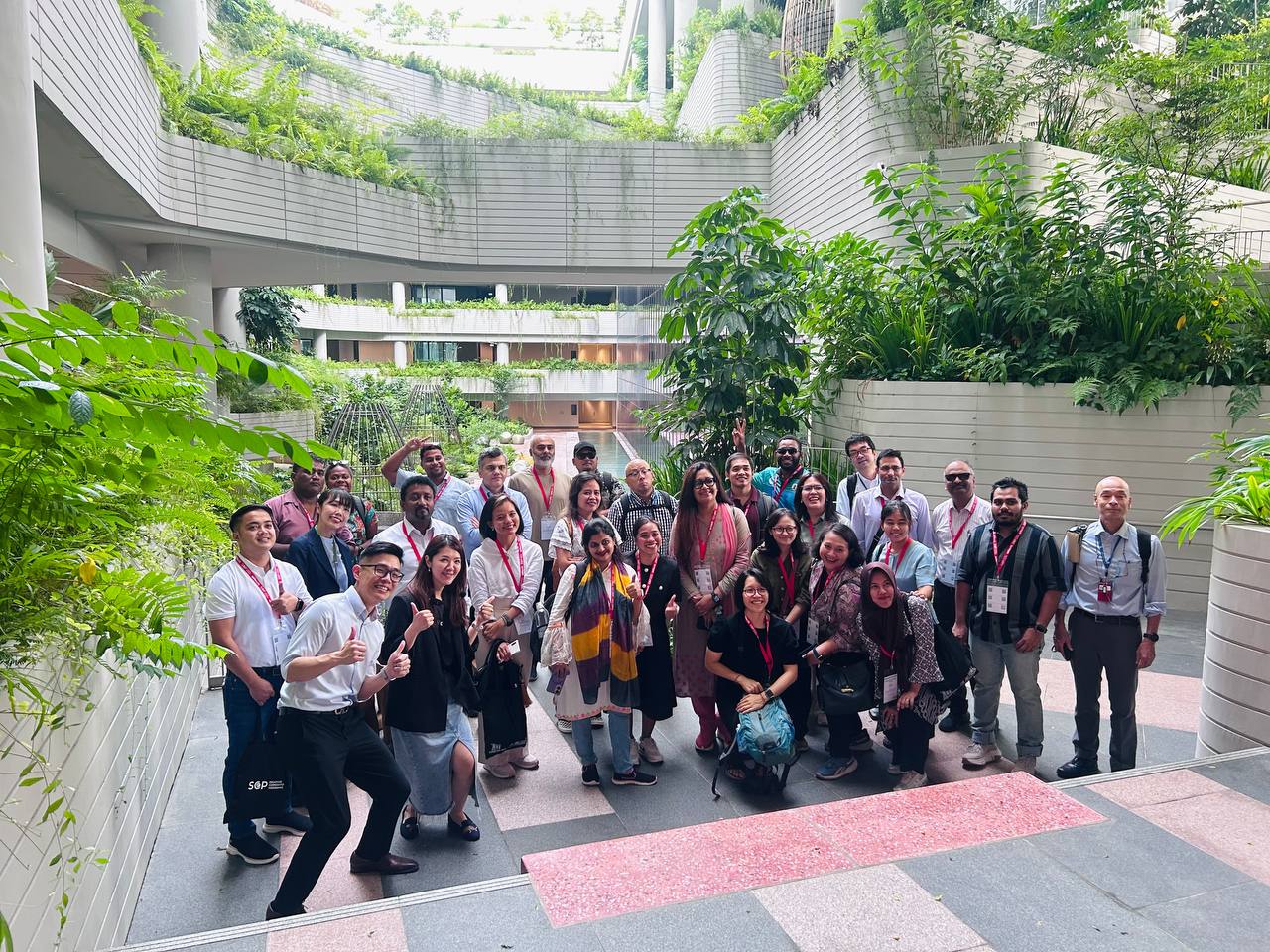
Cities in the Asia-Pacific region continue to face the pressures of climate change, rapid urbanisation, housing affordability, mobility demands, technological disruption, and rising expectations for public services. The Japan-Singapore Partnership Programme for the 21st Century (JSPP21) is organised to encourage and support collective learning in such times
Organised by CLC in cooperation with the Japan International Cooperation Agency (JICA) and supported by Singapore’s Ministry of Foreign Affairs, this year’s JSPP21 brought together senior city officials, urban planners, engineers, and policymakers from countries including Bhutan, India, Indonesia, Maldives, the Philippines, and Vanuatu. Participants not only learned about the driving forces, challenges and opportunities for resilient and sustainable urban development and management, as well as smart nation development in both Japan and Singapore; but also contributed insights from the contexts of their respective countries. The range of learning points enabled the fruitful exchange of views, shared experiences, and how Smart Nation principles could be adapted to cities.
A Shared Framework for Liveability and Sustainability
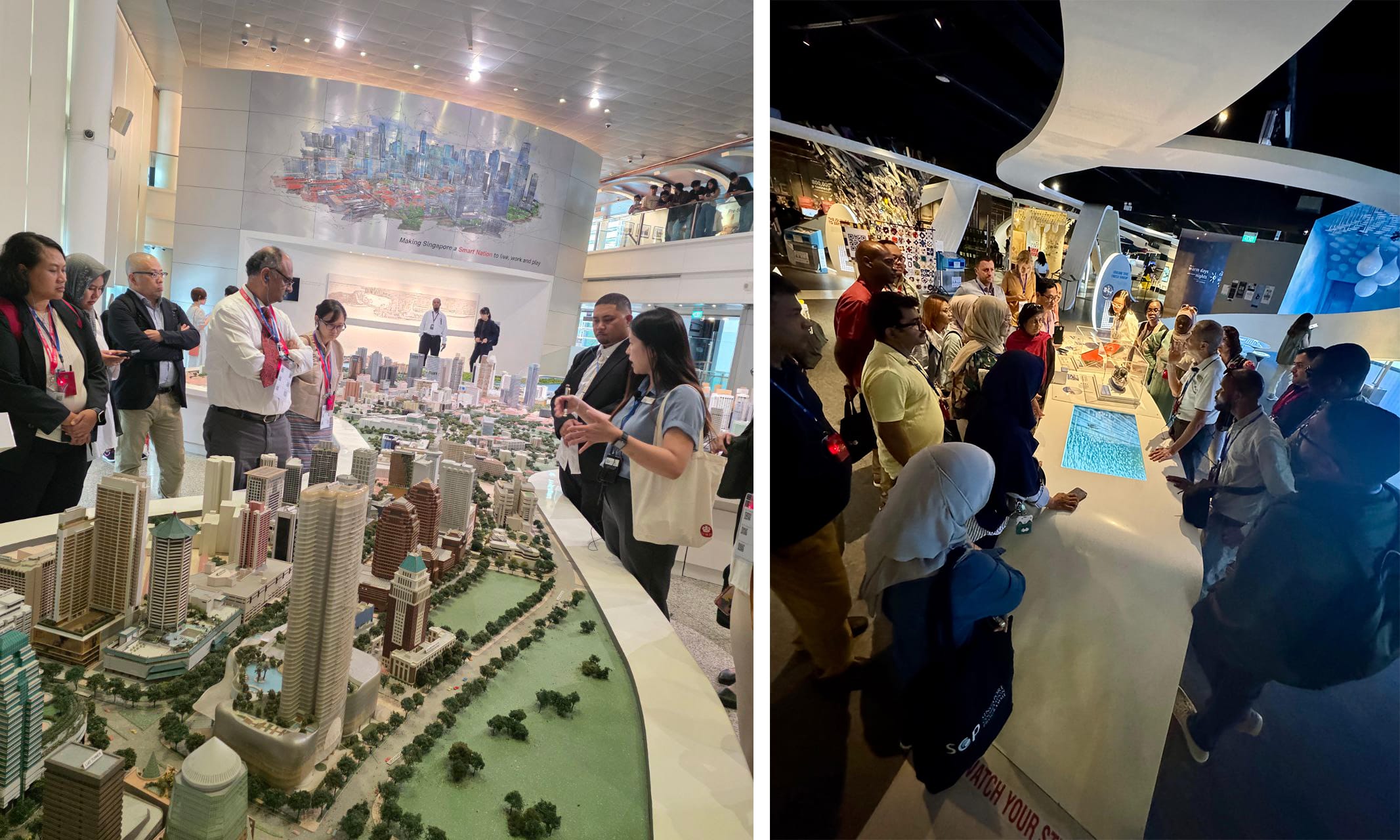
Against the backdrop of CLC’s Liveability Framework, practitioners and experts highlighted Singapore’s holistic strategies in land use planning, transport integration, affordable housing, environmental sustainability, and Smart Nation developments. These complemented field visits that demonstrated how planning principles were translated into real systems on the ground.
At the URA City Gallery, participants explored Singapore’s long-term planning journey and its model of integrated land use and transport development. At Heartbeat@Bedok, they observed how co-locating public services such as sports facilities, clinics, and social services can deliver convenient, citizen-centric experiences. A visit to Marina Barrage showcased Singapore’s Water Story and her approach to integrating water management strategies to bolster Singapore’s resilience towards climate impacts. Meanwhile, the Punggol Digital District illustrated the city’s efforts to cultivate a tech-driven economic cluster anchored by smart infrastructure and integrated design.
Learning from Japan’s Urban Transformation
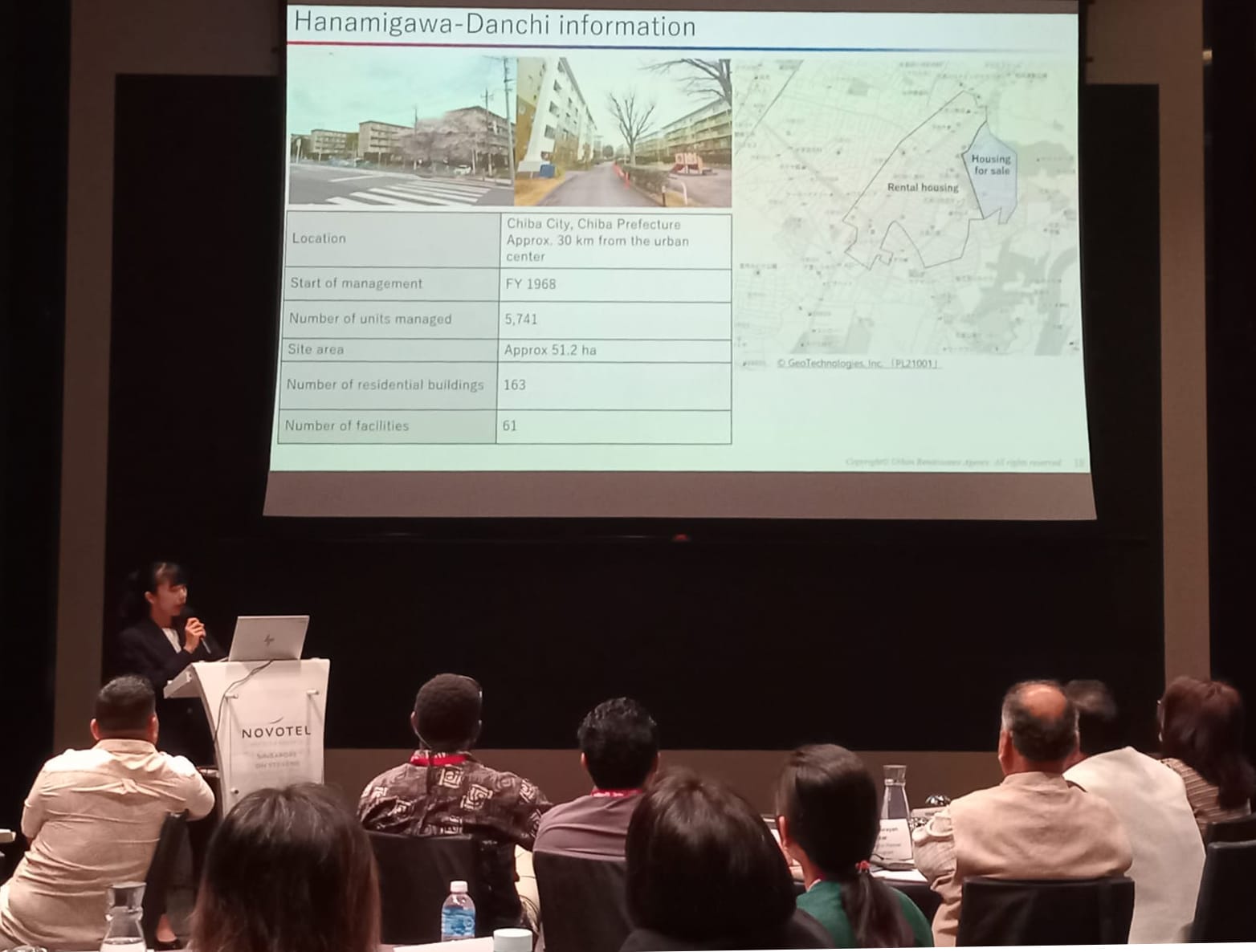
Presentation on "Housing in Japan" by Ms Otsu Yurie, Department for Global Affairs, Project Promotion Officer, Urban Renaissance Agency
Alongside examples from Singapore, experts from JICA and Japan’s Urban Renaissance Agency (UR) shared on the country’s sustainable urban development. They shared their on housing management, urban transport integration, environmental sustainability, and the People–Public–Private (PPP) Partnership model - an approach that promotes collaboration between citizens, government, and businesses for infrastructural development. On the topic of Japan’s rapidly ageing population, UR also presented case studies on neighbourhood revitalisation, community renewal, and efforts to maintain housing quality.
Together, the Singapore and Japan segments offered a richer platform for participants to compare approaches, identify common challenges, and reflect on how international lessons can be applied locally.
Looking Ahead: From Planning to Implementation
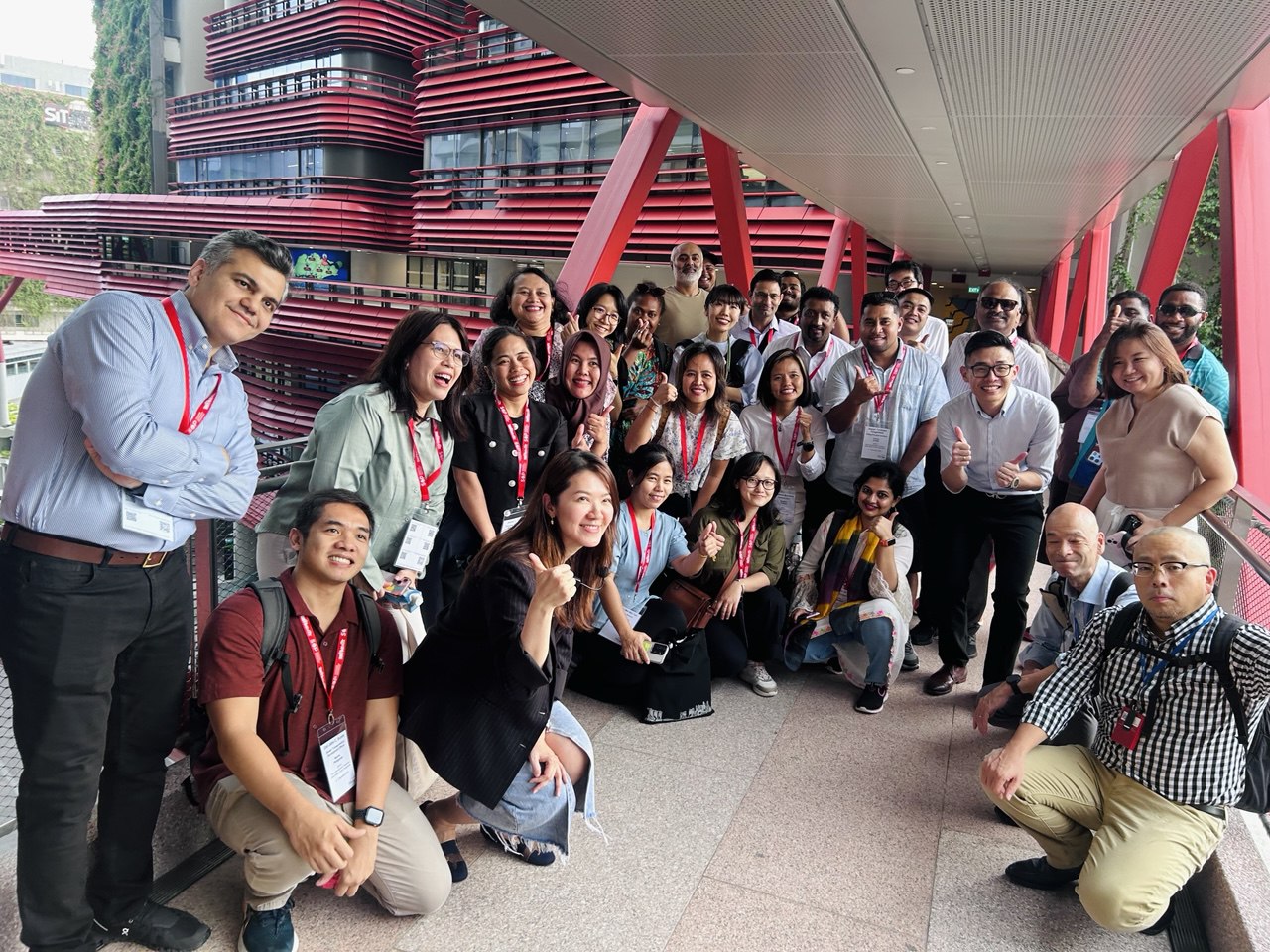
Participants expressed strong interest in several universal themes that resonated across geographies such as the importance of long-term visioning, inter-agency alignment, citizen involvement, and resilience planning. Many found the lectures relevant, learning journeys inspiring, and peer exchanges invaluable. Feedback indicated strong interest in applying the tools, frameworks, and ideas to their home cities. Participants also suggested possible topics for future runs of JSPP21, including smart infrastructure, flood control systems, bicycle mobility, and housing renewal.
“The overall experience was holistic. Experiencing the system through learning journeys helped me understand how planning, policies, and technology come together. Some methods might not be directly applicable, but the frameworks are guiding tools for our own cities.”— Jessa Celocia, Housing and Homesite Regulation Officer, Department of Human Settlements and Urban Development, Cebu City, Philippines
“As a Senior Town Planner, the programme has given me practical ideas that can support development in our towns and communities.”— Martin Aruporou, Senior Town Planner, Luganville Municipal Council, Luganville, Vanuatu
“I enjoyed the programme and found it highly relevant to my field. As an urban planner, I aspire to apply and adapt the successful approaches of Singapore and Japan in advancing smart and sustainable urban development.”— Chhime Dolkar Phuntshok, Senior Urban Planner, Phuentsholing Thromde (Municipality), Phuentsholing, Bhutan
“The lessons learned from both countries on how they meet the needs of their people while progressing toward a sustainable smart nation were especially inspiring.”— Dyah Sitaresmi Budiarti, Ministry of Public Works (PU), Jakarta, Indonesia
Strengthening Regional Collaboration for Better Cities
As cities across the region navigate rapid urbanisation and digital transformation, the partnership between Singapore and Japan remains a cornerstone in advancing regional capacity building. Participants returned home with renewed clarity, practical insights, and a strengthened sense of shared purpose in shaping liveable, sustainable, and future-ready cities.
CLC looks forwards to organising the eighth edition of the JSPP21 course in 2026, which would mark the 60th anniversary of Singapore-Japan bilateral relations with deepening collaboration.
Contributed by Jessica Ng, Senior Assistant Director, Capability Development