
Articles
Global Conversations on Cities – CLC in Brazil
28 November 2025
In November, CLC participated in three global climate action events in Brazil - the C40 World Mayors Summit, the Climate Action Innovation Zone 2025, and the UN Climate Change Conference (COP30) where we curated Cities Day at the Singapore Pavilion.
C40 World Mayors Summit, Rio de Janerio, 3 – 5 November
The C40 World Mayors Summit 2025 brought together mayors from around the world, alongside business leaders, philanthropists, academics, and civil society. Held before COP30, the Summit focused on city-led climate action, showcased innovative solutions from global cities, and demonstrated possibilities through delivery-focused collaboration.
A Singapore delegation led by Senior Minister of State (SMS), Low Yen Ling, Ministry of Culture, Community and Youth & Ministry of Trade and Industry, and Mayor of South West District, included CLC’s Executive Director, Hugh Lim, and researcher Andy Tan.
SMS Low and Executive Director Lim shared on Singapore’s experiences in the following sessions:
At the session on “Urban Planning: The Key to Liveable Cities”, SMS Low shared Singapore’s fundamental planning principles – planning long-term, adopting a holistic approach that integrates present and future needs, and involving whole-of-society. These enable cities to implement regenerative strategies, such as using nature-based solutions, building low-carbon development and enhancing resource circularity to remain highly liveable and resilient in a climate-changed world. Her presentation closely referred to CLC’s Liveability Framework (read in full here).
SMS Low also participated in the “Regional Convening for Mayors from Asian and Oceania Cities” where she spoke on Singapore’s three-pronged science-based and proactive heat resilience strategy to tackle heat stress due to climate change.
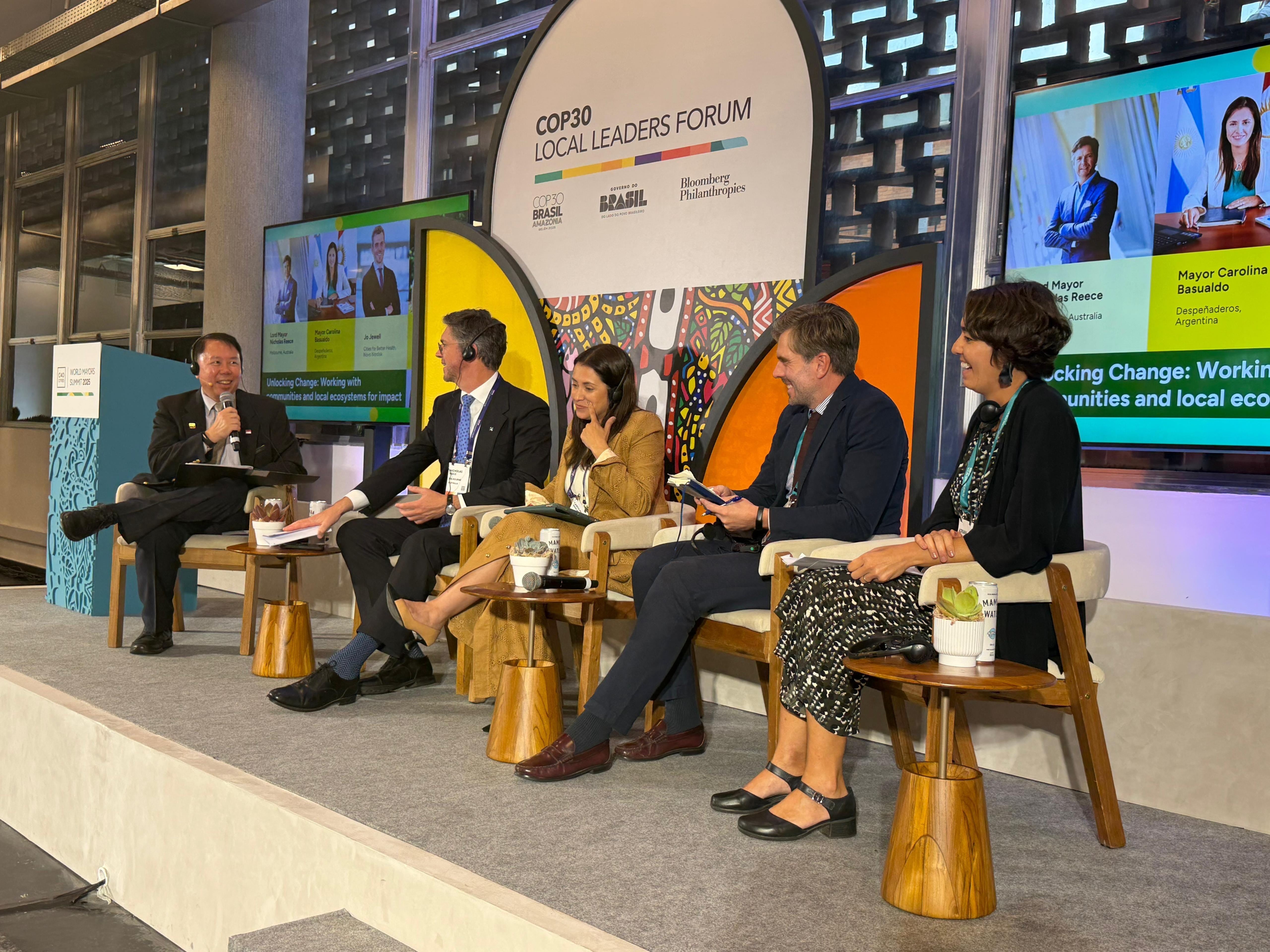
Hugh (far left) moderates the “Climate and Health” session. Credit: Lee Wei Qiang
Hugh was a moderator at the session on “Climate and Health”, with panellists Nicholas Reece, Lord Mayor of Melbourne, Carolina Basualdo, Mayor of Despeñaderos, Jo Jewell, Director of Cities for Better Health, and Adriana Sansão, Professor at Federal University of Rio de Janeiro. A key point of this session was that healthy and green neighbourhoods can be achieved by building a collaborative ecosystem of stakeholders across sectors. This allows cities to mobilise diverse resources, expertise, and innovation, and ensures that climate solutions benefit all.
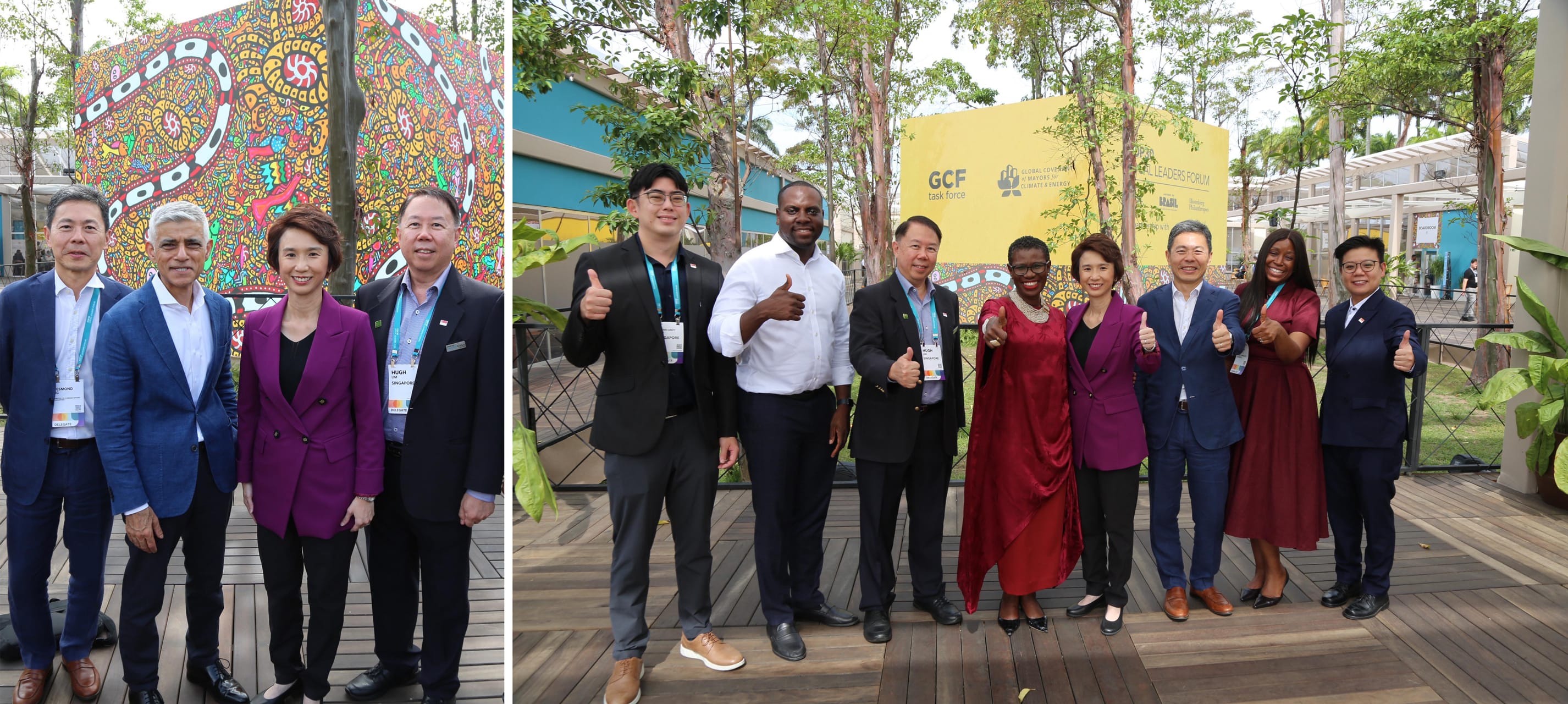
The Singapore delegation with C40 C0-Chairs, Sadiq Khan, Mayor of London (left), and Yvonne Aki-Sawyerr, Mayor of Freetown (right). Credit: Lee Wei Qiang
The delegation also connected with global counterparts, including C40 Co-Chairs Sadiq Khan, Mayor of London and Yvonne Aki-Sawyerr, Mayor of Freetown, the mayors of Rio de Janeiro, Rotterdam, Santiago, Oslo, Milan, Tshwane, Athens, and Johannesburg, city leaders from Los Angeles, Yokohama, and Sydney, as well as the Dubai Environment and Climate Change Authority. These meetings reaffirm the importance of multi-level partnership and collaboration between cities to address challenges and enhance liveability.
Melbourne joins the City Network for the Lee Kuan Yew World City Prize
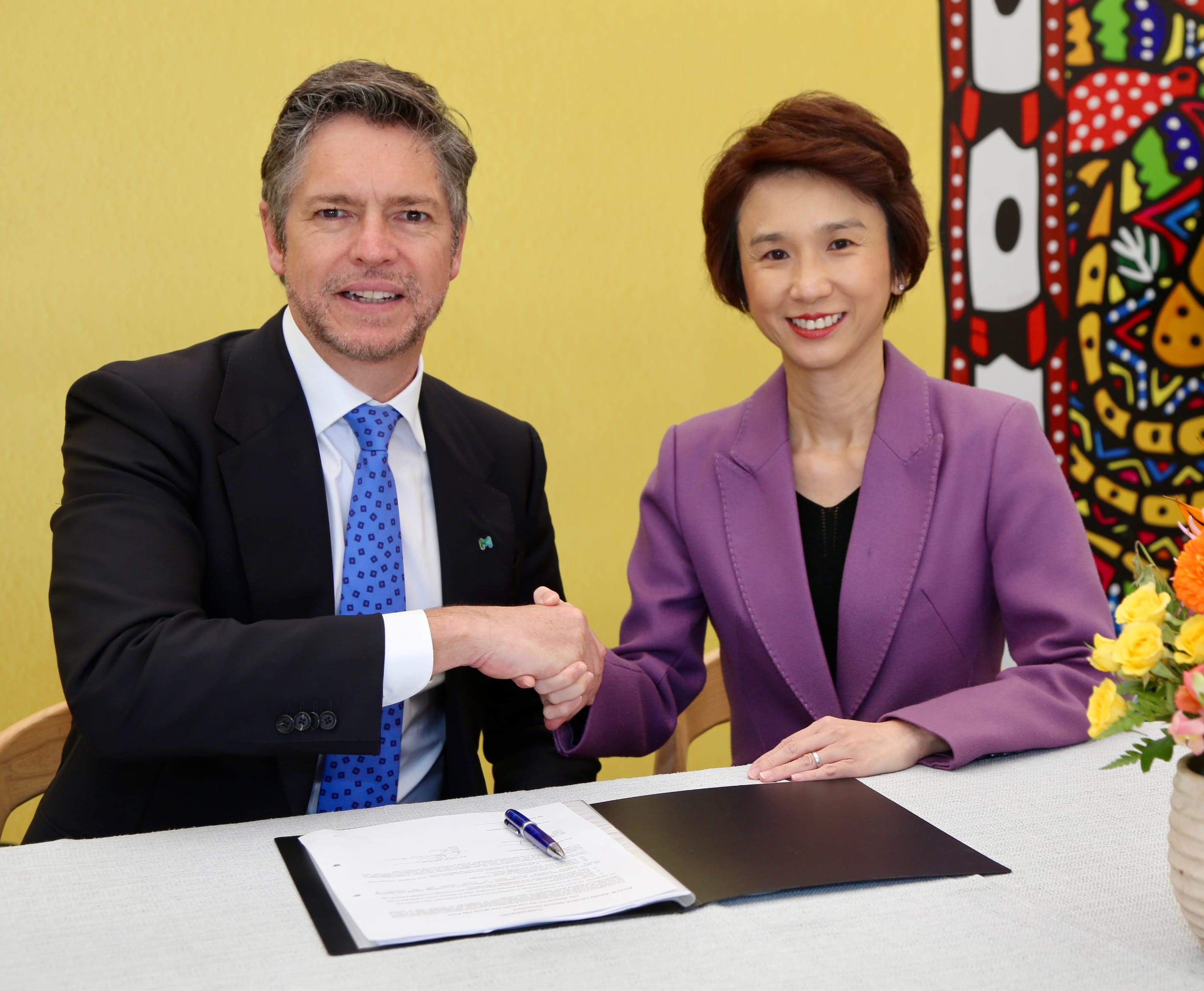
SMS Low (right) and Lord Mayor Nicholas Reece (left) sign the declaration. Credit: Lee Wei Qiang
A highlight of the C40 World Mayors Summit for CLC was welcoming the city of Melbourne, a 2024 Special Mention city, to the City Network for the Lee Kuan Yew World City Prize (LKYWCP Network). The declaration was signed by SMS Low and Lord Mayor Nicholas Reece. It signalled Singapore and Melbourne’s commitment to collaborate and share best practices and solutions for urban challenges.
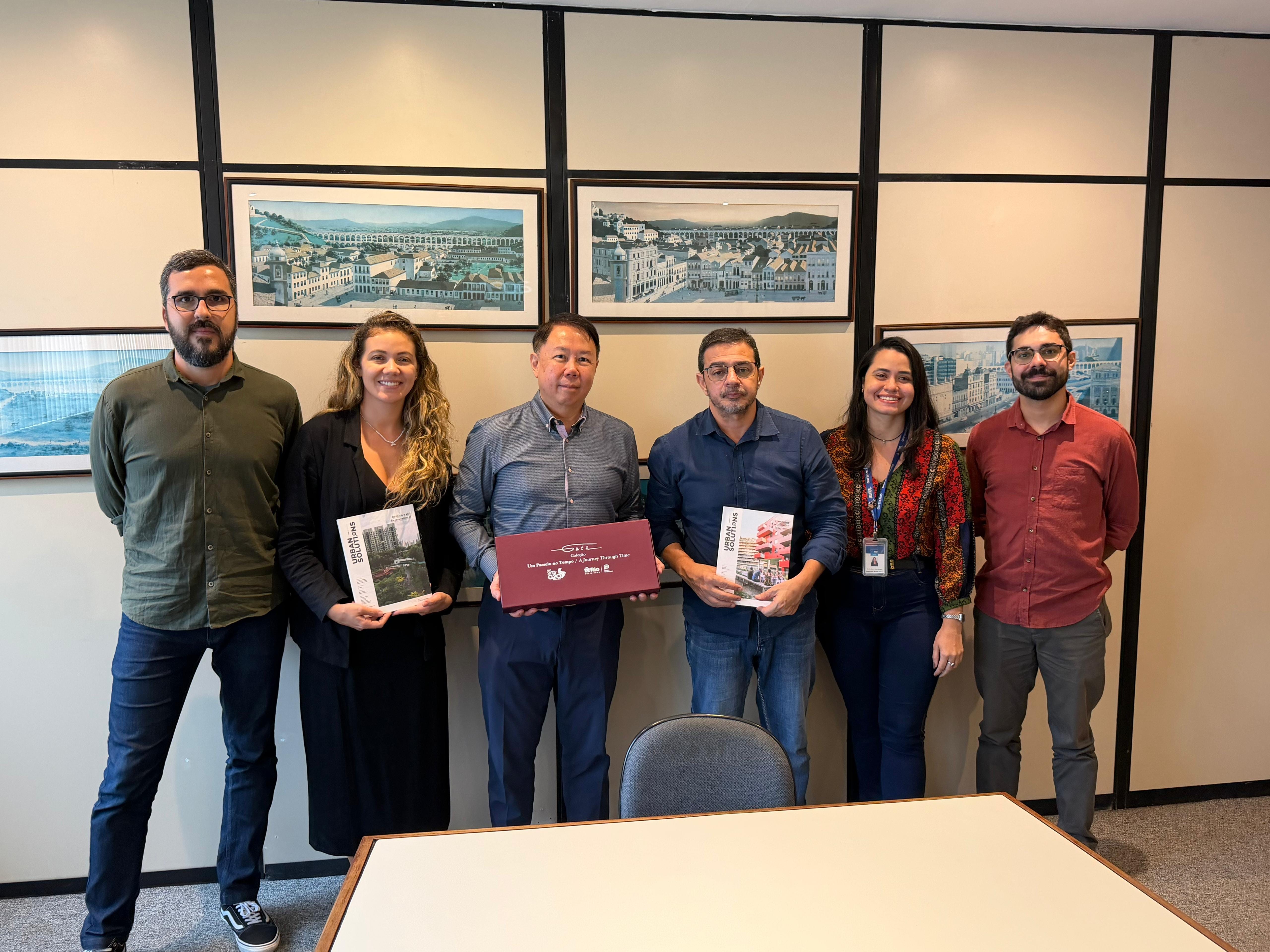
Hugh with Instituto Pereira Passos
Hugh also met with Elias Jabbour, President, Instituto Pereira Passos (IPP), and IPP staff. IPP is Rio de Janeiro’s nominated knowledge organisation as a member of the LKYWCP Network. CLC and IPP had a fruitful discussion on the challenges faced by both cities, and how the work of each organisation supports liveable urban development.
Read more on the LKYWCP Network here.
Climate Action Innovation Zone 2025, São Paulo, 7 – 8 November

Hugh (far right) at the Sustainable Innovation Forum
Following the C40 World Mayors Summit, CLC attended the Climate Action Innovation Zone 2025 in São Paulo. This platform for accelerating action and showcasing real world solutions ahead of COP30 included four flagship events - Sustainable Innovation Forum, Hydrogen Transition Summit, Agri-Food Systems Summit and the Climate Implementation Summit.
Hugh was a panellist on the Sustainable Innovation Forum panel titled “Local Leadership, Global Impact: Cities at the Heart of Climate Action”. His fellow speakers included Cristina Gamboa, CEO, World Green Building Council and Titi Oshodi, Special Advisor to the Governor on Climate Change and Circular Economy, Lagos State. The session was moderated by Kirsten Dunlop, CEO, Climate KIC.
At the panel, he shared on Singapore’s comprehensive long-term integrated planning approach for a liveable and resilient city, and the Singapore Green Plan 2030.
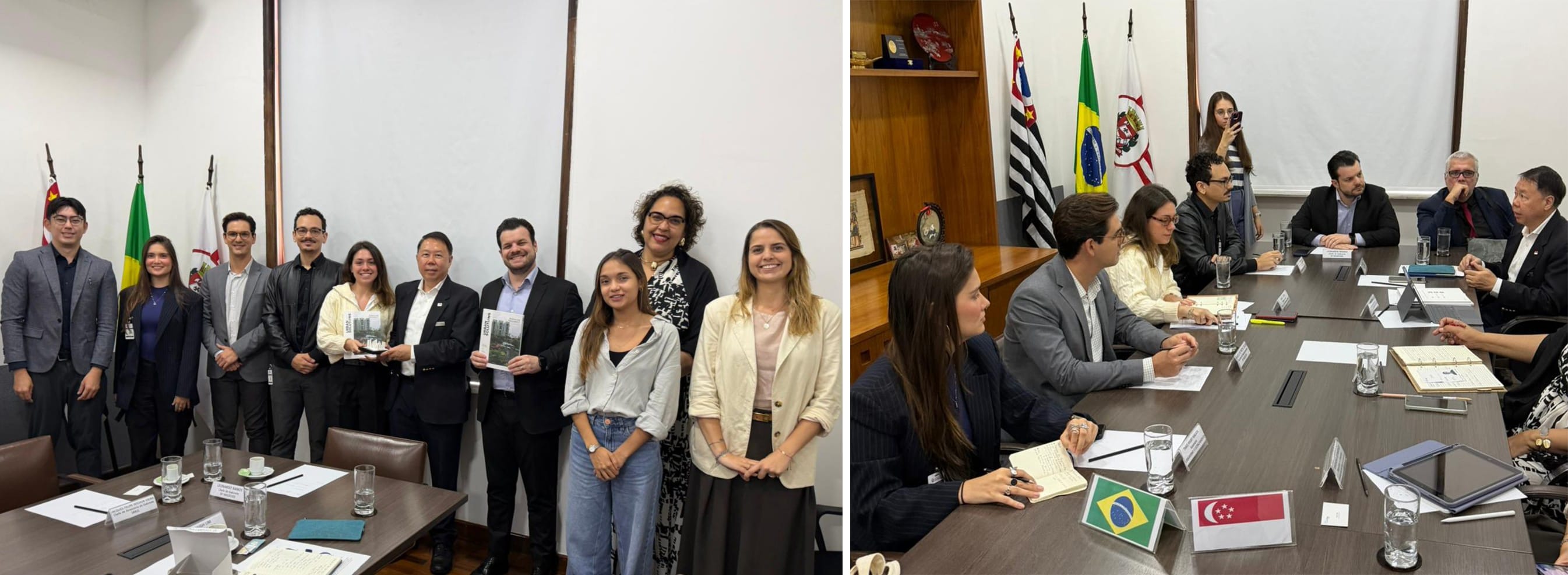
Meeting with Leonardo Ramos, Chief of Staff, São Paulo Negócios and representatives from the São Paulo Municipal Government.
CLC also met with Leonardo Ramos, Chief of Staff, São Paulo Negócios, and other representatives from the São Paulo Municipal Government, and had an engaging session sharing about CLC’s work and the World Cities Summit 2026.
CLC at the UN Climate Change Conference (COP30), Belém, 10 – 11 November
.jpg)
Singapore Pavilion Cities Thematic Day. Credit: COP30 Singapore Pavilion
From 10 - 11 November, CLC participated in the Singapore Pavilion at COP30, hosted by the Amazonian city of Belém. Over two weeks, the Singapore Pavilion served as a convening space for collaboration and dialogue, hosting programmes with more than 60 partner organisations and welcomed over 8,000 visitors, including foreign dignitaries, senior business leaders, non-governmental organisations, academia and climate youth leaders. Beyond the physical space, the Pavilion also attracted a digital audience of over 30,000. COP30 welcomed over 56,000 delegates.
Cities Day at the Singapore Pavilion

Cities Thematic Day – “Resilient and Regenerative Cities” panel (left), “City in Nature” panel (right). Credit: COP30 Sg Pavilion
CLC organised the Singapore Pavilion Cities Thematic Day on the afternoon of 11 November. The session began with a welcome message from Chee Hong Tat, Minister for National Development, in which he highlighted Singapore’s long-term, integrated planning approach to turn climate challenges into opportunities, and emphasised the need for cities to work together to strengthen collective efforts. A keynote presentation on CLC’s regenerative cities research in partnership with multi-sectoral stakeholders was then presented by Hugh who also launched the 27th edition of the CLC Urban Solutions on “Resilience and Regeneration” (download here).
As part of Cities Day, CLC curated two lively panel discussions, moderated by Hugh, to a full-house audience. The first panel centred around “Resilient and Regenerative Cities for a Climate-Changed World” with speakers Winston Chow, Co-Chair IPCC Working Group II and Professor, Singapore Management University, Peter Ortner, Assistant Professor, Singapore University of Technology and Design, Jo da Silva, Global Sustainable Development Director, Arup, and Ang Yu Qian, Assistant Professor, NUS. They shared approaches and enablers to build resilience and regenerative cities, including ecosystem restoration, using nature-based solutions, biomimetic design and bio-based materials, establishing a measurement tool to assess regenerative co-benefits, and AI-driven modelling to inform planning for a low-carbon city.
The second panel titled “Towards a City in Nature” saw panellists discuss approaches to integrate nature as part of urban planning to tap on nature’s multi-functional benefits for climate adaptation and liveability. This session featured Ingrid Coetzee, Director, Biodiversity, Nature and Health, ICLEI – Local Governments for Sustainability, Signe Kongebro, Global Director, Future Resilient Design Architecture & Landscape, Ramboll, Kotchakorn Voraakhom, CEO, Landprocess, and Winston Chow, Co-Chair, IPCC Working Group II; Professor, Singapore Management University.
Hugh closed Cities Day in an address that emphasised how cities are centres of innovation and hence have tremendous potential to break away from convention and adopt new ways of planning and development such as regenerative approaches. He distilled five key enablers of regenerative urban development that have emerged from Cities Day – long-term and placed-based planning, supportive policies established by cities and governments, strategic use of digital tools and artificial intelligence, robust financing and measurement mechanisms, sustained partnership across public, private and community sectors, and between cities.
CLC representation at Country Pavilions
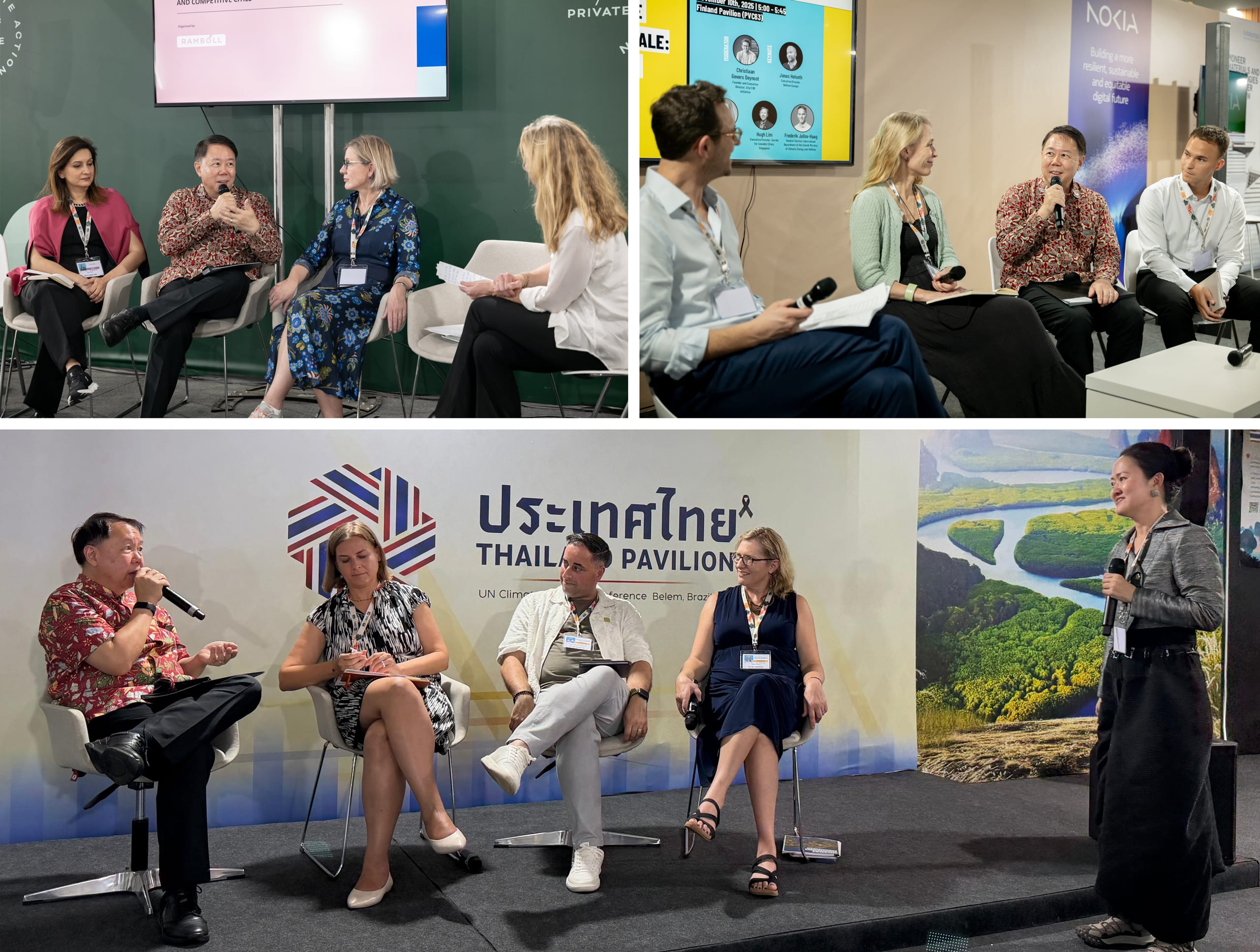
Hugh speaking at the country Pavilions of (clockwise from top) Denmark, Finland and Thailand.
Hugh was also invited to speak on panels at various Country Pavilions.
Denmark Pavilion session organised by Ramboll where Hugh shared on Singapore’s climate adaptation efforts for the built environment using nature-based solutions. These included nature-based solutions like parks and naturalised lakes and rain gardens, strengthening coastal protection efforts, and designing cool public housing estates using environmental modelling.
Finland Pavilion session organised by City Carbon Dioxide Removal. He spoke about Singapore’s mitigation efforts to transition towards a low-carbon built environment, such as the Singapore Green Building Masterplan 2030 and promoting green modes of transport, at the Finland Pavilion session.
Thailand Pavilion session organised by Landprocess. He highlighted Singapore’s City in Nature vision to safeguard and expand nature and biodiversity to build a more liveable and resilient city.
Conclusion
The pre-COP events and COP30 demonstrate that cities have a pivotal role to play in tackling climate change. While cities are hotspots of emissions and climate risks, they can also be powerful drivers of resilient and regenerative solutions for climate mitigation and adaptation to strengthen liveability and resilience for all.
Contributed by Andy Tan, Assistant Director, Research