
Articles
From Learning to Action: SPARKS Programme Concludes Three-Year Journey with Pacific Island Forum States
27 July 2026
After three years of meaningful learning, exchange and collaboration, the Singapore-Pacific Resilience and Knowledge Sharing (SPARKS) Programme concluded in June 2026 with Module Three, Towards Climate Resilience and Urban Sustainability for the Pacific.
After three years of meaningful learning, exchange and collaboration, the Singapore-Pacific Resilience and Knowledge Sharing (SPARKS) Programme concluded in June 2026 with Module Three, Towards Climate Resilience and Urban Sustainability for the Pacific.
Jointly organised by CLC and the Ministry of Foreign Affairs under the Singapore Cooperation Programme, SPARKS was launched as part of Singapore's commitment to supporting Pacific Island Forum (PIF) member states in strengthening their capacities for climate resilience. Over three years, the programme brought together city leaders and senior government officials from 12 PIF member states, providing a platform to exchange experiences and best practices, study Singapore's urban development journey, and build a strong network of practitioners addressing some of the Pacific's most pressing climate and urban challenges.
Through the progressive three-year curriculum, Module One laid the foundation by introducing Singapore's integrated approaches to climate resilience, urban governance and sustainable development. Building on this, Module Two took a deep dive into priority themes identified by PIF member states, including urban flooding, coastal protection, water security and nature-based solutions. Participants also worked alongside experts from Singapore to begin developing Action Plans tailored to the urban challenges facing their own cities and countries.
In this final module of the programme, Module Three focused on translating learning into plans for implementation. To complement learnings in mainstream domain areas, and support the implementation of climate resilience initiatives in their respective states, participants explored practical tools in sustainable financing and behavioural insights. They also gained a deeper understanding of food resilience, urban cooling and climate-induced public health.
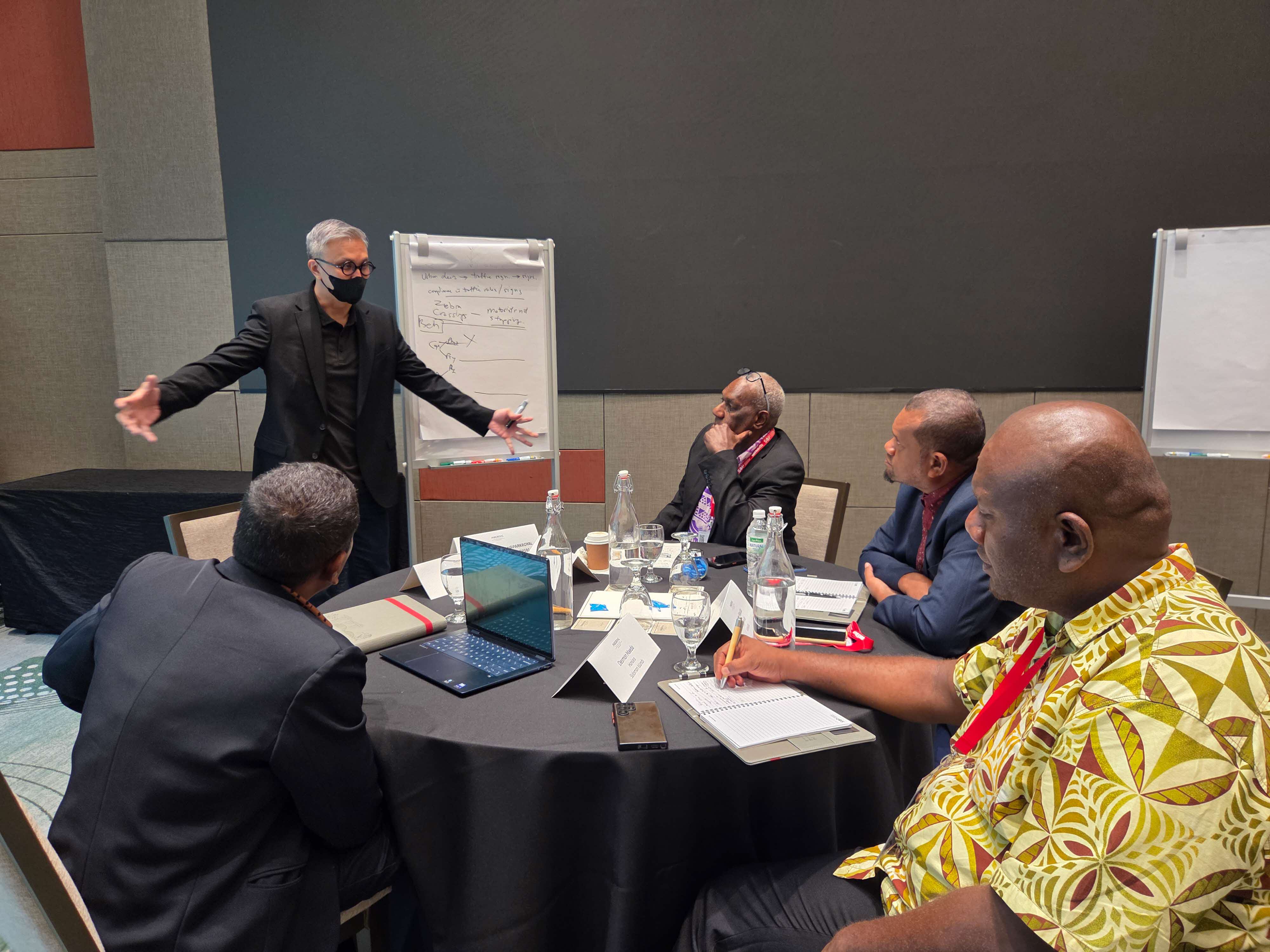
Participants from Vanuatu and Solomon Islands brainstorming ideas during the Behavioral Insights Workshop conducted by Temasek Polytechnic
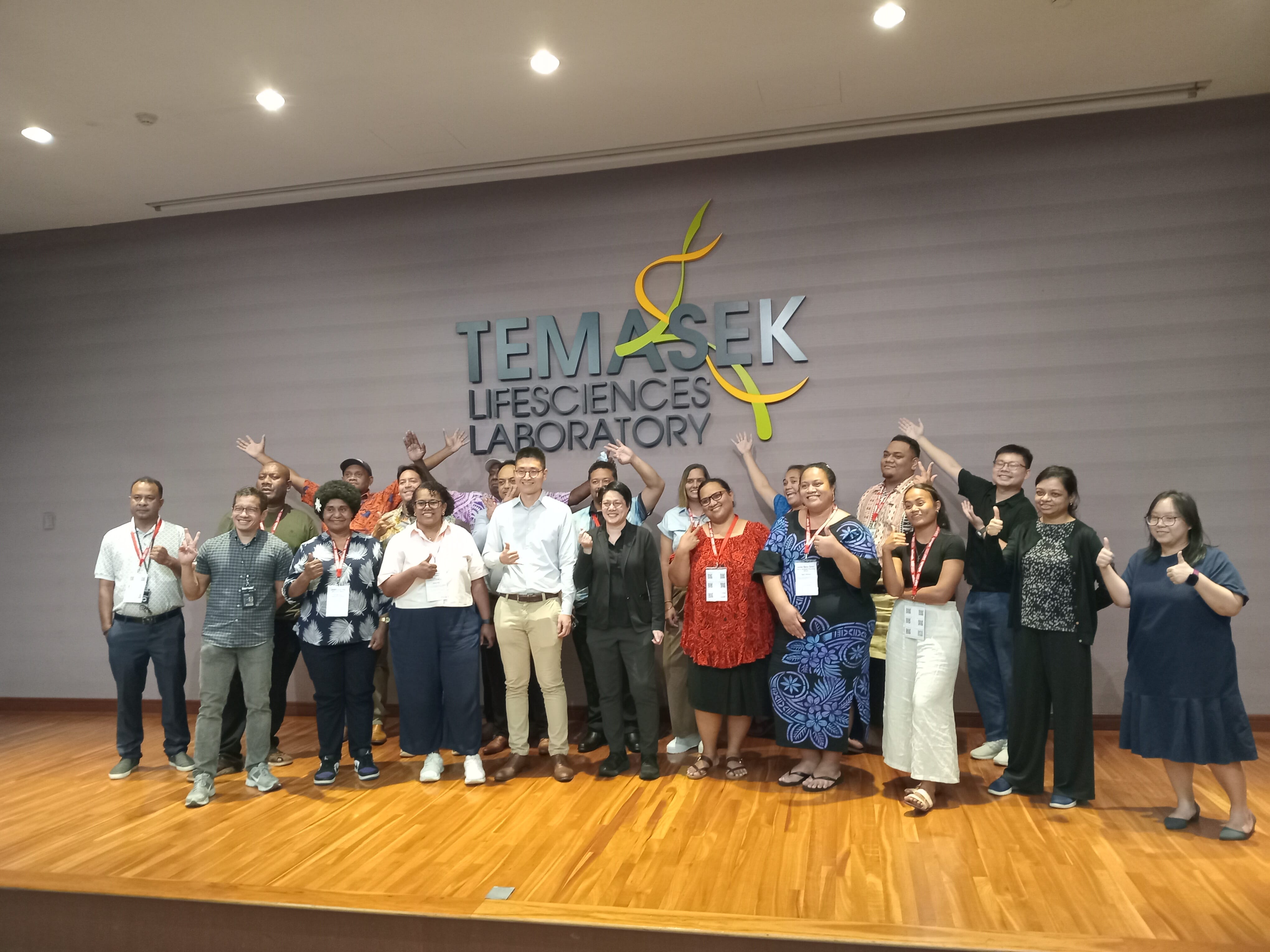
Participants on a learning journey to Temasek Lifesciences Laboratory
The programme culminated in a series of Action Plan presentations by each city team, marking the capstone of the three-year SPARKS journey. The final presentations showcased implementation-focused Action Plans addressing challenges ranging from flooding and coastal resilience to water security, waste management and sustainable urban development. Compared to earlier stages of the programme, many participating states demonstrated significant progress by articulating clearer problem statements, identifying key stakeholders and partnerships, and presenting more structured pathways for implementation. Several projects stood out for their ambition and long-term vision.
A Senior Executive Officer from the Ministry of Environment Conservation and Climate Change in the Papua New Guinea team proposed how behavioural change can complement infrastructure investments in tackling urban flooding in Port Moresby. Beyond upgrading drainage systems and improving waste management, the proposal emphasised community ownership, public education and stronger cross-government coordination. This reinforced one of the programme's key messages that resilient cities require not only engineering solutions, but also effective governance and lasting behavioural change.
In the French Polynesia team, Jordy Chan, Minister for Public Works and Infrastructure, presented an ambitious strategy to relieve growing pressures on the capital, Papeete, where more than 70 per cent of the population is concentrated. The proposal sought to decentralise government functions, promote mixed-use development, improve public transport and encourage active mobility, creating a more balanced and resilient urban system.
The Presidential Advisor in the Nauru city team focused on charting a transformational vision for the island nation through its Higher Ground Initiative. Faced with severe land constraints resulting from decades of phosphate mining, Nauru outlined plans to rehabilitate inland areas to support new housing, community facilities and green spaces, while strengthening food, water and climate resilience through an island-wide master plan.
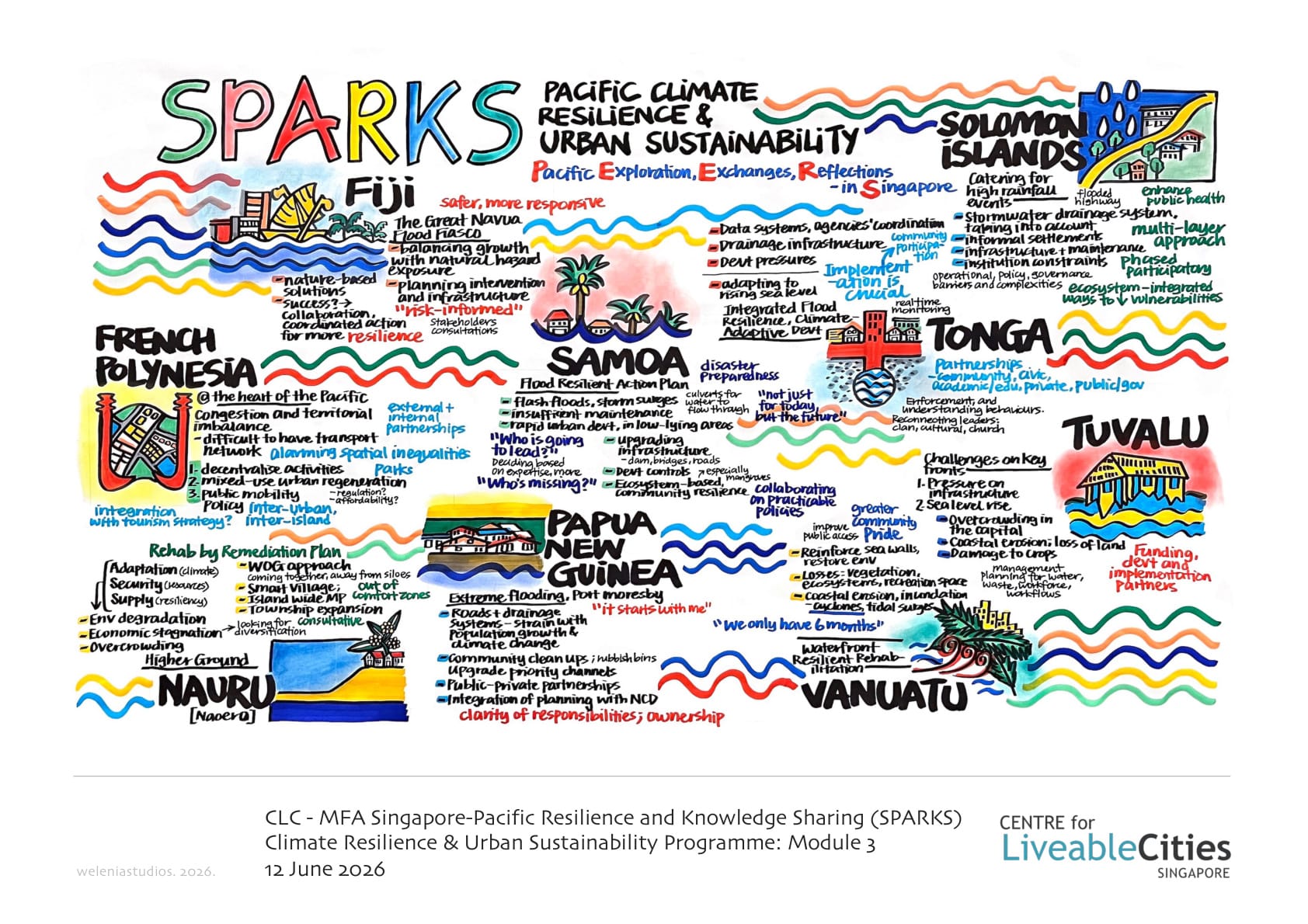
A graphic recording of all 9 participating PIF member states’ closing presentations at Module 3
While the Action Plans remain at different stages of development, they collectively demonstrated a growing commitment by PIF member states to move beyond identifying challenges towards implementing practical, locally appropriate solutions. For these small island states, which face the long-term existential impacts of climate change, the key take away is this: building robust climate resilience goes beyond technical solutions. It requires integrated governance, cross-sector collaboration, sustainable financing and meaningful community engagement.
The programme also created new opportunities for collaboration beyond the classroom. Several participating states have expressed interest in connecting with organisations that can support the implementation of their climate resilience initiatives. CLC welcomes solution providers, development partners and organisations with relevant expertise to explore opportunities for collaboration with participating states as they take their Action Plans forward.
While the SPARKS journey has concluded, the work of building climate-resilient cities continues. CLC hopes the ideas, partnerships and Action Plans developed will serve as a catalyst for meaningful and lasting impact across the Pacific.
Contributed by Grace Lau, Senior Assistant Director, Capability Development