
Articles
Building Regenerative Cities: Singapore at the C40 Workshop in Jakarta
23 February 2026
CLC participated in the C40 Sustainable Urban Planning Workshop in Jakarta from 2-5 February, joining urban planners from across Asia-Pacific to explore climate-responsive planning approaches that prioritise both people and planet.
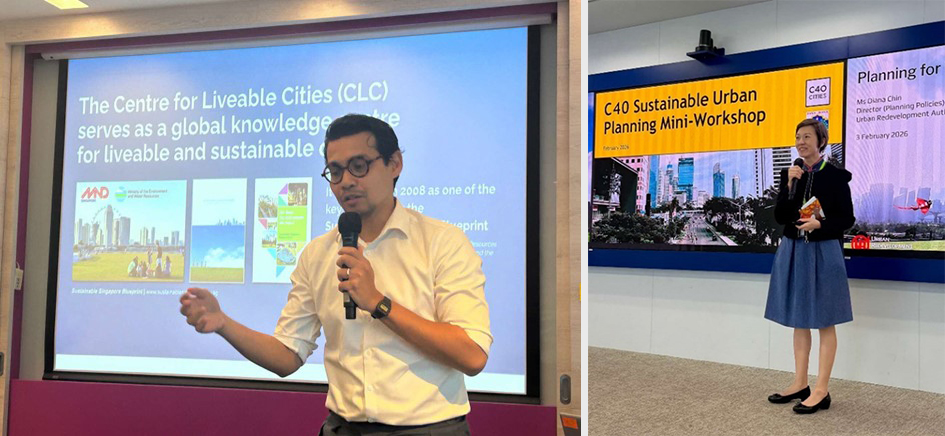
Presentations by Singapore delegation – Adib Jalal (left) and Diana Chin (right)
The workshop, part of C40's Urban Planning Accelerator initiative, brought together senior planners from Bangkok, Tokyo, Yokohama, Quezon City, and Amman. Singapore was represented by Diana Chin, Director, Planning Policies from the Urban Redevelopment Authority (URA) and CLC’s Elaine Tan, Director, Research, and researcher Adib Jalal.
Showcasing Singapore's Integrated Approach
Diana shared on Singapore's compact and connected development model, which demonstrates how the city-state balances complex demands through collaborative governance and long-term strategic planning. Her presentation sparked extensive dialogue about Singapore's distinctive approach about coordinating government agencies and engaging the private sector through clear regulatory frameworks.
Adib then introduced CLC's Regenerative Cities Framework that extends beyond traditional climate mitigation towards a holistic vision that enhances urban liveability. Through the use of case studies, the regenerative concepts became relatable and actionable. The sharing set the stage for the official launch of the Framework at the upcoming World Cities Summit from 14 – 16 June 2026 in Singapore.
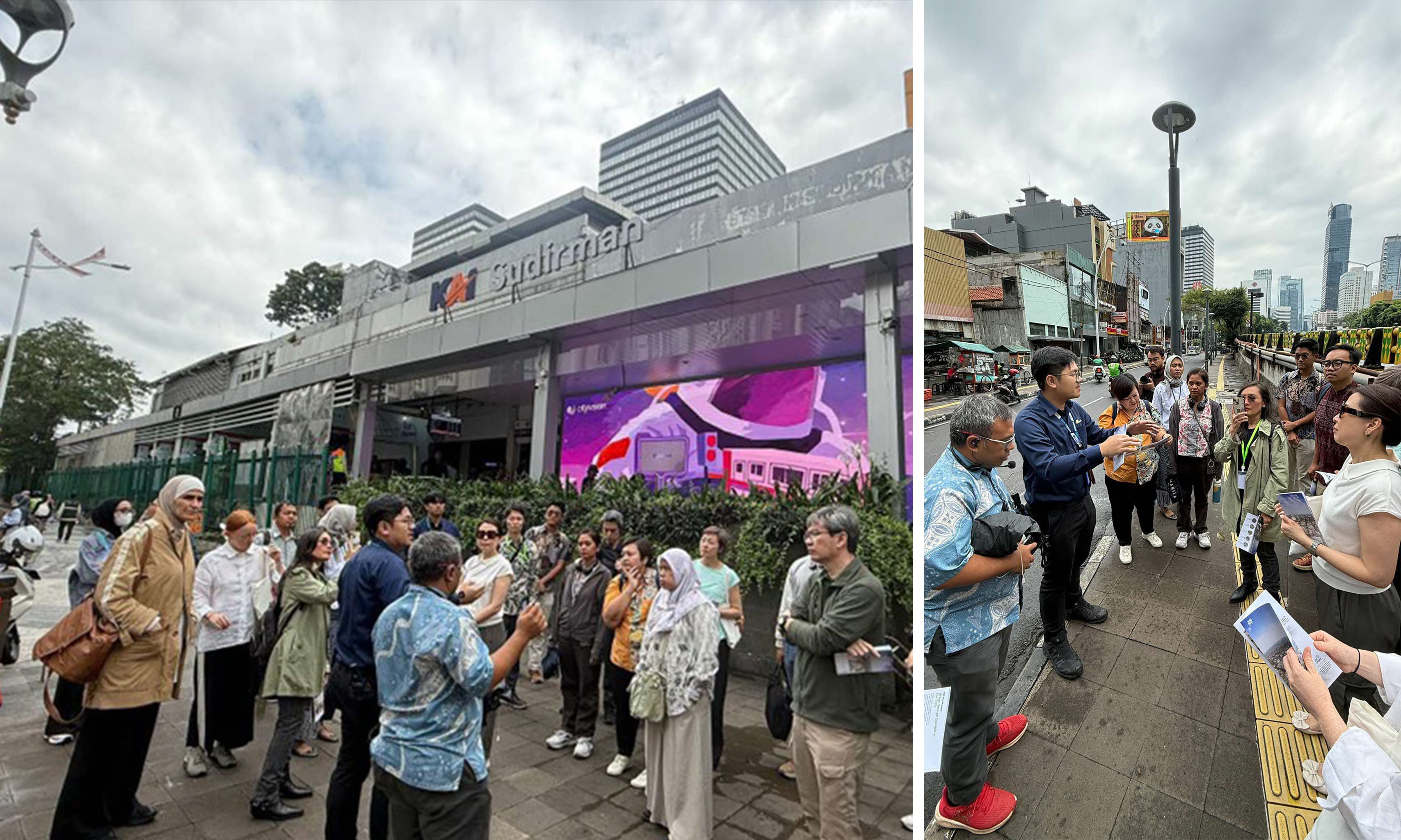
Site Visit to Duku Atas Transit Oriented Development
Learning from Regional Innovation
The workshop revealed diverse approaches across the region. For instance, Bangkok demonstrated remarkable commitment through many years of comprehensive urban planning initiatives. Tokyo showcased advanced sustainable energy integration, including their innovative Harumi Flag hydrogen-powered district. Yokohama's focus on circular economy applications highlighted opportunities for technical knowledge exchange, particularly regarding Singapore's integrated waste-to-resource systems.
Site visits provided practical insights into Jakarta's urban transformation efforts. At Dukuh Atas, participants explored Indonesia's flagship transit-oriented development - a multimodal hub integrating MRT, LRT, and BRT systems to tackle the metropolitan area's notorious traffic congestion. The Kampung Akuarium vertical housing project demonstrated innovative informal settlement upgrading through in-situ development that preserves social fabric whilst improving living conditions.
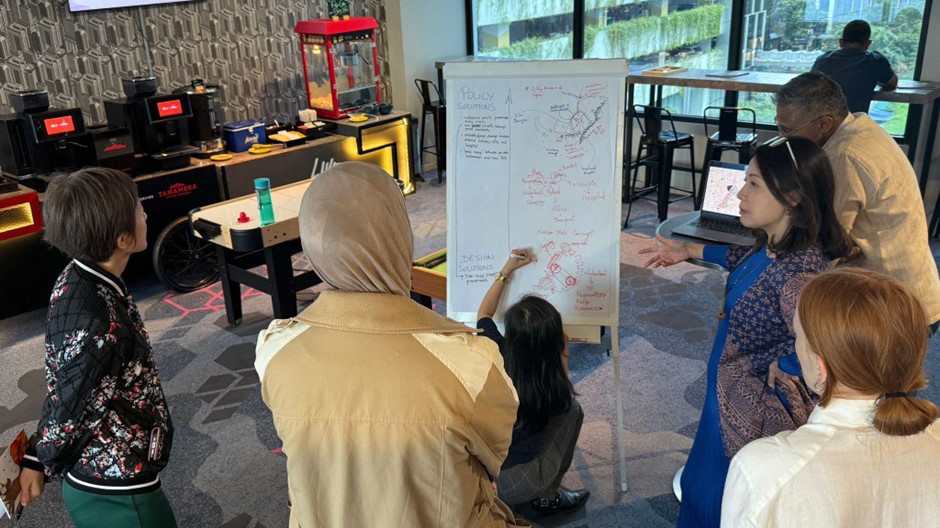
Brainstorming exercise at the workshop
Collaborative Problem-Solving
The workshop was also an opportunity for counterparts to learn from each other as a Community of Practice tackling similar urban challenges. Two hands-on exercises demonstrated practical application of sustainable planning principles. Participants developed solutions for Amman's expansion challenges, proposing cable car systems for mountainous terrain and integrated green infrastructure addressing urban heat, flood management, and water security simultaneously. For Quezon City's 15-minute city implementation, creative solutions included land swap mechanisms and a dual-node strategy leveraging planned subway infrastructure.
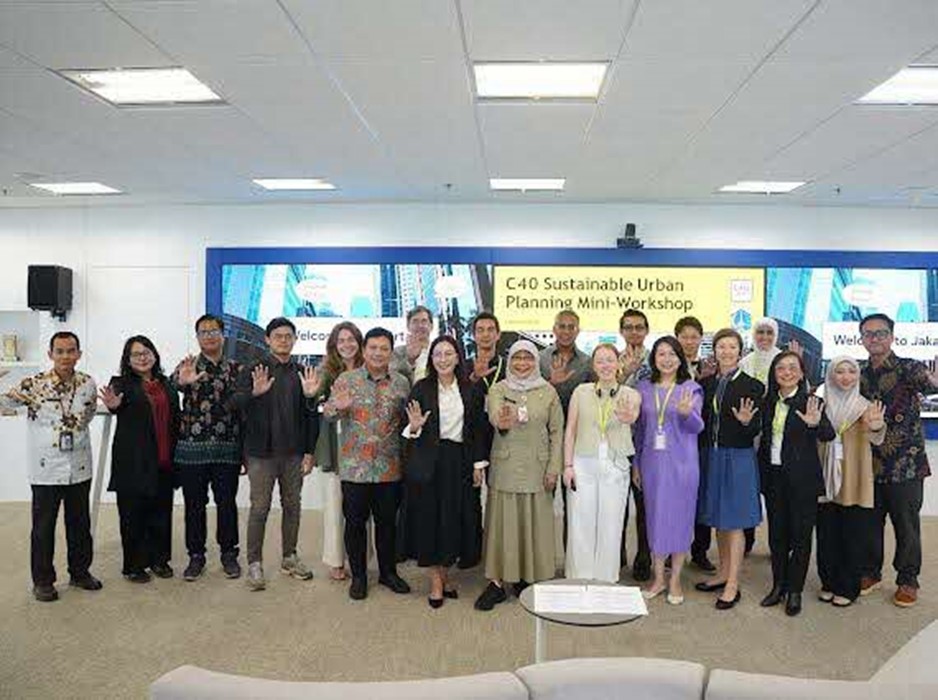
Workshop participants with C40 organisers and the Jakarta Provincial Government
Strengthening Regional Partnerships
The workshop strengthened CLC's strategic engagements with C40 Cities, all sharing a desire for impactful climate action. Particularly, the workshop's in-person format proved valuable in fostering high-trust communities of practice among urban planning professionals.
The workshop reinforced that cities across Asia-Pacific face similar challenges but are developing innovative, context-specific solutions. It also validated the regenerative cities approach as complementary to regional climate planning priorities.
Contributed by: Adib Jalal, Senior Assistant Director, Research