
Articles
A Growing Global Community: The LKYWCP Network's Commitment to Urban Collaboration and Research
30 September 2026
The City Network for the Lee Kuan Yew World City Prize (LKYWCP Network) took a two-pronged approach to advancing urban collaboration and research at the World Cities Summit 2026. A curated programme anchored by two flagship platforms – the Knowledge Forum and the Research Fellowship Masterclass - convened mayors, city leaders and urban practitioners from the LKYWCP Network’s City Halls and Knowledge Organisations.
LKYWCP Network Knowledge Forum
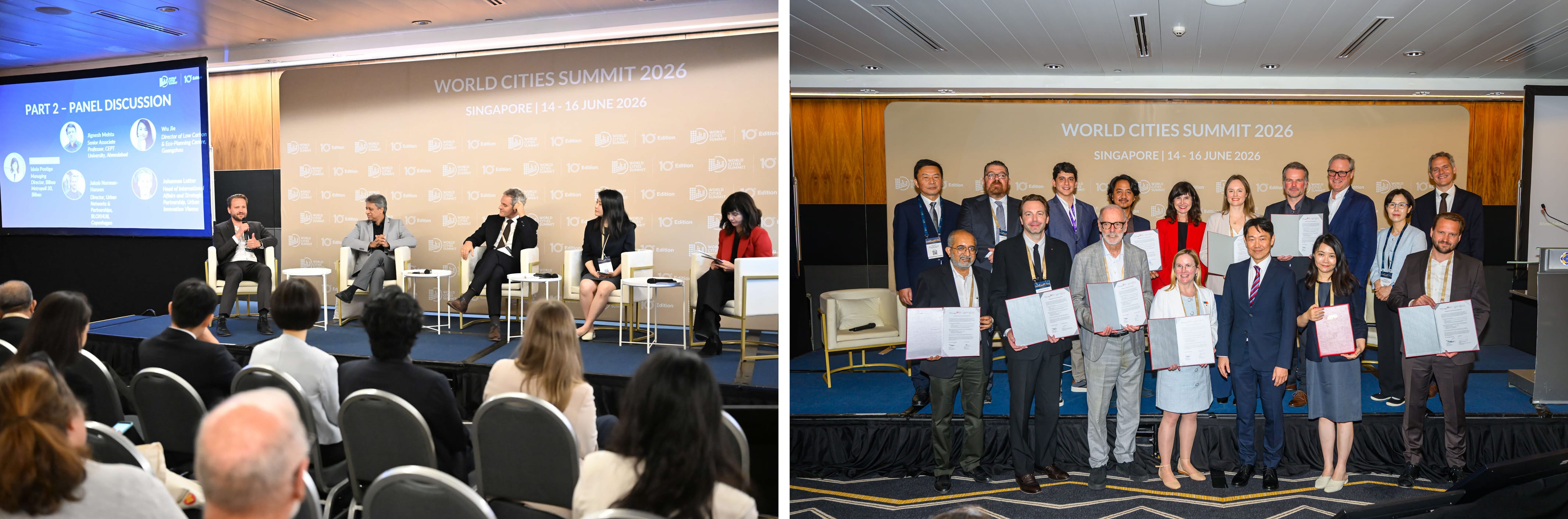
Panel discussion and onboarding of new Network Knowledge Organisations at the Knowledge Forum
As one of the LKYWCP Network’s key initiatives, the LKYWCP Network Knowledge Forum on 15 June 2026 brought together mayors, city leaders and urban practitioners to exchange experiences on how collaboration can accelerate urban transformation and address shared challenges. Through two panel discussions on “Transformation Through Collaboration” and “Acceleration Through Collaboration”, the forum highlighted the LKYWCP Network as a platform for fostering peer learning, strengthening partnerships and advancing practical solutions to common urban issues.
The session also commemorated the onboarding of new members to the LKYWCP Network, symbolising the Network's continued growth and reaffirming members' shared commitment to long-term collaboration and knowledge exchange.
Key learnings:
Effective city-to-city collaboration begins with identifying shared challenges while adapting solutions to local contexts. Speakers highlighted the value of learning from both successful and unsuccessful initiatives, with collaboration creating trusted networks that enable continued knowledge exchange. Participants identified common urban challenges, including balancing redevelopment with sustainability and responding to demographic and labour pressures, as opportunities for deeper collaboration among cities.
Successful urban transformation depends on strong partnerships between governments, communities and the private sector, underpinned by trust and institutional platforms such as the LKYWCP Network. Participants also underscored the role of city-to-city collaboration in maintaining dialogue and advancing shared urban priorities amid an increasingly complex geopolitical environment, reaffirming the Network's value as a platform for sustained international cooperation.
LKYWCP Network Research Fellowship Masterclass
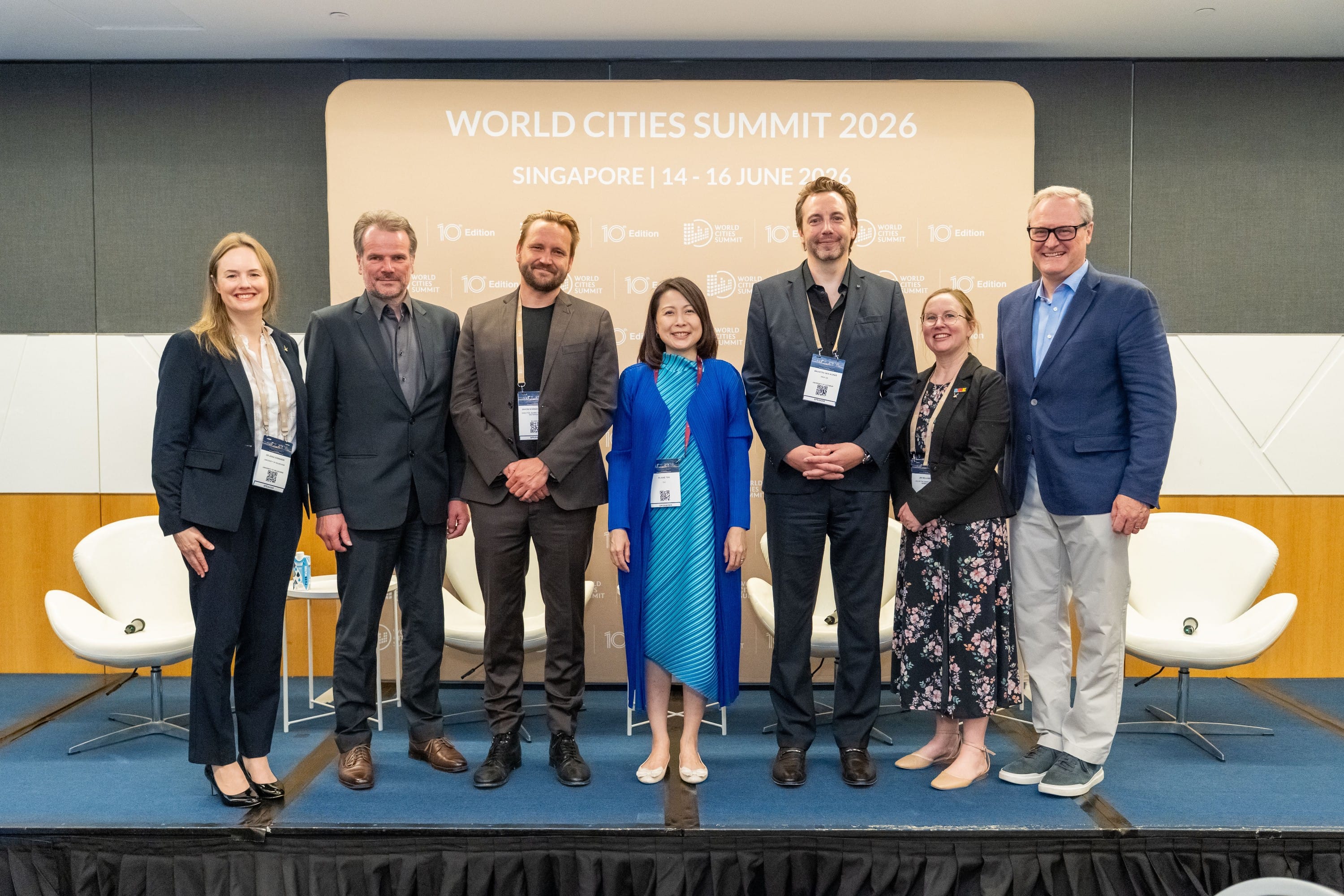
Representatives from the Knowledge Organisations participating in the Research Fellowship.
The Research Fellowship is one of the LKYWCP Network's flagship programmes, designed to advance urban problem-solving through structured, multilateral research. Unlike bilateral exchanges, comparative research across three or more cities produces findings that have been stress-tested across different contexts, separating what is locally contingent from what is broadly applicable, and refining city-level experience into transferable principles. In this way, the Research Fellowship creates a multiplier effect, where each city's enhanced research capability contributes to a growing body of global urban knowledge.
At the World Cities Summit 2026, cities participating in the inaugural cycle came together in person for the first time to formally launch the Research Fellowship. Representatives from Antwerp, Brisbane, New York City, Copenhagen, Hamburg, and Melbourne gathered for the Research Fellowship Masterclass, marking the beginning of their collaborative journey and sharing early perspectives on advancing active mobility and affordable housing in their respective cities. The masterclass surfaced key insights across each theme.
Network members collectively identified Mobility and Housing as the two themes for the inaugural Cycle 1 of the Research Fellowship:
Mobility: Antwerp (University of Antwerp), Brisbane (Committee for Brisbane), and New York City (Regional Plan Association)
Housing: Copenhagen (BLOXHUB), Hamburg (HafenCity University), and Melbourne (Centre for Cities)
Cities working on Housing will examine how housing systems can be designed and governed to function as social infrastructure, while building resilience against the pressures of climate change. This includes surfacing the policy and planning levers most likely to enable these outcomes at scale. Cities working on Mobility will focus on actionable strategies to accelerate the transition to sustainable mobility, alongside new models of collaboration capable of delivering transformative change in complex urban environments.
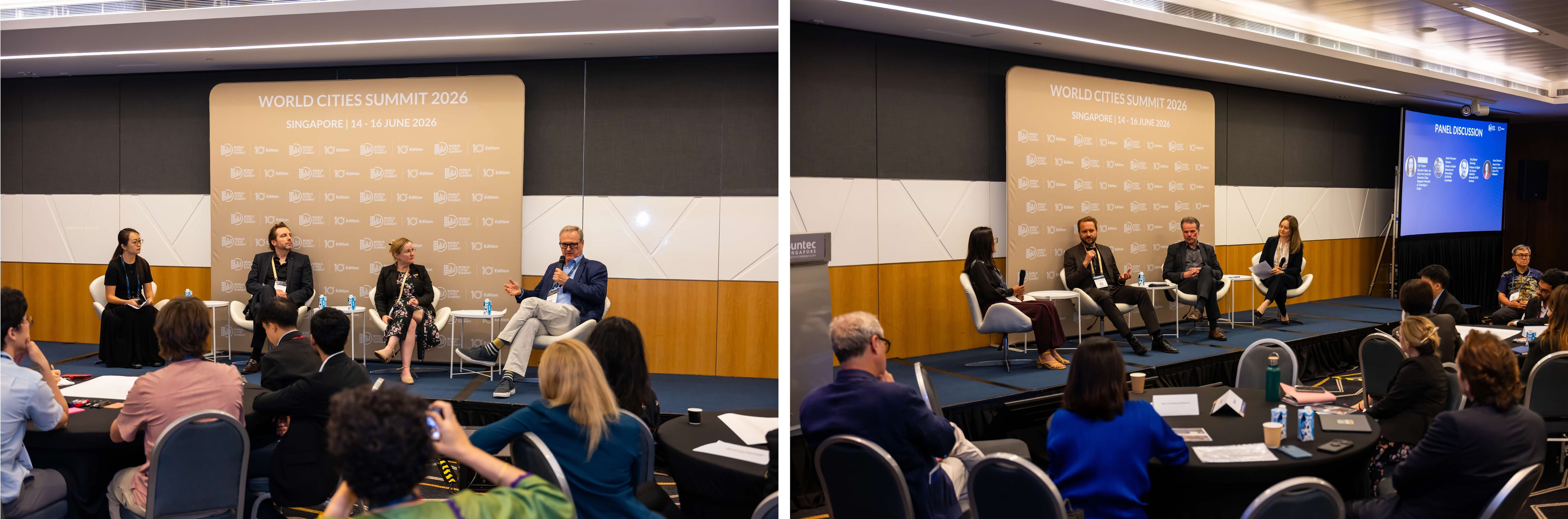
Panels on Mobility and Housing at the Research Fellowship Masterclass
Key Insights on Active Mobility
1. The Multi-Dividend Case for Active Mobility
One of the clearest takeaways from the mobility discussion was that investments in active mobility rarely serve just one purpose. Antwerp's €10 billion park project, featuring 20km of cycle routes and 20km of noise barriers, simultaneously advances cycling uptake, noise management, air quality, and public health. In New York City, reclaiming the waterfront through new parks is at once a climate resilience strategy (protecting against storms and flooding in the wake of Hurricane Sandy), a micro-mobility initiative, and a community revitalisation effort. Brisbane's green grid, designed to counter the urban heat island effect, makes cycling and walking more comfortable, which in turn reduces car dependency. Yet, pursuing several goals at once can itself become a challenge, requiring careful coordination and a clear articulation of how different objectives reinforce one another.
2. Critical Success Factors
Three factors were identified to being essential to scaling active mobility projects.
Firstly – a shared, long-term vision. Urban projects often take 10 to 20 years to deliver, spanning multiple political cycles. Without a common goal that transcends individual administrations, momentum is easily lost. Antwerp addressed this partly through co-creation "work benches" for its park project, where landscapers, designers, and engineers all had an equal voice, building broad ownership of the vision.
Secondly - a bias towards action. Both Brisbane and New York City emphasised the value of starting projects without waiting for perfect conditions or full funding. Temporary interventions, like a pop-up bicycle lane, a trial pedestrian zone etc. allow cities to test ideas, learn from public response, and build the case for permanent investment.
Finally - sustained attention to maintenance. Securing capital funding to build infrastructure is only half the battle. Cities must also plan for the ongoing costs of upkeep, or risk seeing investments deteriorate and public trust erode.
3. Pitfalls to Avoid
The Research Fellows were equally candid about common mistakes. Framing cycling infrastructure as a "war on cars" is counterproductive; the more effective narrative is one of restoring balance and improving overall city health. Equally, cities risk investing heavily in a single piece of infrastructure while neglecting the surrounding context: housing, transport connections, and land use all need to be considered together.
Planning networks in isolation was highlighted as another pitfall. Bicycle lanes, for instance, are often used by people with prams, mobility aids, or other needs. Designing for cyclists alone, without consulting the full range of users, creates conflicts that could have been avoided with a more holistic approach.
Finally, cities should not underestimate the importance of quick wins. Large-scale projects can take years to show results, and public support can wane in the interim. Small, visible improvements help maintain momentum and demonstrate that change is possible.
Key Insights on Affordable Housing
1. Reframing the Problem
Across Copenhagen, Hamburg, and Melbourne, a common diagnosis emerged - housing has increasingly been treated as a financial asset rather than as social infrastructure. This has driven prices up, concentrated ownership, and left many residents, particularly younger generations, locked out of the market. The panellists broadly agreed that reframing housing as a human right and a form of public infrastructure is a necessary pre-condition for meaningful reform.
The challenge is compounded by the scale of demand. Hamburg is a growing city in a country of shrinking cities, with a high rate of in-migration and limited room to expand outward. Melbourne faces similar pressures, with a large international student population driving high housing turnover. In both cities, the question is not just how to build more housing, but how to build it faster, more affordably, and more sustainably without sacrificing quality or liveability.
2. Lessons from Practice
Hamburg's HafenCity development, Europe's largest urban development project, offers a candid lesson in how housing mix evolves over time. The first phase, driven by the city's interest in revenue generation, produced a high concentration of wealthy residents. Subsequent phases introduced more experimental typologies, including housing designed for musicians with soundproofed studios, and eventually settled on a deliberate one-third social, one-third city-owned, one-third private split. The result was a more balanced, vibrant urban community, and a model that other cities are now studying.
Melbourne's Make Room project addresses housing at the other end of the spectrum; it converted a building into 50 rooms for rough sleepers and paired accommodation with wrap-around support services over a 12-month period. The goal was to help residents stabilise and transition into longer-term rental housing, a model that treats housing as a platform for broader social recovery.
Looking Ahead
The LKYWCP Network’s two key activities at WCS this year reinforces and furthers its agenda in advancing urban collaboration. The Knowledge Forum creates the conditions for open dialogue, surfacing shared challenges, building trust, and strengthening the partnerships that make deeper collaboration possible. The Research Fellowship then provides the structured environment in which these conversations are translated into comparative research, tested and refined across cities at different stages of the same journey.
This inaugural cycle demonstrated that peer exchange at such a level generates insights that no single city could arrive at alone. As the Network deepens its agenda, both the Knowledge Forum and the Research Fellowship will continue to serve as key mechanisms for turning shared urban challenges into shared urban knowledge for cities across the Network and beyond.
Contributed by:
Lim Ren Ai, Assistant Director, Research
Kikuzawa Yuichi, Assistant Director, Research