
Articles
A Glimpse into the Future of Research: UCL Person-Environment-Activity Research Laboratory (PEARL)
30 September 2026
As the global population of older persons living with dementia (PLWDs) grows, cities face mounting pressure to support ageing in place, ensuring that PLWDs can move around safely, maintain independence, and remain active members of their communities. Addressing this requires not just better care infrastructure, but a fundamental rethink of how urban environments are designed and experienced.
The NUS Centre for Environment and Ageing Well (Engage) – UCL Person-Environment-Activity Research Laboratory (PEARL) research collaboration responds to this challenge by developing an evidence-based, inter-agency framework for age-inclusive urban environments and mobility. NUS Engage contributes expertise in ageing research that integrates the built environment, health, and community practice, with a strong emphasis on co-design with older adults. UCL PEARL brings a unique experimental simulation facility that uses life-sized controlled environments to study how people interact with urban spaces, enabling a more scientifically rigorous approach than traditional prototyping or survey methods. Together, the collaboration is pioneering the use of cognitive and sensory assessment tools to simulate and evaluate dementia-friendly environments, offering cities a new evidence base for planning and design decisions.
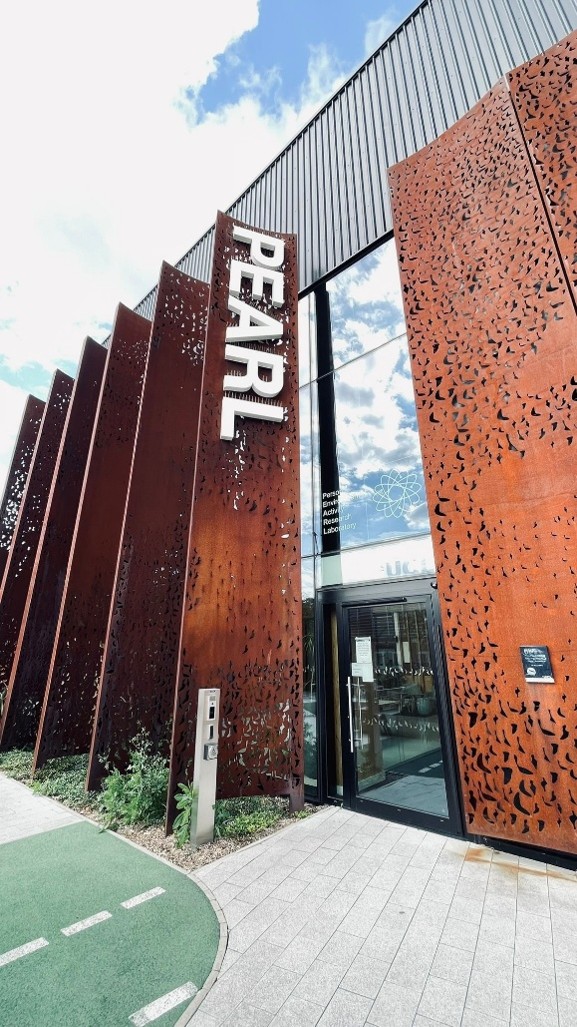
Arriving at UCL PEARL
Designing for edge conditions should become a core design principle
Accessibility should not be considered an additional layer added after mainstream design decisions have been made. Instead, infrastructure should be designed from the outset to accommodate those with the greatest physical or cognitive challenges, including older adults, persons living with dementia, autism, epilepsy, mobility impairments and other diverse user groups.
Many seemingly minor design decisions can disproportionately affect these users. This includes tactile paving, where certain textures may benefit visually impaired users but create discomfort for frail older adults, and ramp gradients, where an increase from two to four per cent substantially increases the effort required by wheelchair users and caregivers to maintain a straight trajectory. Similarly, colour contrast, lighting, shadows, signage placement and environmental complexity can significantly influence how easily people navigate public spaces.
The underlying principle is that infrastructure which performs well under these edge conditions is likely to improve the experience for the wider population, shifting accessibility from a compliance exercise towards universal, inclusive design.
Infrastructure should be designed for the brain, not just the body
The brain is inherently predictive rather than reactive. Rather than simply responding to stimuli, it continuously anticipates what will happen next based on previous experiences and environmental cues. Stress arises when reality deviates from these predictions.
This suggests that well-designed environments are those that minimise uncertainty by being intuitive, legible and predictable. Clear wayfinding, consistent visual cues, appropriate lighting, colour contrast and logical spatial organisation all reduce unnecessary cognitive effort before users even become consciously aware of it.
PEARL's research further demonstrates that neurological responses occur milliseconds before conscious awareness. Through measurements such as functional near-infrared spectroscopy (fNIRS), eye tracking, pupil dilation, heart rate and muscle activity, researchers can observe how the brain processes environmental information at a pre-conscious level. To cite an example of an experiment where electric scooters approached participants silently: Participants exhibited significantly greater visual cortex activation because the brain had not anticipated the approaching scooter. However, introducing an audible warning reduced this neurological response by enabling the brain to predict the event, illustrating how relatively simple design interventions can substantially improve perceived safety.
Human responses to infrastructure are shaped by lived experience
Identical environments do not produce identical responses. People's reactions are shaped not only by the physical environment but also by their previous experiences, cultural backgrounds and existing stress levels.
Research indicated that baseline daily stress may be one of the strongest determinants of cognitive load during commuting. Individuals experiencing higher everyday stress appear more susceptible to additional environmental stressors. Conversely, participants who regularly commute in highly crowded environments may demonstrate lower cortisol responses, suggesting some degree of physiological adaptation, even though their brains may continue to exhibit elevated cognitive activity. This reinforces the distinction between subjective perceptions, physiological adaptation and underlying cognitive effort.
There are broader variations across age, gender, disability and cultural context, hence infrastructure should be evaluated across a diverse range of users rather than assuming uniform responses.
The built environment can now be evaluated through objective physiological evidence
Traditionally, infrastructure has been evaluated using operational metrics such as travel time, passenger throughput and service reliability, supplemented by user surveys. PEARL introduces a fundamentally different evidence base by directly measuring physiological responses to the environment.
Brain oxygenation, pupil size, heart rate, muscle activity and cortisol provide objective indicators of cognitive effort and stress that complement subjective feedback. Rather than relying solely on what people report experiencing, researchers can understand the mechanisms that drive behaviour itself.
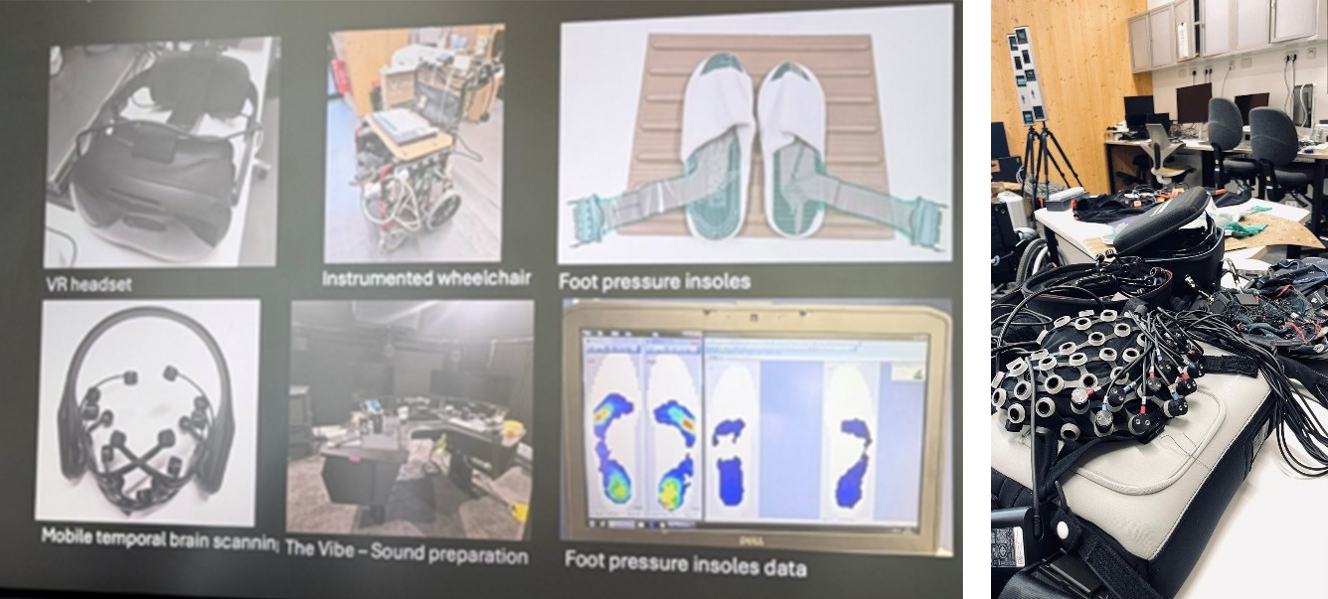
Examples of instruments used at PEARL. Rather than collecting relatively shallow data from large populations, PEARL captures millions of physiological data points from individual participants, providing high-resolution insights that complement conventional population-based research.
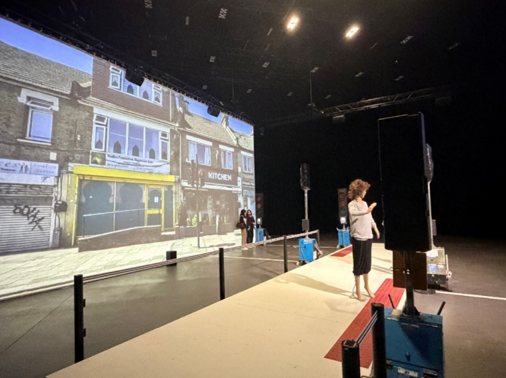
The Empathy Machine simulates the lived experiences of chronic illnesses to improve communication between patients and healthcare providers. One setup recreates the disorientation experienced by people with dementia when crossing a road.
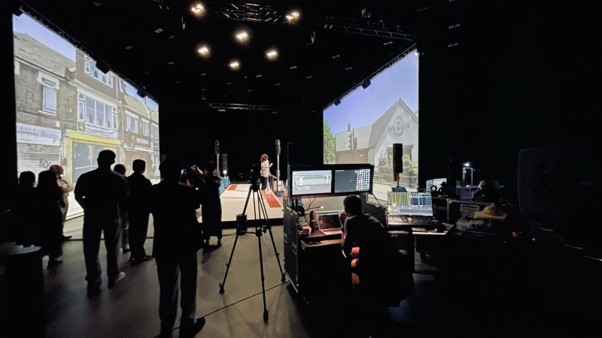
PEARL recreates full-scale urban environments under controlled conditions, enabling researchers to test environmental factors and interventions. It also tracks eye movement, heart rate, blood pressure and cognitive responses.
Conclusion
Collectively, the emergence of neuroarchitecture as an evidence-based discipline that integrates neuroscience with architecture, urban design and transport planning is promising. For government agencies, this presents opportunities to complement existing universal design and accessibility initiatives with evidence-based approaches that explicitly consider cognitive accessibility.
Rather than designing environments that people can simply use, future infrastructure could be designed to actively support brain health by considering how people perceive colour, lighting, spatial complexity, environmental predictability and sensory stimulation. This is a shift from designing solely for physical movement towards designing environments that reduce cognitive effort and enhance psychological wellbeing.
Going forward, PEARL has demonstrated how neuroscience can fundamentally reshape the way cities are planned, designed and evaluated; and this is a glimpse into the future of research and design of our built environments, towards a more person-centric approach backed by evidence-based science to respond to our cognitive needs, and ultimately achieving higher standards of liveability.
Contributed by Lim Ren Ai, Assistant Director, Research