
Articles
“The Impact of the Social and Built Environment on Health and Well-being” – a Pre-Symposium Workshop Panel
7 May 2026
CLC’s Research Director, Elaine Tan, spoke at a Pre-Symposium Workshop Panel on “The Impact of the Social and Built Environment on Health and Well-being”, organised by the MOH Office for Healthcare Transformation (MOHT).
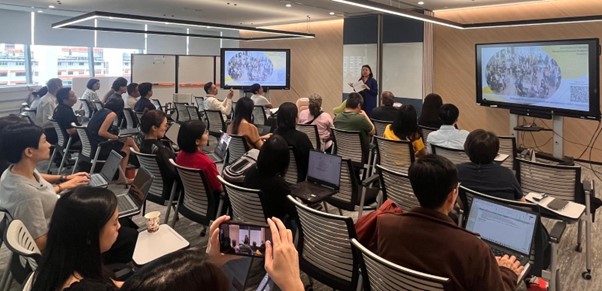
Health is not the same as healthcare. The distinction goes beyond medical treatment to encompass a broader understanding of wellbeing, one that includes physical, cognitive, emotional and social dimensions. This perspective has shaped Singapore's integrated approach to urban planning, where land-use planning, transport systems, town design, greenery and recreational facilities work together to promote healthy choices and behaviours.
These ideas were explored at MOHT’s Pre-Symposium Workshop Panel, which brought together participants across various sectors, including MOHT staff, community providers such as Active Ageing Centres, healthcare providers, as well as officers from Town Councils, HDB, URA and LTA. The Pre-Symposium Workshop aimed to equip participants with practical, place-based approaches that leverage multi-stakeholder efforts and the built environment to enhance physical wellbeing, mental wellbeing and social connectedness.
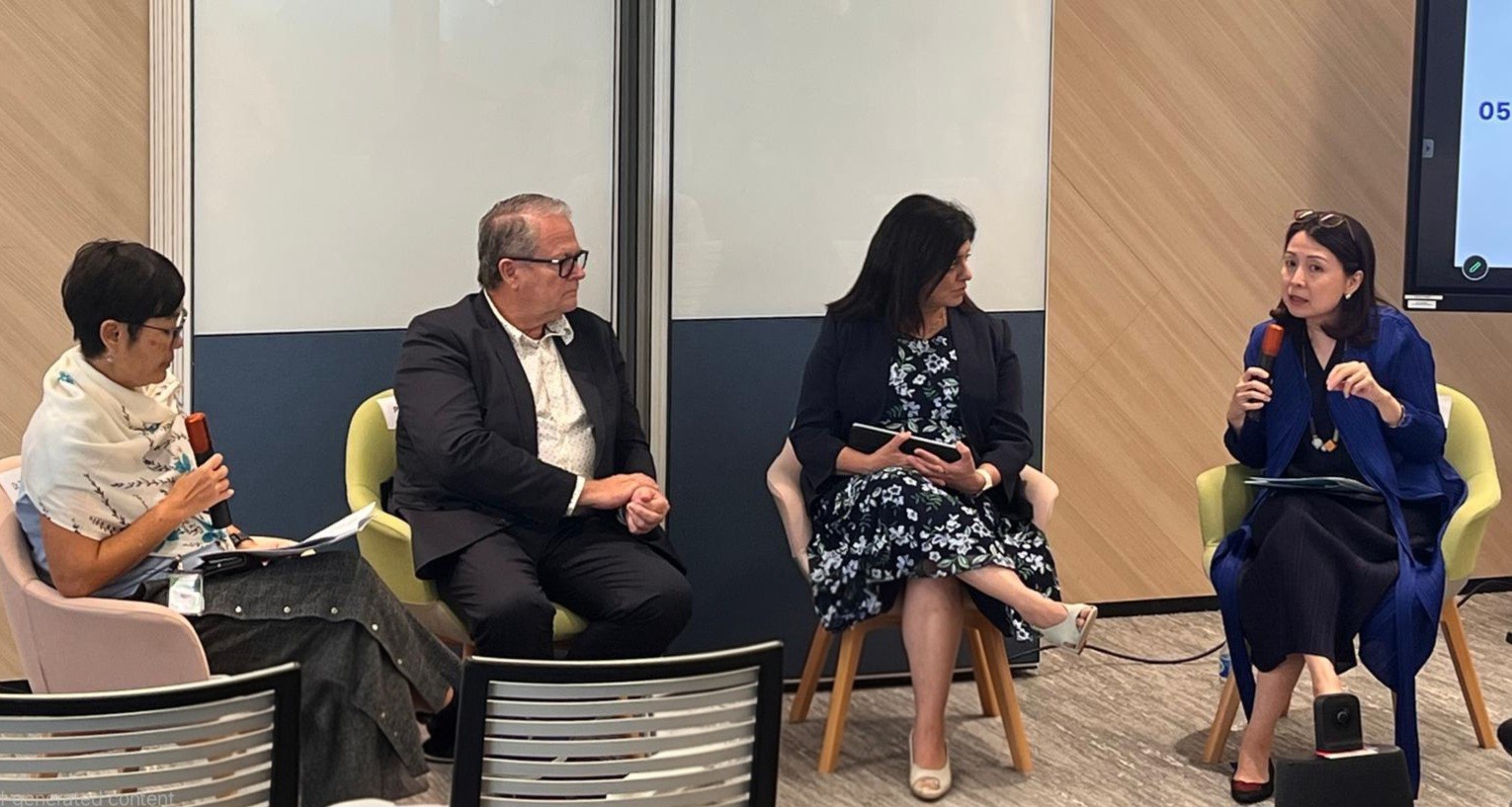
L to R: Dr Tan Weng Mooi, Professor Michael Nilsson, Professor Reshma Aziz Merchant and Elaine Tan
The panellists at the Pre-Symposium Workshop Panel included:
Elaine Tan, Director (Research), Centre for Liveable Cities (CLC)
Professor Reshma Aziz Merchant, Senior Consultant, Division of Geriatric Medicine, Department of Medicine, National University Hospital
Professor Michael Nilsson, Emeritus Professor, School of Medicine and Public Health, University of Newcastle, Australia
Dr Tan Weng Mooi, Head, Integrated Health Promotion, MOH Office of Healthcare Transformation
Designing for Diverse Needs
Elaine’s presentation focused on how different community segments require nuanced approaches. She shared on the CLC-developed “Dementia Friendly Neighbourhood Design Guide”, specifically contextualised for Singapore's high-rise, high-density urban environment. The guide outlines four key design principles:
Strengthening mental maps through distinct locations that link to cognitive functions, routines and meaningful memories, reinforcing positive familiarity and supporting navigation through effective wayfinding.
Embracing a ‘less is more’ approach to help persons living with dementia process sensory stimuli more effectively, eliminating unnecessary clutter and providing calm, quiet spaces with minimal sensory input.
Enabling diverse experiences by extending consideration to caregivers and the wider community, creating inclusive spaces where everyone can experience purpose and delight together.
Supporting gradual adaptation by building on familiar elements whilst introducing fresh activities in manageable steps, helping individuals utilise their cognitive and physical capabilities to adapt to change.
From Hardware to Software: Activating Community Spaces
Elaine highlighted that thoughtful design alone is not sufficient. Well-designed neighbourhood spaces can remain under-utilised without intentional activation. The challenge, therefore, extends beyond providing physical infrastructure to programming these spaces in ways that encourage use and participation.
In this regard, partnerships play a critical role. Elaine shared that collaborations with community groups, schools and voluntary organisations help to ensure that programmes are responsive to residents’ needs. Active Ageing Centres, for instance, can make use of common spaces across HDB estates (parks, exercise corners, pavilions, coffee shops and void decks), while Residents’ Centres can facilitate activities that foster interaction and social connection among seniors.
A compelling example emerged from CLC's study on building community resilience. The research revealed that community trust, whilst taking time to build, becomes enduring during times of crisis. This led to the creation of a green corridor at Cambridge Road, conceptualised, designed, implemented and maintained by community volunteers.
Designing Inclusive Engagement
Even so, challenges remain in ensuring that community engagement efforts are inclusive and accessible. Often, the same groups of residents participate repeatedly, while others may feel overwhelmed by the multitude of programmes and providers available.
At the same time, effective engagement calls for diverse approaches tailored to different groups. When working with persons living with dementia, conventional methods such as interviews or surveys have proven inadequate. Instead, researchers have turned to non-verbal methods, such as guided neighbourhood walks, observing navigation patterns, and using visual prompts like photographs, to better understand how individuals experience their environment.
Similarly, engagement strategies for other groups must be adapted to their context. For busy working adults, pop-up booths in naturally frequented weekend locations have proven effective. For seniors, pictorial and visual tools help make abstract ideas more tangible, enabling them to share their perspectives more easily.
A Thriving Ecosystem for Health and Wellbeing
Taken together, these approaches underscore that health is not solely an individual responsibility, but a shared outcome shaped by multiple stakeholders, including government agencies, community organisations, employers and residents themselves. Creating a supportive environment for healthy living therefore requires sustained collaboration across these groups.
Crucially, this also means ensuring representation across the full diversity of stakeholders, rather than relying on the same active participants. Specially tailored engagement methods are needed to cater to the varied needs and preferences of the different groups.
Elaine concluded by highlighting that while the built environment provides the essential hardware for health and wellbeing, it is community trust, active engagement and strong partnerships that form the vital software that brings neighbourhoods to life. The path forward lies not only in designing better spaces, but in building the ecosystem and relationships that enable these spaces to become thriving, inclusive communities.
Download the “Dementia Friendly Design Guide” here Dementia-Friendly Neighbourhood Design Guide | Centre for Liveable Cities Knowledge Hub
Contributed by Lim Ren Ai, Assistant Director, Research