
Creating Liveable Cities: A Cross-Domain Approach to Sustainable Mobility
Find out more about how a cross-domain approach to sustainable mobility can help cities maximise the impact of urban interventions.
Last updated 12 June 2026
Creating Liveable Cities: A Cross-Domain Approach to Sustainable Mobility
Aligned with the Liveability Framework developed by CLC, the publication introduces a cross-domain framework that enables cities to identify and maximise co-benefits of mobility interventions, from health and environment to equity and economic vitality.
Featuring international case studies, it demonstrates how integrated planning and holistic assessment approaches can support outcomes-based strategies and strengthen decision-making and public communication.
Download PDF - Desktop [PDF, 11.93 MB]
Download PDF - Mobile [PDF, 12.10 MB]
Practitioner’s Guide
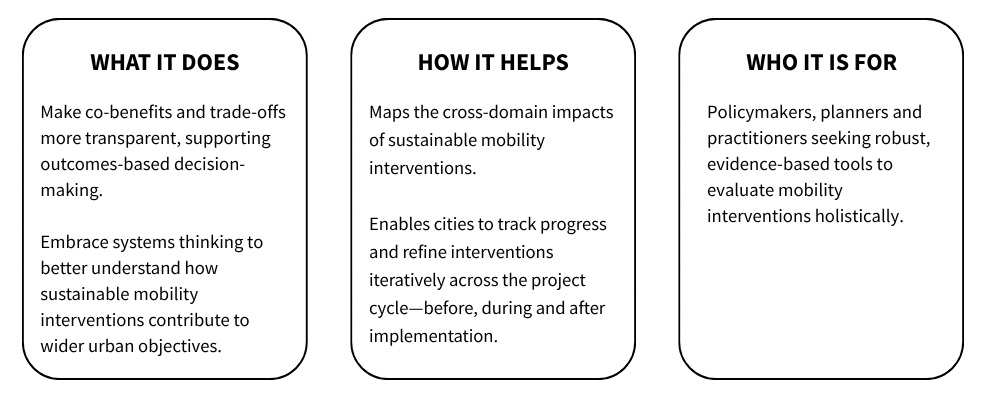
The publication is accompanied by a Practitioner’s Guide. The Guide outlines the methodology, tools and detailed step-by-step approach on the application of the cross-domain framework.
About the Framework
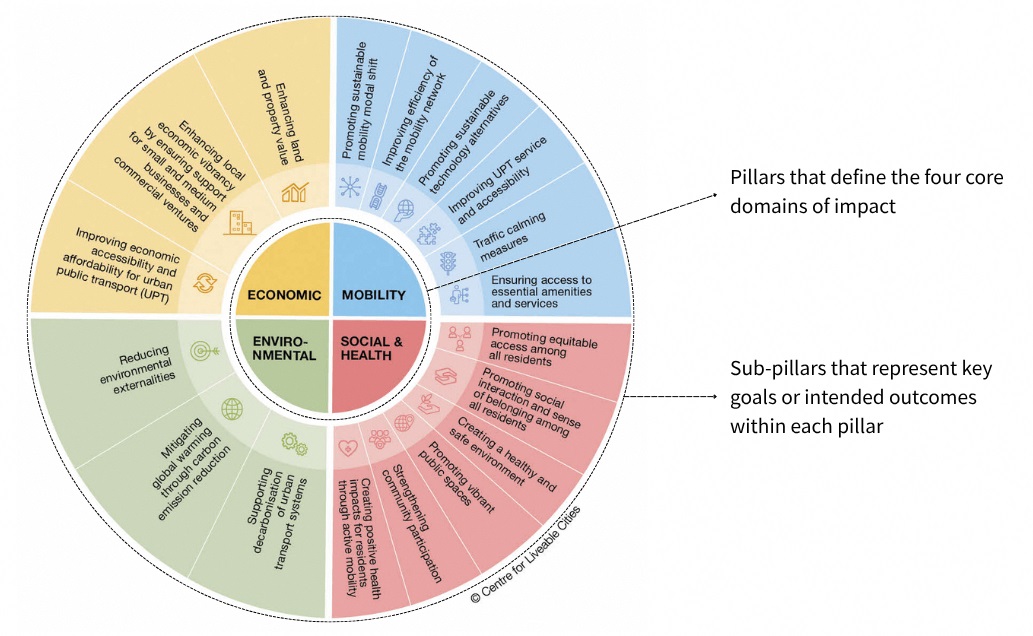
The cross-domain framework provides a structured approach to assess the holistic impacts of sustainable mobility interventions. Recognising that mobility systems influence not only mobility, but also environmental, social and health, and economic domains, the framework organises the assessment of sustainable mobility interventions across these key interconnected areas—acknowledging that outcomes should not be measured in silos but as part of a broader urban system.
Case Studies
The cross-domain framework was applied to three real-world interventions to showcase how sustainable mobility interventions can deliver benefits beyond transport outcomes.
Explore the case studies below to discover how cities are experimenting with mobility strategies that are transforming the way people move.
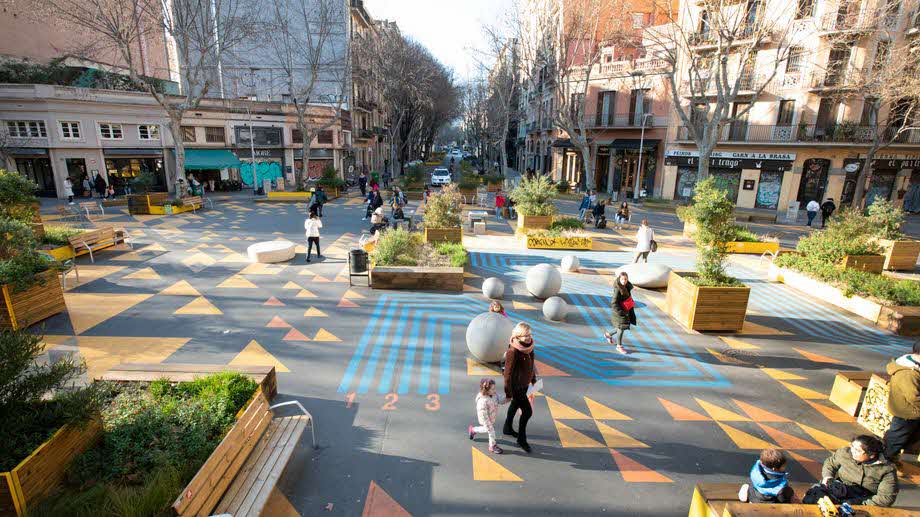
Superblocks, Barcelona
The Superblocks illustrate how roads can be reclaimed for public use, greenery and active mobility infrastructure to deliver cross-domain outcomes, enhancing the liveability of a neighbourhood.
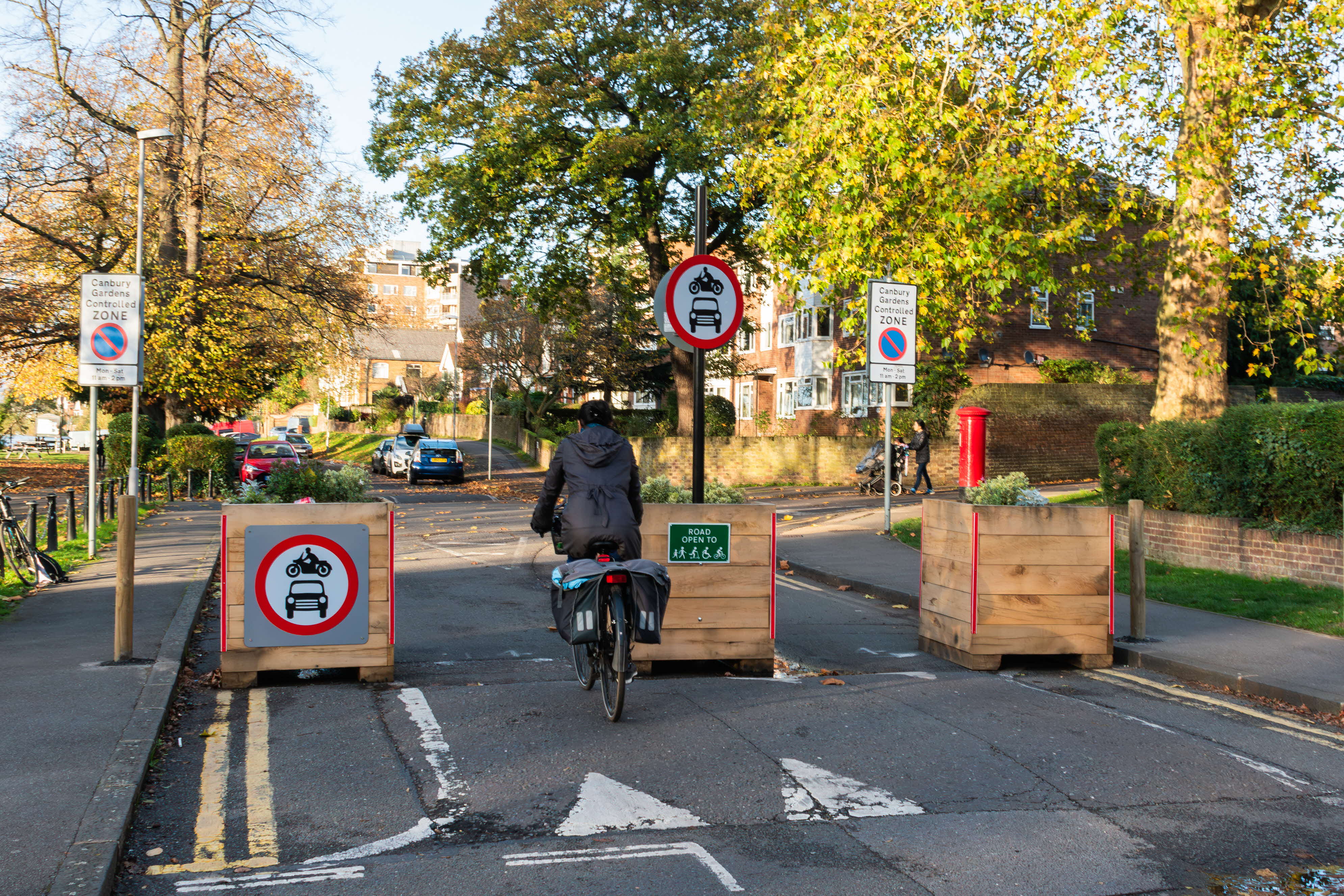
Low-Traffic Neighbourhoods (LTNs), London
The LTNs reveal insights into how reducing through-traffic on residential streets and prioritising the needs of pedestrians and cyclists can make sustainable mobility modes an attractive option for all, while also offering lessons on navigating challenges and trade-offs.
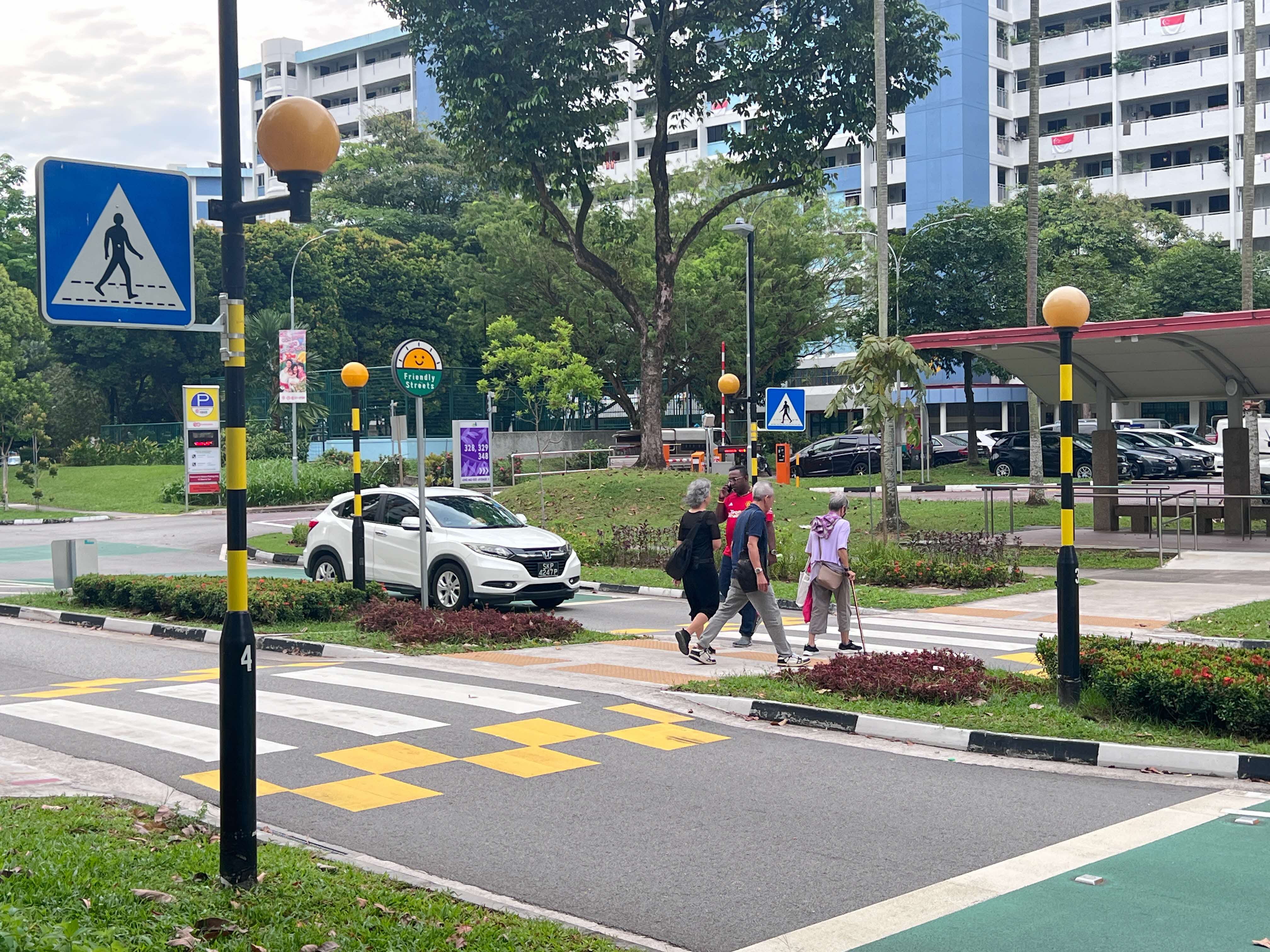
Friendly Streets, Singapore
The Friendly Streets showcase how street design interventions can make residential streets safer and more accessible, while also elevating the walk-cycle-ride experience for commuters.